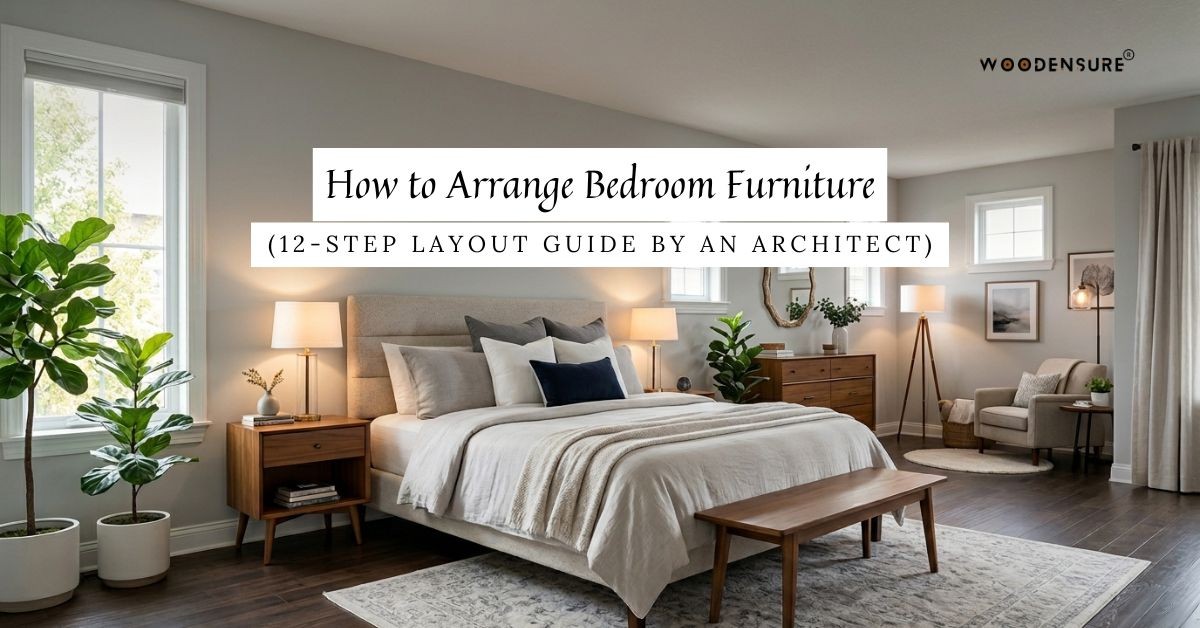

How to Arrange Bedroom Furniture (12-Step Layout Guide by an Architect)
Figuring out how to arrange bedroom furniture can feel overwhelming—especially when your room looks fine but doesn’t feel comfortable. The issue usually isn’t your furniture—it’s how everything is placed.
A well-designed bedroom focuses on layout first, decor second. Architects prioritize movement, balance, and usability before aesthetics. In this guide, you’ll learn a 12-step system to create a bedroom that feels spacious, functional, and visually calm.
What is the best way to arrange bedroom furniture?
The best way to arrange bedroom furniture is to place the bed as the focal point, maintain at least 2–3 feet of walking space, position large furniture like wardrobes along walls, and use layered lighting. A functional layout always comes before decoration.
Step 1 – Diagnose Your Bedroom Layout

Every effective bedroom layout starts with understanding the space. Before moving anything, take time to evaluate your room’s dimensions, door swings, and window placements. These fixed elements determine what is realistically possible.
Observe how you move through the room daily. A good layout should feel natural and unobstructed, not forced. Even a simple hand-drawn floor plan can help you visualize better furniture placement and avoid trial-and-error frustration.
Step 2 – Where to Place the Wardrobe

Wardrobes are one of the largest elements in a bedroom, so their placement significantly affects both function and appearance. Position them along a solid wall where they don’t block natural light or restrict movement.
In smaller rooms, bulky wardrobes can overwhelm the space. Choosing sliding doors or built-in storage can help maintain a cleaner and more efficient layout without compromising usability.
Step 3 – How to Position the Bed

The sofa bed acts as the visual and functional anchor of your bedroom. Its placement sets the tone for the entire layout.
Ideally:
- Place the bed against a solid wall
- Ensure it’s visible from the entrance
- Leave space on at least one or both sides
Avoid pushing the bed into a corner unless space is extremely limited. A well-positioned bed improves both comfort and visual balance.
Step 4 – Do You Need a Dresser?

Not every bedroom benefits from additional furniture. A dresser should only be included if it serves a clear purpose. Overcrowding the room with unnecessary storage can disrupt movement and make the space feel smaller.
If your wardrobe already meets your storage needs, consider keeping the layout minimal. A more open room often feels more relaxing and functional.
Step 5 – Adding a Desk Without Clutter

Modern bedrooms often double as workspaces, making desk table placement an important consideration. Position your desk near a window to maximize natural light, which improves both productivity and comfort.
Avoid placing the desk in a way that makes the room feel cramped. Keeping the design simple and lightweight ensures it integrates smoothly into the overall layout.
Step 6 – Chair or Bench?

Choosing between a rocking chair and a bench depends on how you actually use your bedroom. While a bench at the foot of the bed creates symmetry, a chair offers more practical functionality.
- Bench: adds visual balance and a structured look
- Chair: better for daily use like reading or working
Always prioritize usability over appearance to maintain an efficient layout.
Step 7 – Mirror Placement Tips

Mirrors are a powerful tool in bedroom design. When placed correctly, they can reflect light, enhance depth, and make a small bedroom feel larger.
Position mirrors where they:
- Reflect natural light
- Enhance openness
- Don’t obstruct pathways
Avoid placing mirrors in tight or awkward spaces where they lose their effectiveness.
Step 8 – Curtain Placement Guide

Curtains influence how spacious your bedroom feels more than most people realize. Hanging curtains higher than the window frame creates the illusion of taller ceilings.
Extend curtains beyond the window width to make the space appear larger. Choosing the right fabric also helps control light and privacy while complementing the overall design.
Step 9 – Using Rugs to Define Space

Rugs are not just decorative—they help organize your layout. A properly sized rug anchors the bed and visually connects the furniture.
For best results:
- Place the rug partially under the bed
- Ensure it extends outward evenly
- Avoid rugs that are too small
A well-placed rug brings cohesion and balance to the room.
Step 10 – Wall Decor That Works

Wall decor should support your layout rather than compete with it. Random placement can make even a well-designed room feel disorganized.
Align 3d artwork and wall shelves with major furniture pieces like the bed or dresser. Maintaining consistent spacing and proportions creates a more polished and intentional look.
Step 11 – Bedroom Lighting Layers

Lighting plays a crucial role in how your bedroom feels throughout the day. Relying on a single ceiling light often creates harsh and uncomfortable lighting conditions.
Instead, use layered lighting or led side tables:
- Ambient lighting for general brightness
- Task lighting for reading or work
- Accent lighting for warmth and mood
This approach creates a flexible and comfortable environment.
Step 12 – Symmetry & Sightlines

The final step focuses on how your bedroom looks and feels at a glance. Symmetry creates a sense of calm, while clear sightlines improve the overall experience of the space.
When you enter your room, the layout should feel balanced and uncluttered. Small adjustments—like aligning furniture or centering home decor—can make a noticeable difference.
Common Bedroom Layout Mistakes to Avoid
Many bedroom design issues come from avoidable mistakes:
- Blocking windows with large furniture
- Using oversized furniture in small rooms
- Leaving no walking space
- Relying only on ceiling lighting
- Overcrowding with unnecessary items
Avoiding these mistakes can instantly improve your bedroom layout.
Quick Bedroom Layout Checklist
Use this checklist to evaluate your space:
- Bed placed against a solid wall
- 2–3 feet of walking space available
- Wardrobe not blocking natural light
- Lighting layered properly
- Minimal and functional furniture only
Final Thoughts
A well-arranged bedroom is not about having more furniture—it’s about placing the right elements in the right way. When you prioritize layout, everything else naturally falls into place.
If your room doesn’t feel right, try adjusting your layout before buying anything new. Small changes in placement can create a big difference in how your space looks and functions.
Related Blog: 20+ Trending Bedroom Wall Colour Combinations You’ll Love in 2026
About the Author
This article is written by Woodensure’s marketing team to simplify interior layout planning using practical, experience-based design principles. The focus is on creating functional, comfortable living spaces that work in real life—not just in theory.