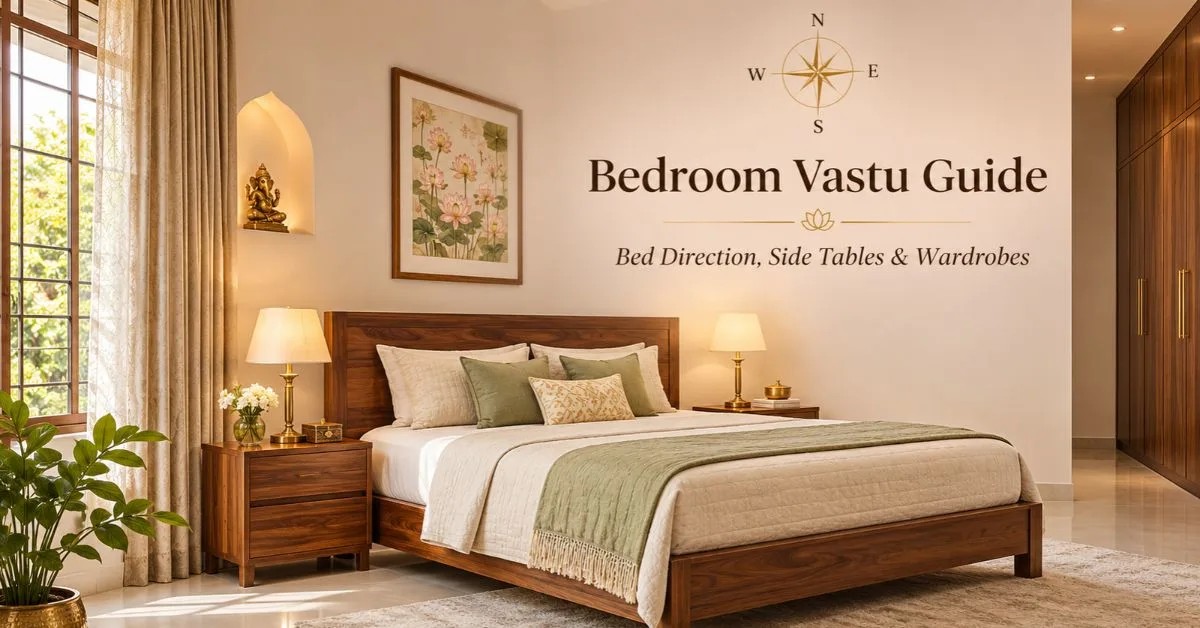
Bedroom Vastu: Bed Direction, Side Table and Wardrobe Placement for Indian Homes
According to traditional Vastu Shastra, the southwest direction is generally preferred for the master bedroom, while the bed should be positioned so that your head points towards the south or east while sleeping. Heavy furniture, such as wardrobes and cupboards, is traditionally placed along the south or west walls. Bedside tables should be positioned next to the bed without restricting movement, while mirrors should ideally avoid directly reflecting the sleeping area. In modern Indian homes, combining bedroom Vastu principles with practical furniture placement, natural lighting, ventilation and sufficient walking space can help create a comfortable, functional and organised bedroom.
Last updated: 27 Nov 2026
Your bedroom is more than just a place to sleep. It is a personal retreat where you relax, recharge and spend time away from everyday responsibilities. From choosing the right bed direction to selecting wooden bedside tables and positioning wardrobes, every furniture decision influences how comfortably you use the space.
This comprehensive bedroom Vastu guide explains traditional directional preferences, furniture placement, bedroom layouts, suitable materials and practical solutions for modern Indian apartments and independent houses.
Note: Vastu Shastra is a traditional Indian architectural belief system. Its directional recommendations should not be considered scientifically established methods of improving health, wealth, sleep or relationships.
What Is Bedroom Vastu and Why Is It Important in Indian Homes?
Bedroom Vastu refers to the application of traditional Vastu Shastra principles to bedroom orientation, furniture placement, sleeping direction, colours and interior arrangements.
Vastu Shastra considers the relationship between architectural spaces, cardinal directions and the five traditional elements of nature: earth, water, fire, air and space.
Understanding Vastu Shastra in Bedroom Design
Traditional bedroom Vastu focuses on several aspects of interior planning:
- Direction and location of the bedroom.
- Orientation of the bed and headboard.
- Placement of heavy furniture and wardrobes.
- Positioning of mirrors and dressing tables.
- Selection of bedroom colours and materials.
- Organisation of furniture and available space.
- Natural lighting and ventilation.
Many Indian homeowners follow these principles because of their cultural significance and personal preferences.
Bedroom Vastu in Modern Indian Homes
Modern apartments, particularly in cities such as Mumbai, Bengaluru, Delhi, Pune and Hyderabad, often have fixed bedroom layouts. Homeowners may not have complete control over bedroom directions, window positions or structural walls.
However, following selected Vastu preferences does not necessarily require major renovations. Rearranging your bed, choosing appropriately sized wooden side tables, repositioning storage furniture and maintaining clear walking paths can help create a more functional bedroom.
The ideal approach is to balance traditional preferences with practical interior design, furniture safety and everyday comfort.
Bedroom Vastu Direction Chart: Quick Reference Guide
The following bedroom Vastu chart summarises commonly followed traditional furniture placement recommendations alongside practical interior planning considerations.
| Bedroom Element | Traditionally Preferred Placement | Placement to Avoid Where Possible |
|---|---|---|
| Master Bedroom | Southwest | Northeast |
| Guest Bedroom | Northwest | Unsuitable or overcrowded layouts |
| Bed Sleeping Direction | Head towards south or east | Head towards north |
| Bed Headboard | South or east wall | Directly beneath a window |
| Wardrobe | South, west or southwest | Blocking windows and entrances |
| Bedside Table | Next to the bed | Obstructing walking space |
| Dressing Table | North or east, where suitable | Mirror directly reflecting the bed |
| Heavy Storage Furniture | South or west | Blocking natural ventilation |
| Bedroom Seating | Available corner with clear access | Crowded circulation areas |
| Bedroom Centre | Open and uncluttered | Excessive furniture |
| Bedroom Colours | Neutral, soft and earthy shades | Visually overwhelming combinations |
These recommendations reflect commonly followed Vastu traditions. Specific interpretations may differ between practitioners and regional traditions.
Which Direction Is Best for a Bedroom as per Vastu?
According to traditional Vastu Shastra, the southwest corner of the house is generally considered the preferred location for the master bedroom. Other directions may be suitable depending on the purpose of the bedroom, its occupants and the overall house layout.
Southwest Bedroom Vastu for Homeowners
The southwest direction is traditionally associated with stability and permanence, making it a commonly recommended location for the master bedroom.
For a southwest bedroom, consider:
- Positioning the headboard along the south or east wall.
- Installing wardrobes along suitable south or west walls.
- Choosing comfortable wooden bedroom furniture.
- Maintaining an uncluttered central area.
- Using warm, neutral interior colours.
A southwest bedroom can accommodate a coordinated furniture arrangement featuring a wooden bed, bedside tables, wardrobe and additional seating, depending on available space.
Northwest Bedroom Vastu for Guest Rooms
The northwest direction is commonly recommended for guest bedrooms in traditional Vastu planning.
Guest bedrooms should focus on functionality and flexibility. A comfortable bed, compact bedside table, accessible storage and adequate lighting can make the room suitable for different visitors.
East-Facing Bedrooms for Children
East-facing bedrooms may be preferred for children because of traditional directional beliefs and access to morning sunlight, where window orientation permits.
When designing a children's bedroom, prioritise stable furniture, sufficient study lighting, accessible storage and clear space for movement.
Can a Bedroom Be in the Northeast or Southeast?
Traditional Vastu practitioners generally discourage northeast and southeast locations for master bedrooms. However, many modern Indian apartments have bedrooms in these directions due to architectural and space limitations.
Homeowners can focus on suitable furniture placement, comfortable sleeping arrangements and practical improvements instead of undertaking expensive structural modifications solely for Vastu reasons.
Best Bed Direction as per Vastu Shastra
The best bed direction according to commonly followed Vastu principles is to sleep with your head towards the south or east. When arranging your bedroom, remember that sleeping direction refers to the direction in which your head points while lying on the bed.
Sleeping with Your Head Towards the South
South is one of the most commonly recommended sleeping directions in traditional Vastu Shastra.
To follow this arrangement, position the headboard against the south wall so your feet point towards the north.
This arrangement is often preferred for master bedrooms and can be incorporated into both traditional and contemporary Indian bedroom interiors.
Sleeping with Your Head Towards the East
East is another widely accepted sleeping direction according to Vastu.
Position the headboard along the east wall, allowing your feet to point towards the west. This is a practical alternative when the south wall contains windows, entrances or built-in furniture.
Sleeping with Your Head Towards the West
Recommendations regarding westward sleeping vary among Vastu practitioners. Some consider it acceptable, while others prefer south or east.
If your bedroom layout makes westward head placement more practical, consider whether changing the bed direction would negatively affect room accessibility, ventilation or furniture functionality.
Why Is Sleeping with Your Head Towards the North Discouraged in Vastu?
Traditional Vastu beliefs generally discourage sleeping with the head pointing north.
However, there is insufficient established scientific evidence to conclude that northward sleeping is inherently harmful. Claims connecting sleeping direction with magnetic fields, blood circulation or serious medical conditions should not be presented as proven facts.
Bed Direction Versus Sleeping Direction: What Is the Difference?
Sleeping direction refers to the direction in which your head points while lying on the bed. It does not refer to the direction you face while entering the bedroom or standing beside the bed.
| Sleeping Direction | Headboard Position | Feet Direction | Traditional Vastu Preference |
|---|---|---|---|
| South | South Wall | North | Highly preferred |
| East | East Wall | West | Preferred |
| West | West Wall | East | Interpretations vary |
| North | North Wall | South | Generally discouraged |
Before repositioning your bed, identify the cardinal directions using a compass or a reliable floor plan.
How to Position Your Bed According to Bedroom Vastu
Correct bed placement involves more than identifying the preferred sleeping direction. Your bed should also be positioned to allow comfortable movement, convenient access and functional furniture arrangements.
Place the Bed Against a Solid Wall
A solid wall behind the headboard provides a defined furniture arrangement and can make the bedroom feel visually organised.
A well-designed wooden headboard can also introduce natural texture, character and warmth into contemporary bedroom interiors.
Avoid positioning freestanding furniture where it may move unexpectedly or obstruct access to electrical outlets.
Avoid Placing the Bed Directly in Line with the Bedroom Door
Traditional Vastu recommendations generally discourage positioning the bed directly opposite the bedroom entrance.
From an interior design perspective, placing the bed away from the direct doorway can improve privacy and create a more comfortable visual arrangement.
Avoid Positioning the Bed Directly Under a Window
Whenever possible, position the bed against an uninterrupted wall rather than directly underneath a window.
This arrangement can make it easier to operate curtains, clean windows and maintain access to natural ventilation.
However, window-side bed placement can still work when the room layout requires it, provided the window remains accessible and the arrangement is safe.
Maintain Sufficient Space Around the Bed
Bedroom furniture should not restrict everyday movement. Consider the external dimensions of the bed frame rather than only the mattress dimensions.
| Bedroom Furniture Clearance | Suggested Planning Range |
|---|---|
| Walking Space Beside the Bed | 24–30 inches |
| Space at the Foot of the Bed | 30–36 inches |
| Clearance in Front of Hinged Wardrobes | 36–42 inches |
| Bedside Table Height | Approximately level with mattress top |
| Space Between Furniture Pieces | Based on comfortable access |
These measurements are practical planning suggestions rather than mandatory Vastu requirements or universal accessibility standards. Larger clearances may be necessary for people with mobility needs.
Side Table Placement as per Vastu: Complete Bedside Furniture Guide
A bedside table should ideally be placed next to the bed, where it provides convenient access to everyday essentials without obstructing walking space. Although traditional Vastu does not establish a universally accepted independent direction for bedside tables, their placement should complement the bed orientation and overall furniture layout.
Where Should a Side Table Be Placed in the Bedroom?
Position your bedside table close enough to reach comfortably while sitting or lying on the bed.
For a bed with its headboard towards the south, bedside tables will generally sit towards the eastern and western sides of the bed. For an east-facing headboard, the tables will generally occupy the northern and southern sides.
The ideal bedside table placement depends on:
- Available bedroom floor space.
- Bed and mattress height.
- Position of electrical sockets.
- Wardrobe and door clearance.
- Personal storage requirements.
- Accessibility from the bed.
Avoid selecting oversized side tables that make the bedroom difficult to navigate.
Should You Keep One or Two Bedside Tables?
Two bedside tables are often preferred for larger bedrooms because they create a symmetrical furniture arrangement and provide separate surfaces for both occupants.
However, a single bedside table is equally practical in compact bedrooms, guest rooms and studio apartments.
There is no universally established Vastu requirement that every bedroom must contain two bedside tables.
For smaller Indian homes, a compact wooden nightstand with a drawer or open shelf can provide storage without occupying unnecessary floor space.
Which Material Is Best for Bedroom Side Tables?
Solid wood is a popular choice for bedroom side tables because of its natural appearance, structural strength when properly constructed and compatibility with different interior styles.
| Side Table Material | Main Advantages | Suitable Interior |
|---|---|---|
| Solid Wood | Natural grain, durability and repairability | Traditional and contemporary bedrooms |
| Engineered Wood | Affordable and available in varied finishes | Budget-friendly interiors |
| Marble | Elegant appearance and distinctive surface patterns | Luxury bedrooms |
| Wood and Metal | Contrasting textures and modern styling | Industrial and contemporary homes |
| Wood and Epoxy Resin | Decorative patterns and distinctive craftsmanship | Designer bedrooms |
Material selection should depend on construction quality, maintenance requirements, budget and personal preferences rather than unsupported claims about spiritual energy.
Explore Woodensure's wooden side tables and end tables for natural wooden furniture designs suited to different interior arrangements.
Round vs Square Side Tables for Bedroom Vastu
The shape of your bedside table can influence how efficiently the furniture fits within your bedroom.
| Side Table Shape | Practical Benefit | Recommended Use |
|---|---|---|
| Round | No projecting corners | Compact bedrooms |
| Square | Efficient tabletop arrangement | Modern bedrooms |
| Rectangular | Additional surface and storage | Larger bedrooms |
| Organic or Curved | Sculptural appearance | Contemporary interiors |
| Floating | Preserves floor space | Small apartments |
| C-Shaped | Flexible positioning | Multipurpose bedrooms |
Round and curved bedside tables are especially useful where furniture is positioned close to walking paths.
Homeowners looking for distinctive contemporary furniture can consider Woodensure's organic curvature wooden side tables with sculptural pedestal bases. These asymmetrical furniture designs introduce natural wooden character and visual interest into bedroom interiors.
What Is the Ideal Bedside Table Height and Size?
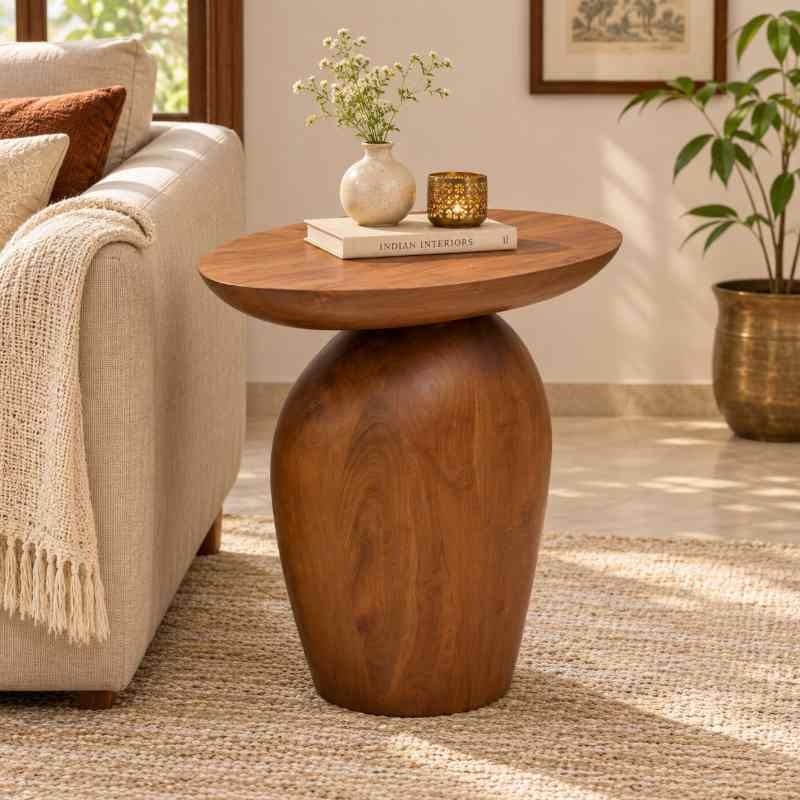
The ideal bedside table height is approximately level with the top of the mattress. This makes it easier to reach a lamp, phone, book or glass of water without uncomfortable stretching.
| Side Table Dimension | Suggested Measurement |
|---|---|
| Height | Approximately equal to mattress height |
| Typical Width | 12–24 inches |
| Typical Depth | 12–18 inches |
| Compact Bedroom Width | 12–16 inches |
| Larger Bedside Table Width | 18–24 inches |
| Storage | Drawers or open shelves as required |
Always measure the available space before purchasing bedroom furniture. These dimensions are general furniture planning suggestions.
A customised wooden side table may be suitable when standard furniture dimensions do not match your room layout.
What Should You Keep on Your Bedside Table?
A bedside table should provide convenient storage without becoming overcrowded.
Suitable bedside essentials include:
- A reading lamp.
- A water bottle or glass.
- A current book.
- An alarm clock.
- A coaster.
- Small decorative accessories.
- Everyday personal essentials.
Choose nightstands with drawers if you prefer keeping charging cables, personal belongings and other accessories out of sight.
A practical and uncluttered bedside arrangement makes daily use and cleaning easier.
Wardrobe Placement as per Vastu Shastra
According to commonly followed Vastu Shastra recommendations, wardrobes and heavy cupboards are ideally positioned along the south, west or southwest areas of the bedroom. In modern homes, wardrobe placement should also account for door clearance, ventilation, accessibility and available storage space.
Which Direction Is Best for a Wardrobe as per Vastu?
| Wardrobe Location | Traditional Preference |
|---|---|
| South Wall | Commonly preferred |
| West Wall | Commonly preferred |
| Southwest Area | Frequently recommended for heavy storage |
| North Wall | May be used if the layout requires it |
| East Wall | May be used without obstructing openings |
| Northeast Area | Traditionally less preferred for heavy storage |
South and west walls are commonly recommended for heavy bedroom storage in traditional Vastu-oriented interior planning.
Which Direction Should Wardrobe Doors Open?
Some Vastu practitioners recommend arranging wardrobes so their front faces north or east.
For example, a wardrobe installed against the south wall may have its front facing north, while one installed against the west wall may face east.
However, the actual door arrangement should allow easy access to clothing and belongings.
Ensure that wardrobe doors do not collide with your bed, bedside tables or bedroom entrance.
Is a Mirrored Wardrobe Suitable for a Bedroom?
Mirrored wardrobes are popular in modern Indian apartments because they combine clothing storage with dressing functionality.
Traditional Vastu recommendations generally discourage mirrors that directly reflect the bed.
If your mirrored wardrobe faces the sleeping area, you can consider an internal wardrobe mirror, repositioning the wardrobe or using a suitable removable covering.
These adjustments are optional for homeowners wishing to follow traditional preferences.
Wooden Wardrobe vs Metal Wardrobe
Wooden and metal wardrobes each offer different advantages.
| Feature | Wooden Wardrobe | Metal Wardrobe |
|---|---|---|
| Appearance | Warm and natural | Simple and functional |
| Customisation | Extensive design possibilities | Depends on construction |
| Maintenance | Requires appropriate moisture protection | Requires corrosion protection where applicable |
| Durability | Depends on material and joinery | Depends on metal quality and finish |
| Interior Compatibility | Traditional and contemporary | Utility and industrial interiors |
Select a wardrobe based on material quality, storage requirements, local humidity and the overall bedroom design.
Sliding Wardrobe vs Hinged Wardrobe for Small Bedrooms
Sliding wardrobes are generally useful in compact Indian bedrooms because their doors do not require outward opening space.
Hinged wardrobes can provide wider access to individual storage compartments but require sufficient clearance in front of the furniture.
| Feature | Sliding Wardrobe | Hinged Wardrobe |
|---|---|---|
| Door Opening Space | Minimal | Additional space required |
| Small Bedroom Suitability | Usually good | Depends on layout |
| Access | Partial sections at a time | Full individual compartments |
| Maintenance | Sliding tracks require cleaning | Hinges may require adjustment |
| Design | Contemporary | Traditional or contemporary |
Regardless of the wardrobe style, tall freestanding units should be secured according to the manufacturer's instructions to reduce tipping risks.
Dressing Table and Mirror Placement as per Bedroom Vastu
Traditional Vastu principles commonly recommend placing bedroom mirrors towards the north or east, although specific dressing table recommendations vary across practitioners.
Best Direction for Dressing Table Placement
Choose a location with sufficient lighting and comfortable access. A dressing table near a source of indirect natural light can be useful for grooming and daily routines.
Avoid positioning the furniture where it obstructs wardrobe doors, windows or movement around the bed.
Can a Mirror Face the Bed?
According to commonly followed bedroom Vastu traditions, mirrors should ideally not directly reflect the bed.
There is no established scientific evidence that a mirror facing the bed causes relationship problems or other misfortune. Nevertheless, some homeowners prefer positioning mirrors away from the sleeping area for cultural reasons, privacy or reduced nighttime reflections.
What If Your Wardrobe Mirror Already Faces the Bed?
You do not necessarily need to replace the entire wardrobe.
Consider the following alternatives:
- Relocate the mirror to another suitable wall.
- Use an internal wardrobe mirror.
- Change the bed position where practical.
- Install a suitable removable mirror covering.
Choose the solution that works best for your room layout and personal preferences.
Bedroom Vastu Layout Ideas for Different Indian Bedroom Sizes
The best bedroom furniture layout depends on room dimensions, door positions, window locations and furniture measurements. Following Vastu preferences becomes easier when furniture is selected according to the available floor area.
The following examples are conceptual planning suggestions for common Indian bedroom sizes.
Bedroom Vastu for a 10 × 10 ft Room
A 100-square-foot bedroom requires careful furniture selection to prevent overcrowding.
Recommended furniture arrangement:
- Compact double bed with a south- or east-facing headboard where feasible.
- One narrow bedside table.
- Space-saving sliding wardrobe.
- Wall-mounted shelves where required.
- Minimal freestanding decorative furniture.
Avoid oversized bed frames, bulky nightstands and large dressing tables.
Bedroom Vastu for a 10 × 12 ft Room
A 120-square-foot bedroom provides additional flexibility for furniture placement.
A queen-size bed, compact bedside tables and a well-positioned wardrobe can create an organised layout.
Position the bed along the preferred wall and place storage furniture where it does not obstruct windows or bedroom entrances.
Consider bedside tables with integrated drawers to reduce the need for additional storage furniture.
Bedroom Vastu for a 12 × 14 ft Room
A 168-square-foot bedroom can accommodate larger furniture, depending on the location of doors and windows.
This room size may accommodate a king-size bed, two wooden bedside tables, wardrobe and compact dressing area.
A bedroom bench or accent chair can also be included if sufficient circulation space remains available.
Bedroom Vastu Furniture Layout Comparison
| Bedroom Size | Suggested Bed | Side Tables | Storage |
|---|---|---|---|
| 10 × 10 ft | Compact Double | One slim table | Sliding wardrobe |
| 10 × 12 ft | Double or Queen | One or two compact tables | Compact wardrobe |
| 12 × 14 ft | Queen or King | Two tables | Larger wardrobe |
| 14 × 16 ft and Above | King | Two larger tables | Wardrobe and additional storage |
| Studio Apartment | Compact bed or sofa cum bed | Multipurpose side table | Space-saving storage |
These are indicative furniture combinations, not measured architectural plans. Actual furniture fit must be checked against external bed frame dimensions, wardrobe depth and room clearances.
Bedroom Vastu for Large Master Bedrooms
Large master bedrooms offer greater flexibility for incorporating traditional Vastu preferences and contemporary furniture arrangements.
In addition to a comfortable bed and matching bedside tables, homeowners may consider a wooden bedroom bench, accent chair, reading corner, dressing table or additional storage.
Place these furniture pieces where they complement the overall layout without restricting access to the bed, windows or wardrobes.
Bedroom Vastu for Studio Apartments and Small Flats
Studio apartments often combine sleeping, seating and working areas within the same room.
Multifunctional furniture such as convertible sofa cum beds, compact wooden side tables, wall-mounted shelving and flexible storage units can help maximise available space.
Where strict directional placement is impractical, prioritise safe furniture arrangements, comfortable sleeping conditions and unrestricted movement.
Bedroom Vastu for Married Couples, Children, Guests and Senior Citizens

Different household members have different furniture requirements. A well-planned bedroom should accommodate these needs rather than applying the same arrangement to every room.
Master Bedroom Vastu for Married Couples
Traditional Vastu generally favours a southwest master bedroom with a south- or east-oriented headboard.
For couples, matching bedside tables, accessible personal storage and sufficient walking space on both sides of the bed can create a functional shared arrangement.
Soft lighting, coordinated furniture finishes and comfortable bedding can contribute to an inviting bedroom atmosphere.
Bedroom Vastu for Children
A children's bedroom should balance sleeping, studying, storage and recreational activities.
Select stable furniture with rounded or protected corners, accessible storage and appropriate study lighting.
Avoid unsecured tall furniture, exposed electrical cables and heavy shelves installed above sleeping areas.
Guest Bedroom Vastu
Guest bedrooms benefit from flexible furniture arrangements that accommodate different visitors.
A comfortable bed, accessible bedside table, reading lamp and sufficient clothing storage are usually more important than adding excessive decorative furniture.
Convertible furniture may be useful when the guest bedroom also functions as a home office.
Bedroom Vastu for Senior Citizens
Senior citizens require bedroom furniture that supports safe and comfortable everyday movement.
Prioritise appropriate bed height, accessible bedside tables, clear walking paths, secure furniture, non-slip surfaces and convenient night lighting.
Directional Vastu preferences should never take priority over mobility, accessibility or safety requirements.
Best Bedroom Colours, Furniture Materials and Lighting as per Vastu
Bedroom colours, furniture finishes and lighting influence the visual atmosphere and usability of the room. Traditional Vastu-inspired interiors often incorporate soft colours and natural-looking materials.
Which Colours Are Best for a Bedroom as per Vastu?
| Bedroom Colour | Colour Reference | Interior Design Benefit |
|---|---|---|
| Warm Beige | #DCCBB3 | Creates a welcoming neutral background |
| Ivory White | #F4EFE2 | Supports a light and spacious appearance |
| Sage Green | #A9B59D | Complements natural wood furniture |
| Soft Blue | #BCCDD9 | Creates a visually understated atmosphere |
| Earthy Brown | #A88B71 | Adds warmth and natural character |
| Muted Pink | #DFC4BE | Introduces a soft decorative accent |

Dark colours are not inherently unsuitable. They can work effectively when balanced with appropriate lighting, room dimensions and lighter furniture or fabrics.
Is Solid Wood Furniture Suitable for Vastu-Inspired Bedrooms?
Solid wood furniture complements many Vastu-inspired interiors because of its natural grain, warm appearance and timeless design possibilities.
Well-crafted wooden bedside tables, headboards, accent tables and storage furniture can suit traditional, minimalist and contemporary Indian bedrooms.
Unlike furniture selected solely for appearance, solid wood products should also be evaluated for joinery, finishing quality, stability and maintenance requirements.
Protect wooden furniture from prolonged moisture exposure, excessive direct sunlight and hot objects.
Bedroom Lighting and Natural Ventilation
A functional bedroom should offer appropriate lighting throughout the day and night.
Use natural daylight where available, warm bedside lighting for evening activities and curtains or blinds to manage excessive brightness.
Keep windows and ventilation openings accessible. Avoid placing large wardrobes where they block airflow or prevent windows from opening.
For sleeping, reducing noise and unwanted light and maintaining a comfortable temperature are better-supported recommendations than relying on directional changes alone.
Common Bedroom Vastu Mistakes and How to Correct Them
Many bedroom arrangement concerns can be addressed through simple furniture adjustments rather than expensive renovation.
| Common Bedroom Concern | Practical Solution |
|---|---|
| Bed headboard pointing north | Consider repositioning towards south or east |
| Mirror directly reflecting the bed | Reposition the mirror or use an internal wardrobe mirror |
| Oversized bedside tables | Choose narrower or customised designs |
| Wardrobe blocking a window | Rearrange furniture to preserve ventilation |
| Bed directly opposite the entrance | Adjust placement where possible |
| Crowded bedroom centre | Remove unnecessary furniture |
| Sharp projecting furniture corners | Consider rounded or curved designs |
| Insufficient wardrobe clearance | Consider sliding doors or furniture repositioning |
| Poor bedside lighting | Add an accessible reading lamp |
| Disorganised under-bed storage | Use organised storage and maintain cleanliness |
| Excessive furniture in small rooms | Select multifunctional furniture |
| Unsecured tall wardrobe | Secure according to installation instructions |
The objective should be to create a bedroom that reflects your personal preferences while remaining safe, organised and comfortable.
How to Improve Bedroom Vastu Without Structural Changes
You can incorporate several traditional bedroom Vastu preferences without demolishing walls, relocating doors or making major architectural modifications.
Rearrange Your Existing Bedroom Furniture
Identify the preferred headboard direction and determine whether repositioning the bed is possible without restricting access.
Move bedside tables and smaller furniture pieces accordingly.
Replace Oversized Furniture with Compact Designs
Large furniture can make small Indian bedrooms feel crowded.
Compact wooden nightstands, slim bedside tables and multifunctional furniture can improve available floor space while maintaining everyday functionality.
Choose Customised Wooden Furniture
Standard furniture dimensions may not suit bedrooms with unusual wall lengths, fixed wardrobes or awkward corners.
Customised furniture allows homeowners to explore suitable dimensions, finishes and design configurations for their specific bedroom requirements.
Improve Organisation, Lighting and Ventilation
Remove unnecessary objects, maintain clear walking paths and ensure that furniture does not block windows or doors.
These practical improvements can make the bedroom easier to use regardless of its cardinal orientation.
What If Your Bedroom Cannot Follow Every Vastu Rule?
It is not necessary to undertake costly structural changes simply because your existing bedroom does not match every traditional recommendation.
Choose adjustments that are compatible with your budget, available space, family requirements and personal beliefs.
A safe and functional bedroom should always remain the primary objective.
How to Choose the Right Bedroom Furniture for a Vastu-Inspired Home
Furniture plays a central role in creating a bedroom that combines traditional preferences with modern interior design.
Before buying bedroom furniture online, evaluate the following factors.
Measure Your Available Bedroom Space
Measure the room's length and width, including the locations of windows, doors, electrical outlets and existing wardrobes.
Check the space required for furniture installation and delivery as well as its final placement.
Select Appropriate Furniture Dimensions
Choose bedroom furniture that complements the scale of your room.
A compact side table may be more suitable for a 10 × 10 ft bedroom, while a larger master bedroom may accommodate two nightstands, additional seating and decorative accent furniture.
Choose Durable and Functional Materials
Consider construction quality, stability, surface finish, cleaning requirements and expected usage.
Solid wood furniture offers a distinctive natural appearance, while marble, epoxy resin and metal combinations can introduce contemporary design elements.
Consider Customised Bedroom Furniture
Custom furniture can help address specific requirements such as narrow bedside spaces, unusual bed heights and non-standard room dimensions.
Depending on the product and available customisation options, homeowners can explore furniture dimensions, materials and finishes that complement their bedroom interiors.
Balance Functionality with Interior Aesthetics
A coordinated bedroom does not require every furniture piece to have the same design.
Natural wood furniture can be combined with upholstered beds, neutral wardrobes, textured fabrics and understated decorative accessories.
At Woodensure, you can explore bedroom furniture and wooden side table designs that complement different Indian home interiors.
From minimalist nightstands to sculptural wooden accent tables and handcrafted solid wood designs, selecting suitable furniture can help create a bedroom that is both functional and visually appealing.
Explore the Woodensure Bedroom Furniture Collection or browse our Wooden Side Tables and End Tables.
Bedroom Vastu Checklist Before Buying or Arranging Furniture
Use this checklist before purchasing bedroom furniture or rearranging your existing bedroom layout.
- ☐ Identify the cardinal directions of your bedroom.
- ☐ Check whether the sleeper's head can point south or east.
- ☐ Measure the complete bedroom floor area.
- ☐ Check external bed frame dimensions.
- ☐ Choose bedside tables that match mattress height.
- ☐ Maintain comfortable walking space around the bed.
- ☐ Check wardrobe door-opening clearance.
- ☐ Avoid obstructing doors and windows.
- ☐ Check whether mirrors directly reflect the bed.
- ☐ Select furniture materials suitable for your requirements.
- ☐ Provide accessible bedside lighting.
- ☐ Secure tall freestanding furniture appropriately.
- ☐ Maintain an organised bedroom layout.
- ☐ Prioritise safety, accessibility and comfort.
Conclusion: Create a Balanced and Functional Bedroom with the Right Furniture
Bedroom Vastu provides a traditional framework for arranging beds, wardrobes, side tables and other bedroom furniture. South- or east-oriented headboards, suitable storage placement and uncluttered furniture arrangements are commonly preferred principles.
However, the most effective bedroom design also considers room dimensions, furniture quality, accessibility, lighting and everyday comfort.
Whether you are furnishing a compact Indian apartment or designing a spacious master bedroom, carefully selected furniture can help create an organised and welcoming personal space.
Discover Woodensure's collection of handcrafted wooden side tables, contemporary accent furniture and bedroom essentials to create a space that reflects your lifestyle, design preferences and functional requirements.
Explore Premium Bedroom Furniture at Woodensure
About Woodensure
Woodensure specialises in handcrafted wooden furniture, custom solid wood designs, epoxy resin furniture and contemporary furniture solutions for Indian homes and commercial interiors. The brand focuses on combining natural materials, functional design and distinctive craftsmanship to create furniture suitable for different interior requirements.