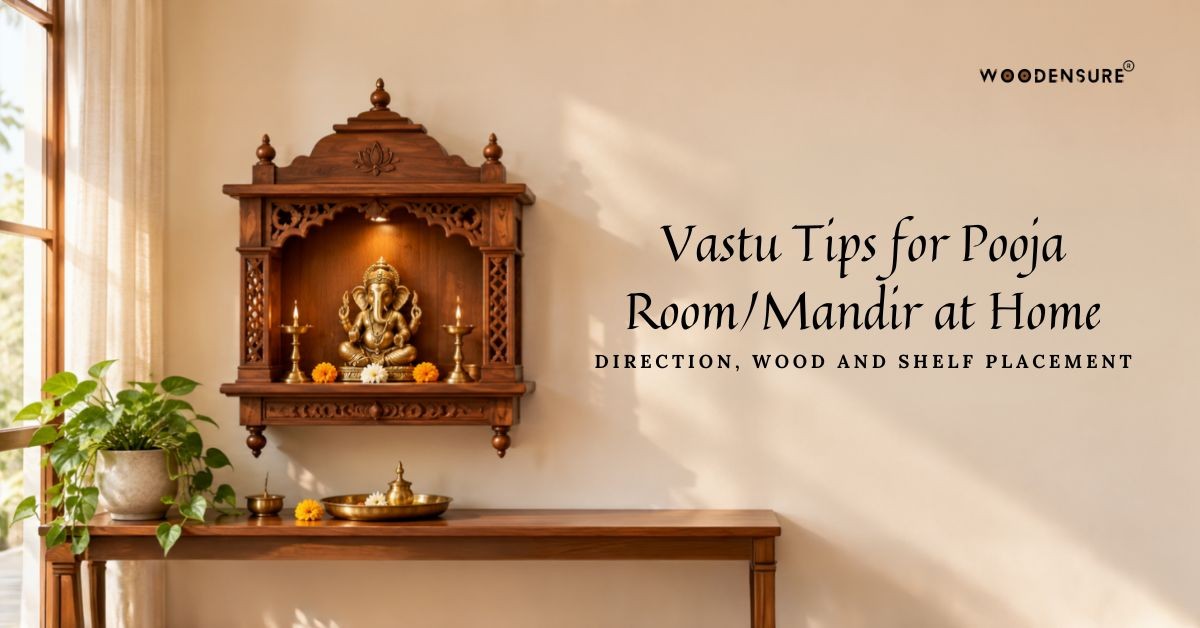
Vastu Tips for Pooja Room / Mandir at Home — Direction, Wood and Shelf Placement
According to commonly followed Vastu Shastra principles, the northeast (Ishan Kon) is considered the best direction for a pooja room or home mandir. East and north are popular alternatives. A wooden mandir or securely installed pooja shelf can also create a dedicated prayer space in small Indian apartments without a separate pooja room.
Last Updated: 26 October 2026
A pooja room is one of the most meaningful spaces in an Indian home. It is where families begin their mornings with prayers, celebrate festivals and find a moment of peace during everyday life.
Whether you live in a spacious independent house or a compact 1BHK apartment, planning a home mandir involves several decisions. Which direction should the mandir face? Which wood is best for a pooja mandir? How high should a wooden pooja shelf be installed?
Traditional Vastu guidance can help inform these choices, while practical considerations such as available space, wood quality, ventilation and safety are equally important.
This guide covers essential pooja room Vastu tips, mandir directions, idol placement, suitable wood, floating shelf arrangements and easy solutions for modern Indian homes.
Best Direction for Pooja Room and Mandir at Home as per Vastu
The northeast direction, traditionally called Ishan Kon, is widely preferred for pooja rooms in Vastu Shastra. East and north are also commonly recommended when northeast placement is not possible.
However, recommendations differ between Vastu traditions. Homeowners should also consider their family's religious practices and the actual layout of their home.
Northeast Direction — Traditionally Most Preferred
In many Vastu traditions, northeast is associated with spiritual activities and worship.
If your home has an available northeast corner, you can consider placing a wooden mandir, pooja cabinet or compact wall-mounted shelf there.
Choose a location that offers comfortable prayer access, adequate lighting and enough space to keep the area organised.
East Direction — A Common Alternative
East is another frequently recommended direction for home mandirs.
A prayer area on the eastern side of a room may also benefit from morning daylight, depending on windows and surrounding buildings.
North Direction — Suitable for Compact Homes
North is commonly mentioned as another possible direction for a pooja room.
For small homes, a wooden mandir shelf on a suitable north-side wall can help create a separate worship corner without taking up valuable floor space.
Pooja Room Direction Comparison
| Direction | Traditional Vastu Guidance | Practical Consideration |
|---|---|---|
| Northeast | Most commonly preferred | Suitable for a peaceful prayer corner |
| East | Frequently recommended | Natural lighting may be beneficial |
| North | Commonly accepted alternative | Can accommodate compact mandir shelves |
| West | Recommendations vary | Consider family customs and room layout |
| South/Southwest | Often discouraged in popular Vastu guidance | Review alternative locations where possible |
Remember: Vastu is a traditional architectural belief system. Claims that a particular direction guarantees prosperity, health or good fortune are not scientifically established.
Idol Placement as per Vastu — Which Direction Should God Face?
One common question about mandir direction as per Vastu is whether the deity should face east, west, north or south.
Many traditional guides discuss east-facing worship, but recommendations for specific deity orientations differ.
It is important to distinguish the direction the idol faces from the direction the devotee faces.
For example, if an idol faces west, a person standing directly in front of it faces east. Similarly, an east-facing idol is viewed by a west-facing devotee.
Ideal Idol Height and Position
A home mandir should allow comfortable viewing and access during worship.
For seated prayers, a lower shelf or cabinet may be convenient. For standing prayers, a raised shelf may provide a more comfortable sightline.
Rather than following a universal height rule, consider the age, height and mobility of family members.
How to Arrange Multiple Idols
When arranging idols and religious photographs:
- Keep the principal deity in a clearly visible position.
- Leave enough space between idols for cleaning and worship.
- Avoid overcrowding the shelf with unnecessary decorations.
- Place heavy stone or metal idols on adequately supported surfaces.
- Follow household customs for specific deities and arrangements.
For a small wooden mandir, a simple arrangement is often easier to maintain than a crowded display.
Which Wood Is Best for a Home Mandir as per Vastu?
Sheesham, teak, acacia and mango wood are practical options for wooden mandirs and pooja shelves. The best choice depends on the desired appearance, construction quality, durability, finish and available budget.
Traditional wooden furniture is popular in Indian prayer spaces because natural grain and handcrafted designs complement both classic and contemporary interiors.
Sheesham Wood Mandir
Sheesham, also called Indian rosewood, is known for its distinctive grain patterns and rich appearance.
It is a suitable material for traditional wooden mandir cabinets, decorative shelves and other solid wood furniture.
Proper seasoning and finishing are important for long-term performance.
Teak Wood Mandir
Teak is widely valued for its durability, natural oils and attractive golden-brown appearance.
It is commonly considered a premium furniture material and can be used for traditional mandir cabinets or wooden prayer units.
Acacia Wood Mandir Shelves
Acacia wood offers attractive natural grain and varied warm tones.
It can suit modern wooden pooja shelves and contemporary interiors, provided the furniture is properly constructed and finished.
A live-edge acacia shelf may appeal to homeowners looking for a natural, minimalist mandir arrangement.
Mango Wood Mandir
Mango wood is another option for decorative wooden mandirs.
Its varied grain patterns and colours make it suitable for compact cabinets and modern shelving designs.
Wooden Mandir Material Comparison
| Wood Type | Main Advantage | Best Suited For |
|---|---|---|
| Sheesham | Distinctive grain and sturdy construction | Traditional mandir cabinets |
| Teak | Durability and premium appearance | Long-lasting wooden mandirs |
| Acacia | Attractive natural grain | Modern floating pooja shelves |
| Mango | Varied colours and patterns | Compact mandirs and decorative shelves |
No particular species should be considered universally required by Vastu without consulting a relevant traditional authority.
When selecting a wooden mandir for home, examine the timber quality, joints, finishing and construction rather than choosing solely by wood species.
Also read: Wall Art Vastu Tips for Home
Floating Wooden Pooja Shelf Placement — Height, Width and Depth
A floating wooden shelf can be a space-saving alternative to a large mandir cabinet, especially in compact Indian apartments.
It can hold suitable framed deity images, small idols and lightweight decorative accessories while keeping the floor clear.
However, shelf capacity and secure installation matter more than appearance.
Can You Use Floating Wooden Shelves for a Mandir?
Yes. A properly installed wooden floating shelf can form part of a home prayer corner.
Choose a shelf with sufficient depth and verified support for the items you intend to display.
Solid wood floating wall shelves from Woodensure offer natural wood designs that can complement different Indian interiors. Check each product's dimensions, mounting requirements and supported weight before selecting it for a prayer arrangement.
What Is the Ideal Height for a Pooja Shelf?
There is no single universally suitable height for a wooden pooja shelf.
For standing prayer, position the idols at a height that allows comfortable viewing and access.
For seated worship, a lower arrangement may be more practical.
Always consider children, elderly family members and anyone who needs to reach the shelf regularly.
How Deep Should a Wooden Mandir Shelf Be?
Shelf depth should be decided according to idol dimensions and accessories.
For example, a shelf approximately 10–12 inches deep may accommodate some small photographs or lightweight objects, but it may not provide enough support or clearance for larger idols.
Measure the actual base of each item and leave adequate distance from the front edge.
Three-Level Wooden Pooja Shelf Arrangement
For a compact home mandir, consider arranging three separate shelves:
- Upper shelf: A principal lightweight idol or framed deity image.
- Middle shelf: Additional lightweight religious photographs and decorative flowers.
- Lower shelf: Unlit pooja accessories, packaged offerings and lightweight storage items.
Shelves should be positioned so each remains accessible and within its verified weight capacity.
Burning diyas and incense should not be placed directly on wooden shelves or trays. Use an appropriate stable, non-combustible surface away from flammable furniture and materials.
This arrangement can create an organised prayer corner while using vertical wall space.
Wooden Trays and Pooja Thali Arrangement for a Home Mandir
A wooden tray can be a useful accessory for organising small pooja essentials.
Instead of scattering flower petals, kumkum containers, unopened incense packets and decorative items across multiple shelves, a tray can keep suitable accessories together.
How to Organise Pooja Essentials
Choose a wooden tray large enough to accommodate your required unlit accessories without overcrowding.
Consider keeping decorative flowers, kumkum containers, packaged offerings and other lightweight items in separate sections.
This also makes cleaning and rearranging easier.
Choosing the Right Wooden Tray
Look for a stable base, smooth finish, adequate dimensions and an easy-to-clean surface.
Woodensure offers a collection of wooden serving trays that can be considered for suitable decorative organisation.
These are general serving and home-decor products; their suitability for a particular pooja arrangement depends on the item and intended use.
Safety tip: Never place a burning diya or hot incense directly on a wooden tray. Use suitable non-combustible holders on a properly protected surface, away from combustible materials.
Pooja Room Vastu for Small Apartments, 1BHK and 2BHK Flats
A separate pooja room may not be practical in a small apartment, but homeowners can still create a dedicated worship corner with suitable furniture.
A compact wooden mandir, floating shelf or small pooja cabinet can provide a convenient space for daily prayers.
Mandir Placement in the Living Room
For many Indian apartments, the living room is the most practical location.
Choose a peaceful corner that does not interfere with movement, seating arrangements or door access.
Where possible, consider the northeast area in line with common Vastu preferences.
A wall-mounted wooden mandir can help preserve floor space.
Can You Keep a Mandir in the Bedroom?
Some Vastu traditions discourage bedroom mandirs, while household practices and available alternatives differ.
If there is no other suitable location, consider a dedicated, clean and accessible prayer corner that respects your family's customs.
Avoid placing lit lamps or incense near bedding, wardrobes and curtains.
Can You Place a Mandir in the Kitchen?
Some families maintain a small prayer space in the kitchen.
If you choose this arrangement, keep wooden shelves away from cooking flames, grease, water splashes, steam and excessive heat.
Practical Mandir Ideas for Small Flats
For a studio or 1BHK, a compact wall-mounted shelf or narrow cabinet may be suitable.
For a 2BHK with additional living-room space, consider a larger wall-mounted unit or dedicated wooden pooja cabinet.
Select the design based on actual room measurements rather than assuming that every apartment needs the same furniture arrangement.
Wall-Mounted Wooden Mandir vs Traditional Pooja Cabinet
A wall-mounted mandir usually works well in compact homes, while a traditional pooja cabinet is better suited to arrangements requiring more storage or floor-supported furniture.
| Feature | Wall-Mounted Mandir | Traditional Pooja Cabinet |
|---|---|---|
| Floor space | Saves floor area | Requires floor space |
| Storage | Usually limited | Often offers drawers or cabinets |
| Installation | Needs suitable wall fixings | Needs stable floor positioning |
| Relocation | Requires removal and refitting | Usually easier to reposition |
| Suitable for | Compact prayer corners | Larger worship arrangements |
For homeowners with limited space, a small wooden floating shelf may provide enough room for a simple display.
For heavy idols, multiple accessories or larger prayer arrangements, a properly designed cabinet may be more suitable.
Vastu Colours, Lighting and Storage for a Pooja Room
Traditional Vastu-inspired interiors often use light colours and uncluttered arrangements to create a calm worship space.
Best Colours for Pooja Room Walls
White, cream, ivory and pale yellow are commonly recommended shades.
These colours pair naturally with wooden mandir shelves and cabinets, helping create a warm and balanced interior.
Lighting for a Home Mandir
Natural daylight and suitable artificial lighting can improve visibility and comfort.
Warm electric lighting may create a peaceful atmosphere, particularly in a small living-room prayer corner.
If your family uses traditional lamps, maintain appropriate fire-safe separation from wooden furniture, electrical cables and decorative fabrics.
Pooja Room Storage
Dedicated drawers, trays or shelves can help organise prayer books, flowers and other essentials.
Keep the space clean and avoid allowing moisture or clutter to accumulate.
Common Pooja Room Vastu and Setup Mistakes to Avoid
While planning a home mandir, homeowners often focus on compass direction but overlook practical installation details.
Common mistakes include:
- Confusing idol-facing direction with the direction of worship.
- Choosing a location that makes daily prayer uncomfortable.
- Installing floating shelves without checking wall strength.
- Overloading shelves with heavy stone or metal idols.
- Placing burning lamps or incense too close to wooden surfaces.
- Ignoring moisture, ventilation and accessibility.
- Selecting a wooden mandir without measuring the available space.
A thoughtful prayer area should respect household beliefs while remaining functional, accessible and safe.
How to Clean and Maintain Solid Wood Pooja Shelves
Proper care can help maintain the appearance and usability of wooden mandirs.
Everyday Cleaning
Use a soft, dry cloth to remove dust and loose flower residue.
Clean spilled water or other liquids promptly, following instructions suitable for the furniture's finish.
Avoid harsh cleaning agents and excessive moisture.
Protecting Wooden Surfaces
Keep wood away from prolonged direct heat, standing water and burning incense.
Avoid placing hot metal objects directly on wooden surfaces.
Maintaining Wall-Mounted Shelves
Periodically inspect shelves for visible movement, loose brackets or damaged fittings.
If a shelf appears unstable, remove the load and have the installation professionally assessed before further use.
Conclusion — Create a Peaceful Pooja Corner with Woodensure
Creating a home mandir involves balancing traditional pooja room Vastu tips with practical furniture decisions.
Whether you prefer a northeast prayer corner, wooden floating shelves or a traditional pooja cabinet, focus on suitable materials, comfortable placement and safe installation.
Explore Woodensure's handcrafted wooden wall shelves, wooden trays and custom furniture options to plan a beautiful, organised prayer space suited to your home.
About the Author — Woodensure Team
The Woodensure Team shares practical insights on solid wood furniture, handcrafted designs, home décor and furniture care. Drawing on Woodensure's furniture-making experience in Udaipur, India, the team helps homeowners choose durable, functional and beautifully designed wooden furniture for modern Indian homes.