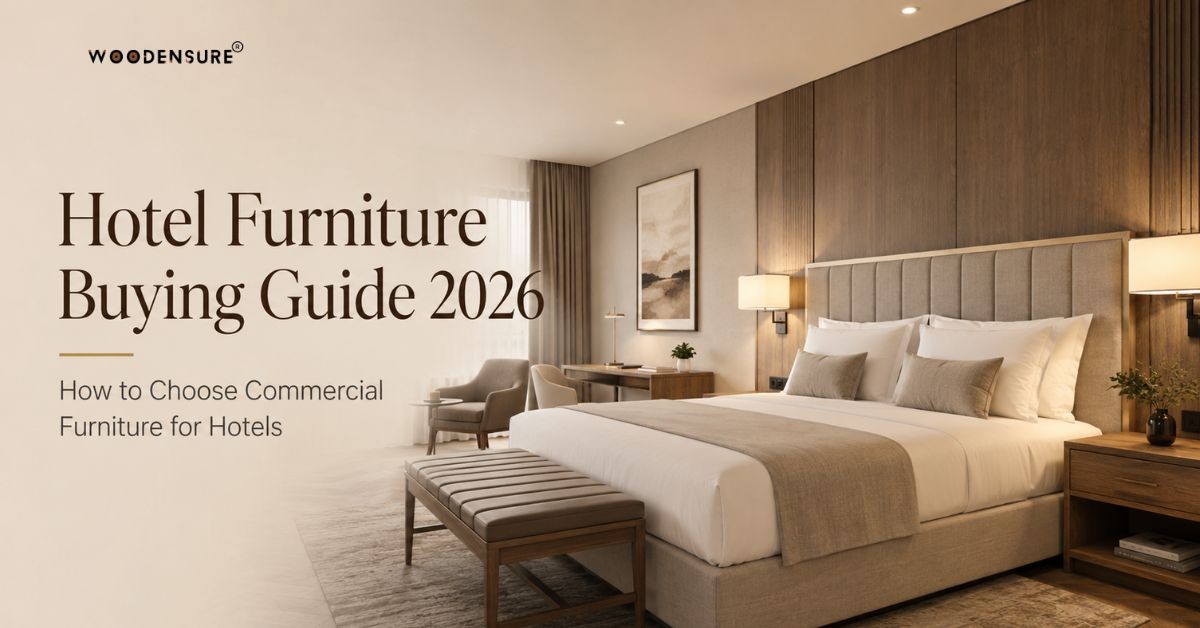

Hotel Furniture Buying Guide (2026): How to Choose Commercial Furniture for Hotels
Choosing hotel furniture requires more than finding products that look attractive. Furniture used in hotels must handle frequent use, repeated cleaning and the needs of different guests while continuing to look presentable.
The right commercial hotel furniture can improve guest comfort, strengthen the property’s brand identity and simplify housekeeping and maintenance. Poorly selected furniture can lead to damaged hardware, uncomfortable rooms, inconsistent finishes and early replacement expenses.
Hotel owners should therefore compare furniture based on construction, material, comfort, maintenance, customisation and lifecycle cost—not only the initial quotation.
This hotel furniture buying guide explains the main types of hospitality furniture, important buying considerations, common procurement mistakes and how to choose a dependable manufacturer.
Whether you are furnishing a boutique hotel, luxury resort, serviced apartment or business hotel, this guide will help you make informed purchasing decisions.
Last Updated: 11 July 2026
What Is Hotel Furniture?
Hotel furniture is commercial-grade furniture made or selected for hospitality environments such as hotels, resorts, serviced apartments and boutique properties. It is expected to support frequent use while providing comfort, durability, convenient maintenance and consistent design. Common hotel furniture includes beds, headboards, wardrobes, desks, luggage benches, lobby sofas, reception counters, restaurant tables, dining chairs, conference furniture and outdoor seating.
Key Takeaways
- Commercial hotel furniture is intended for frequent hospitality use.
- Materials affect durability, maintenance and long-term cost.
- Furniture comfort should be tested through samples or prototypes.
- Custom furniture can create a more consistent hotel identity.
- Buying only on price can increase repair and replacement costs.
- A reliable manufacturer should support sampling, bulk production, inspection, packaging and installation.
What Makes Hotel Furniture Different?
Hotel furniture includes both movable products and fixed furniture used throughout a hospitality property.
It may be installed in:
- Guest rooms and suites
- Reception and lobby areas
- Restaurants, bars and cafés
- Conference and meeting rooms
- Banquet halls
- Balconies, terraces and poolside areas
- Staff rooms, offices and storage areas
What Makes Furniture Commercial?
Commercial furniture is designed or specified for more frequent use than typical residential furniture. Its frame, joints, hardware, finish and upholstery should match the expected traffic and operating conditions.
Hospitality Furniture vs Residential Furniture

Residential furniture is normally used by a limited number of people. Hotel furniture may be used every day by guests with different habits, heights and requirements.
Hospitality furniture must also support hotel operations. Housekeeping teams need accessible spaces for cleaning, while maintenance teams benefit from replaceable hardware and repairable components.
A chair or table that performs well in a private home may not be suitable for a busy lobby, restaurant or hotel room.
Why Commercial Hotel Furniture Matters
Guest Experience
Furniture affects how guests use and remember a property.
A comfortable bed supports rest. A properly sized desk makes working easier. Convenient luggage storage keeps the room organised, while supportive lobby seating creates a more welcoming arrival experience.
Brand Identity
Furniture communicates whether a property is modern, traditional, luxurious, minimal or nature-inspired.
Consistent wood tones, fabrics, handles, metal finishes and furniture shapes help different areas of the hotel feel connected.
Operational Efficiency
Well-planned furniture makes rooms easier to clean, inspect and maintain. It should not block electrical points, restrict movement or create corners that are difficult to access.
Hotel furniture should also allow practical replacement of commonly damaged parts such as handles, hinges, glides and cushion covers.
Accessibility
Furniture planning should consider the needs of guests with reduced mobility.
Long-Term Value
The lowest quotation is not always the most affordable option over time.
A better comparison includes:
Purchase price + packaging + transportation + installation + maintenance + repairs + replacement
Furniture that costs slightly more initially may provide better value when it is easier to clean, repair and maintain.
Types of Hotel Furniture

Hotel Bedroom Furniture
Hotel bedroom furniture normally includes beds, headboards, bedside tables, wardrobes, luggage benches, desks, chairs, mirrors and television units.
The size and number of pieces should match the room category without making movement or cleaning difficult.
Hotel Lobby Furniture
Lobby furniture includes sofas, lounge chairs, centre tables, side tables, console tables and decorative partitions.
These products should provide comfortable waiting areas without blocking reception queues or major movement paths.
Hotel Reception Furniture
Reception furniture may include check-in counters, concierge desks, back counters and storage cabinets.
It should provide enough workspace, cable management and secure storage for hotel operations.
Restaurant and Café Furniture
Restaurant furniture includes dining tables, chairs, benches, bar stools, buffet counters and service stations.
Important considerations include stability, comfort, stain resistance, floor protection and cleaning access.
Hotel Outdoor Furniture
Outdoor hotel furniture may be used on balconies, terraces, lawns and pool decks.
Its material and finish should be selected according to exposure to sunlight, rain, moisture, temperature changes and local weather conditions.
Conference Furniture
Conference furniture includes meeting tables, modular desks, chairs, podiums and storage units.
It should support different layouts and provide convenient access to power, data and presentation equipment.
Banquet Furniture
Banquet halls often require lightweight or movable tables and stackable chairs.
Buyers should consider handling, stacking stability, storage space and the availability of replacement units.
Staff-Area Furniture
Staff furniture includes desks, lockers, shelves, storage cabinets and dining tables.
Although guests may not see these areas, suitable furniture can improve the efficiency and organisation of hotel operations.
7 Things to Consider Before Buying Hotel Furniture
1. Durability
The required level of durability depends on where and how frequently the furniture will be used.
A restaurant chair or lobby sofa experiences more direct use than a decorative console table. These products should not automatically receive the same construction specification.
Ask the supplier about:
- Frame material and thickness
- Joinery method
- Weight capacity
- Hardware brand and grade
- Edge finishing
- Upholstery performance
- Moisture resistance
- Repair and replacement options
2. Material Selection
There is no single best material for every hotel application.
- Solid wood provides a natural, premium appearance and may allow future repair or refinishing.
- Plywood is commonly used for wardrobes, desks, storage units and furniture carcasses.
- MDF provides a smooth surface for painted or routed designs but should be protected from moisture.
- Veneer offers the appearance of natural wood over a suitable engineered core and can help maintain consistency across a large project.
- Laminate is practical for surfaces that require easy cleaning and a uniform finish.
- Metal can be used for furniture frames, bases and shelving when its grade and protective coating match the environment.
The material should always be selected according to its actual use, climate, cleaning routine and budget.
3. Guest Comfort

Comfort cannot be judged accurately from photographs or renders.
Test the seat height, seat depth, back angle, armrest position, foam firmness and workstation dimensions through a physical sample.
Beds, chairs and sofas should ideally be approved through a full-size prototype before bulk production.
4. Design Consistency
Create a clear design language before approving individual products.
Define:
- Main wood tone
- Upholstery colours
- Metal finish
- Handle style
- Edge profile
- Leg shape
- Decorative details
- Variations for different room categories
Consistency does not mean every item must be identical. It means every product should feel like part of the same hotel concept.
5. Maintenance
Discuss furniture maintenance with the housekeeping and engineering teams.
Confirm whether the finish and upholstery are compatible with the cleaning products used by the hotel. Also check whether frequently damaged components can be replaced separately.
Furniture that is difficult to clean or repair can increase room downtime and operational costs.
6. Budget Planning
Avoid spending the same amount on every furniture item.
High-contact products such as beds, restaurant chairs, desks and lobby seating may require stronger materials and better hardware.
The budget should also include:
- Prototypes and samples
- Packaging
- Transportation
- Site unloading
- Installation
- Temporary storage
- Spare units
- Replacement components
7. Manufacturer Experience
A hotel furniture manufacturer should understand more than furniture production.
The supplier should be able to read drawings, develop prototypes, maintain finish consistency, manage bulk quantities and coordinate packaging and delivery.
Ask to review the factory, production capability, material storage, quality-control process and relevant previous work before approving the order.
From Our Furniture Manufacturing Experience

At Woodensure, we recommend approving one complete furniture prototype before beginning bulk production.
A prototype can reveal practical issues involving dimensions, comfort, colour, hardware, cable access, room movement and installation. Identifying these issues before production is usually more efficient than making corrections after furniture has been manufactured for multiple rooms.
Every approved detail—such as material thickness, finish shade, hardware model and upholstery code—should be recorded in writing.
Hotel Furniture Comparison Table
| Factor | Better Buying Approach | Risky Buying Approach |
|---|---|---|
| Material | Grade and thickness clearly specified | Generic material description |
| Warranty | Written coverage and exclusions | Verbal assurance |
| Finish | Physical sample approved | Approved only through an image |
| Comfort | Full-size prototype tested | Catalogue selection only |
| Hardware | Brand and model documented | Unbranded basic hardware |
| Quality | Inspection stages agreed | Inspection only after delivery |
| Delivery | Room-wise packing and labelling | Mixed bulk packaging |
Buying Hotel Furniture in India
Hotel furniture in India should be selected according to the property’s location and operating environment.
Coastal and high-humidity locations may require greater attention to moisture, corrosion and material movement. Furniture for outdoor or semi-open areas needs suitable finishes and protected hardware.
Buyers should also consider:
- Distance between the factory and hotel site
- Interstate transport and handling
- Storage conditions before installation
- Room-wise or floor-wise packaging
- Availability of replacement hardware
- Local installation support
- Applicable building, fire and accessibility requirements
Do not store finished furniture in damp or unfinished rooms. Site conditions should be checked before delivery to prevent avoidable damage.
Common Hotel Furniture Buying Mistakes
Buying Residential Furniture
Residential furniture may not be designed for repeated hospitality use. Confirm the construction and intended application before purchasing.
Choosing Only by Price
A low quotation may exclude stronger materials, better hardware, protective packaging or installation.
Compare suppliers using the same written specification.
Ignoring Hardware
Hinges, drawer channels, connectors and handles often experience repeated movement. Their brand, grade and model should be included in the purchase order.
Skipping the Prototype
A prototype helps identify problems before they are repeated across dozens of rooms.
Poor Procurement Planning
Late furniture approvals can affect production, room handover and hotel opening schedules.
Choosing the Wrong Material
Material should be matched to moisture, sunlight, cleaning, traffic and the intended location.
Buying From Multiple Uncoordinated Vendors
Several suppliers can produce differences in colour, size, hardware and delivery timing. Use one coordinated specification and approval process.
Ignoring Written Warranty Terms
Ask what is covered, what is excluded, how claims are processed and whether replacement components will remain available.
Skipping Pre-Dispatch Inspection
Dimensions, finishes, upholstery, hardware, stability, quantities and packaging should be inspected before dispatch.
How to Choose the Right Hotel Furniture Manufacturer
Start by sharing a detailed project brief containing:
- Property type and location
- Number of rooms
- Room categories
- Furniture quantities
- Drawings and design references
- Target budget
- Delivery requirements
- Installation timeline
Evaluate the supplier in the following areas.
Manufacturing Capability
Confirm that the factory can work with the required wood, boards, veneer, metal, upholstery and finishes.
Customisation
The manufacturer should be able to convert concepts into shop drawings, samples and production-ready specifications.
Bulk Production
Request a realistic production plan based on material availability, factory capacity and prototype approval.
Quality Inspection

The supplier should conduct checks during material selection, production, finishing, assembly and packaging.
Packaging and Delivery

Confirm whether the quotation includes protective packaging, transportation, unloading, floor-wise placement and assembly.
Room-wise labelling can make large hotel installations easier to manage.
Warranty and After-Sales Support
Request written warranty terms and ask whether replacement hardware, fabrics and other components can be supplied later.
Questions to Ask a Hotel Furniture Supplier
- Have you manufactured furniture for similar commercial requirements?
- Which materials and hardware are included in the quotation?
- Can you provide physical samples and a complete prototype?
- How will finish consistency be maintained?
- What quality inspections will be conducted?
- What is the production and delivery timeline?
- How will furniture be packed and labelled?
- Is installation included?
- What does the warranty cover?
- How are defects or replacement requests handled?
Quick Hotel Furniture Buying Checklist

- ✔ Room count and categories finalised
- ✔ Furniture schedule prepared
- ✔ Budget and contingency approved
- ✔ Materials and hardware specified
- ✔ Accessibility requirements reviewed
- ✔ Designs and shop drawings approved
- ✔ Physical finish samples checked
- ✔ Full-size prototype tested
- ✔ Production timeline confirmed
- ✔ Packaging method approved
- ✔ Delivery sequence planned
- ✔ Warranty terms documented
- ✔ Pre-dispatch inspection completed
- ✔ Installation arranged
- ✔ Final snag inspection planned
Conclusion
Commercial hotel furniture is a long-term investment that affects guest comfort, brand identity, maintenance and daily hotel operations.
The best furniture is not necessarily the most expensive or the cheapest. It is the furniture that matches its intended use, operating environment and maintenance requirements.
Hotel owners should compare written specifications, approve physical samples, test prototypes and consider lifecycle costs before placing a bulk order.
Working with an experienced hotel furniture manufacturer can improve design consistency, production quality, packaging, delivery planning and after-sales support.
A clear furniture schedule and documented approval process can prevent many expensive mistakes before the hotel begins operations.
About the Author
Woodensure Editorial Team creates practical furniture guides using insights from its design and manufacturing team in Udaipur, Rajasthan. Every guide is reviewed for clarity, accuracy and real-world usefulness.
Residential furniture is normally used by a limit