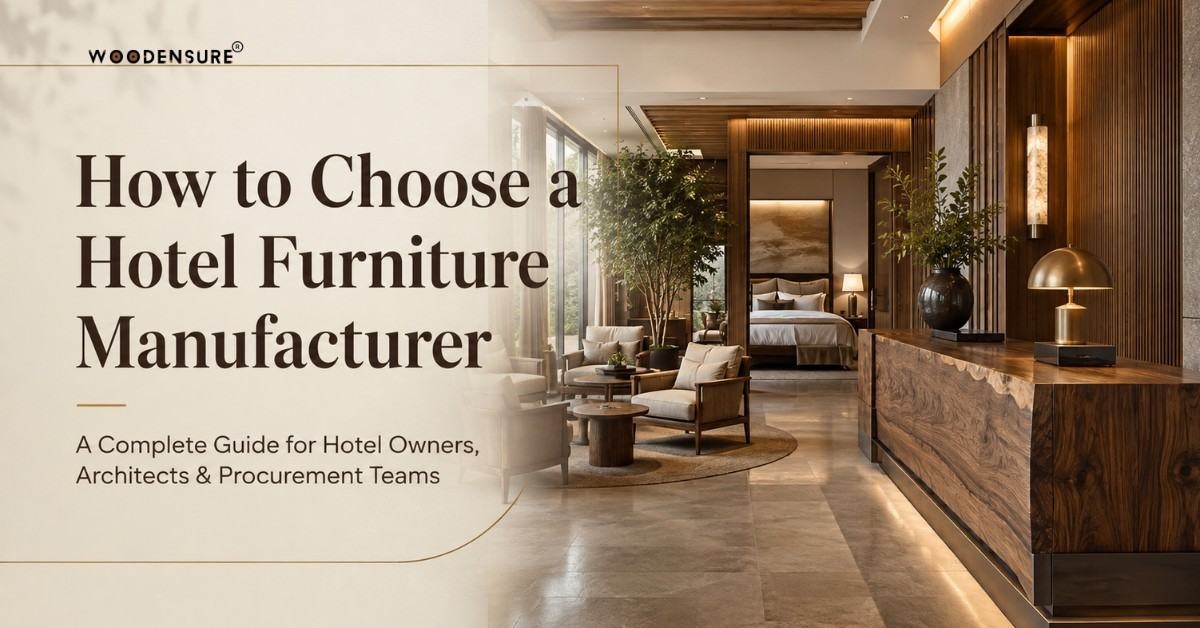
How to Choose a Hotel Furniture Manufacturer: A Complete Guide for Hotel Owners, Architects & Procurement Teams
Choosing the right hotel furniture manufacturer can affect project quality, delivery schedules, design consistency, maintenance and guest experience. Hospitality furniture is not purchased like ordinary residential furniture. Hotels often need repeatable quality across rooms, project-specific dimensions and coordinated finishes.
For hotel owners, architects, interior designers, FF&E consultants and procurement teams, the decision should go beyond catalogue size or the lowest quotation. A suitable manufacturer should understand drawings, materials, quantities, finishes and deadlines.
Last Update: 17 Aug 2026
This guide explains how to evaluate a hotel furniture manufacturer objectively.
How Do You Choose a Hotel Furniture Manufacturer?
Choose a hotel furniture manufacturer by evaluating hospitality experience, customization capability, ability to work from BOQs and drawings, material expertise, sampling procedures, quality-control systems, bulk production capacity, finish consistency, lead-time reliability, packaging, delivery and installation support.
The right manufacturer is not simply the lowest bidder. It is the one capable of reproducing the approved design, specification and quality consistently while meeting the required quantity, schedule and site conditions.
Before awarding a purchase order, verify production methods, project evidence, samples and commercial scope.
What Is a Hotel Furniture Manufacturer?
A hotel furniture manufacturer produces furniture for hotels, resorts, serviced apartments, villas, restaurants and other hospitality properties.
A manufacturer may produce beds, bedside tables, wardrobes, desks, dining tables, lounge seating, reception furniture, restaurant furniture, bar tables and custom pieces.
Hotel Furniture Manufacturer vs Furniture Supplier
A manufacturer is directly involved in production and can usually control dimensions, materials, finishes, construction methods and repeatability. A supplier or trader may source ready-made products from one or more factories.
Neither model is automatically better. However, projects requiring custom dimensions, technical drawings, specific finishes or repeated quantities may benefit from direct manufacturing control.
Why Hotels Need a Specialized Furniture Manufacturer
Hotel furniture faces a different use cycle from furniture in a private home. Guest-room pieces may be used daily by different occupants, restaurant furniture may face repeated cleaning and movement, and lobby pieces need to maintain appearance under continuous use.
Hospitality projects also involve owners, architects, designers, procurement teams, contractors and operators. Furniture must fit approved layouts, coordinate with interiors, arrive on schedule and remain consistent across repeated units.
Manufacturer selection should therefore consider lifecycle suitability, maintenance, replacement, repeatability and project coordination rather than price alone. Requirements vary by hotel category, guest profile, operator standards and project specification.
Planning a hotel or hospitality project?
Share your BOQ, drawings, quantities, and finish requirements with Woodensure to discuss custom furniture manufacturing for your project.
8 Factors to Evaluate Before Choosing a Hotel Furniture Manufacturer
1. Relevant Hospitality Manufacturing Experience

Check whether the manufacturer has completed projects comparable to yours.
Hotel projects introduce challenges such as repeated units, finish consistency, phased delivery and team coordination.
Ask for completed-project photographs, references or similar hospitality examples. Review project type, furniture categories, quantities and customization level.
Real project evidence is more useful than broad claims because it shows whether the manufacturer has handled comparable requirements.
2. Ability to Manufacture Custom Furniture
Customization matters when furniture must follow a room layout, brand concept or architectural detail.
Ask whether the manufacturer can modify dimensions, wood species, finishes, upholstery, edge profiles, metal bases, storage features and hardware.
For unusual room proportions, large lobbies or distinctive restaurant concepts, catalogue furniture may not fit the intended design.
Manufacturing feasibility should ideally be discussed before the design is frozen. Early coordination can identify issues involving structure, materials, transport or installation before they become expensive changes.
3. Ability to Work With BOQs, CAD Drawings and Specifications

A professional hospitality manufacturer should understand project information from architects and procurement teams.
Typical inputs include a BOQ, furniture schedule, CAD drawings, reference images, material specifications, finish schedules and quantities.
The manufacturer should clarify unclear dimensions or production details instead of making assumptions.
Can hotel furniture manufacturers work directly from architects’ drawings? Capable custom manufacturers generally can use design drawings for production development, but responsibility for shop drawings, engineering and approvals should be confirmed before ordering.
4. Material and Construction Expertise
A reliable manufacturer should understand not only how a material looks but also where it is suitable.
Furniture may include solid wood, engineered materials, veneer, metal, upholstery, glass, stone, epoxy or different hardware systems.
Ask why the proposed material and construction method suit the intended location and frequency of use. The manufacturer should explain finish options, maintenance and limitations.
Avoid claims that one material is always best. Selection should reflect design, budget, operating environment, maintenance and project specifications.
5. Sampling, Prototypes and Mock-Up Rooms

Sampling is important before bulk production.
Where appropriate, approve wood samples, finish samples, upholstery swatches, hardware, edge details and other visible materials.
For complex or high-volume projects, a prototype piece or mock-up room can help evaluate dimensions, appearance, comfort, function and construction before approving the full quantity.
Confirm what constitutes approval. A signed finish sample, approved drawing or prototype can become the reference if questions arise during manufacturing.
6. Manufacturing Capacity and Scalability
A manufacturer may make one excellent custom piece but struggle with dozens or hundreds of coordinated units.
Ask about production capacity, machinery, skilled workforce, scheduling and quality consistency across batches. Also check how outside vendors for hardware, upholstery or metalwork are managed.
Customization without production capacity can create delays. Production capacity without customization can compromise design intent. A suitable hotel furniture manufacturer needs enough of both for the project.
7. Quality-Control Process
Quality control should happen throughout production, not only after furniture is finished.
Ask how the manufacturer checks incoming materials, dimensions, joinery, stability, hardware, surface preparation, finish quality, upholstery and packing.
For larger projects, clarify whether inspection photographs, QC reports or pre-dispatch approvals can be provided.
A structured process helps identify errors before furniture reaches the hotel, especially when the same item is reproduced across many rooms.
8. Communication and Project Management
Hotel furniture projects involve ongoing decisions and approvals throughout the project.
Look for clear points of contact and documented communication around drawings, samples, production changes, dispatch and installation.
Owners, architects, designers, procurement teams, contractors and manufacturers may all participate. A change approved by one party but not communicated to production can create problems.
Good project management means information is documented, approved and shared appropriately.
Match the Manufacturer’s Capability to Your Hotel Project

Different hotel areas place different demands on furniture manufacturing.
Guest-Room Furniture
Beds, bedside tables, wardrobes, desks, TV consoles, luggage racks and benches often need repeatability. Dimensions, finish colour, hardware position and construction should remain consistent from room to room.
Lobby and Public-Area Furniture
Lobby furniture may include reception pieces, consoles, statement tables and lounge furniture. These areas often require larger sizes, unusual forms or premium finishes, making custom fabrication important.
Restaurant, Café and Bar Furniture
Dining tables, chairs, benches and bar furniture face frequent use, cleaning and movement. Evaluate durability, stability, maintenance and finish suitability.
Resorts, Villas and Boutique Properties
These projects may use bespoke furniture, natural materials, custom dimensions or design-led pieces. The manufacturer’s ability to interpret and reproduce the designer’s concept accurately becomes a major selection factor.
How to Verify Furniture Quality Before Bulk Production

Do not wait until final delivery to evaluate quality.
Before bulk production, check approved dimensions, materials, thicknesses, joinery, hardware, edge details, finish colour, sheen, upholstery, functionality, stability and comfort where relevant.
For repeat items, the team may approve one prototype or “golden sample” as the visual and dimensional reference for subsequent production. Document the approval so buyer and manufacturer understand the agreed standard.
Ask for evidence rather than relying only on claims. Useful evidence includes workshop photographs, material samples, finish approvals, production-stage images, QC documentation and completed-project records.
Original photographs of manufacturing and installations can also help verify actual capabilities.
Price, Lead Time, Packaging, Delivery and Installation
Price comparisons matter only for the same specification.
A quotation should define material, construction, finish, hardware, quantity, packaging, freight, installation, taxes and after-sales terms where applicable.
Lead time should be broken into stages. Ask about drawings, sampling, approvals, production, quality checks, packing, shipping and installation. A timeline starting after final approval differs from a quotation stating only total weeks.
Large furniture may also require special packing, unloading or assembly at site.
Before production, confirm whether pieces can pass through entrances, corridors, staircases and lifts. Check furniture dimensions against actual access routes, not only room dimensions.
Finally, define who handles installation, assembly, site corrections and damage reporting.
Red Flags When Choosing a Hotel Furniture Manufacturer
Signals that deserve further investigation include:
- Quoting without understanding specifications.
- No clarity about materials or construction.
- No sample or approval process.
- No relevant manufacturing evidence.
- Unrealistically short lead times.
- A vague QC process.
- Drawings not reviewed before production.
- Changes handled verbally without documentation.
- No clear packaging or logistics plan.
- Undefined responsibility for installation or site issues.
- Significant price changes without specification changes.
- Inability to explain manufacturing methods.
A single issue does not automatically make a manufacturer unsuitable, but it should prompt additional questions before commitment.
Hotel Furniture Manufacturer Selection Checklist
Before finalizing a manufacturer, evaluate:
- Hospitality project experience
- Customization capability
- BOQ and CAD handling
- Shop-drawing support
- Material knowledge
- Sampling process
- Prototype or mock-up capability
- Production capacity
- Quality-control system
- Finish consistency
- Lead-time planning
- Packaging and logistics
- Installation support
- After-sales support
- Client references
- Commercial transparency
A scorecard using Excellent, Acceptable and Needs Clarification can help owners, architects and procurement teams compare shortlisted manufacturers using the same criteria.
Questions to Ask Before Awarding a Hotel Furniture PO
Ask:
- Have you completed comparable hospitality projects?
- Can you manufacture from our BOQ and drawings?
- Who prepares or reviews shop drawings?
- What samples are supplied before production?
- Can you produce a prototype or mock-up?
- How is quality control documented?
- What is your production capacity?
- When does the confirmed lead time begin?
- How will furniture be packed and delivered?
- Who handles installation and site issues?
- How are design changes approved?
- What after-sales support is included?
- Clear answers reduce ambiguity once production starts.
Conclusion
Choosing a hotel furniture manufacturer should be treated as a project decision, not simply a purchasing decision. The best-fit manufacturer can translate the approved design into repeatable, durable and project-ready furniture while meeting quality, quantity, schedule and site conditions.
Hotel owners, architects and procurement teams should compare manufacturers using evidence, samples, documented approvals, production capability and clearly defined commercial responsibilities.
Planning a hotel, resort, or hospitality project?
Share your BOQ, furniture schedule, drawings, required quantities, and finish references with the Woodensure team to discuss manufacturing feasibility and project requirements.