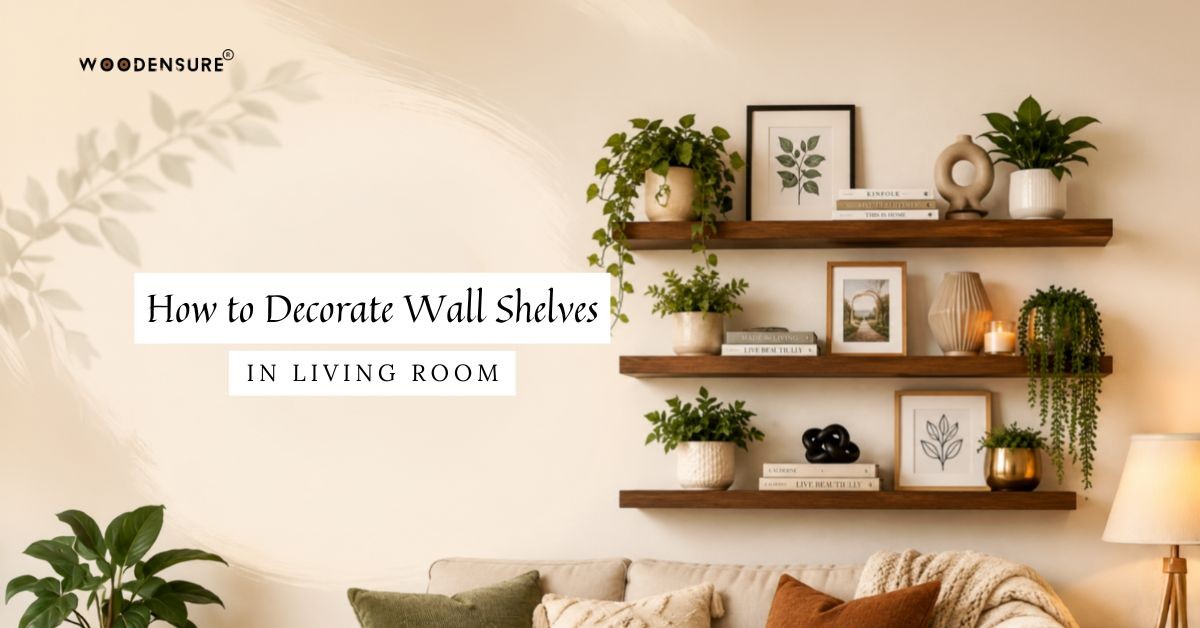
How to Decorate Living Room Wall Shelves: A Guide
A blank wall in your main living space can feel incredibly cold, but knowing exactly how to decorate wall shelves in living room layouts can transform your space into a designer-level focal point. Beautifully styled shelves aren't just for storage—they serve as a canvas to showcase your personal story, style, and taste.
However, many homeowners run into the same issue: their shelves either look like a cluttered retail display or stay completely bare. Achieving that perfect balance requires high-quality materials and smart styling techniques.
In this comprehensive guide, we will break down professional interior design rules, look at upcoming material trends, and provide a complete installation and styling playbook.
1. Choose the Perfect Foundation: Types of Wall Shelves
Before you can learn how to style wall shelves, you must start with a premium canvas. The material, grain, and edge of your shelves establish the entire aesthetic of your room. Mass-produced particle board requires heavily layered decor just to hide the cheap surface. Conversely, a premium shelf stands alone as structural art.
Solid Wood & Live Edge Wall Shelves
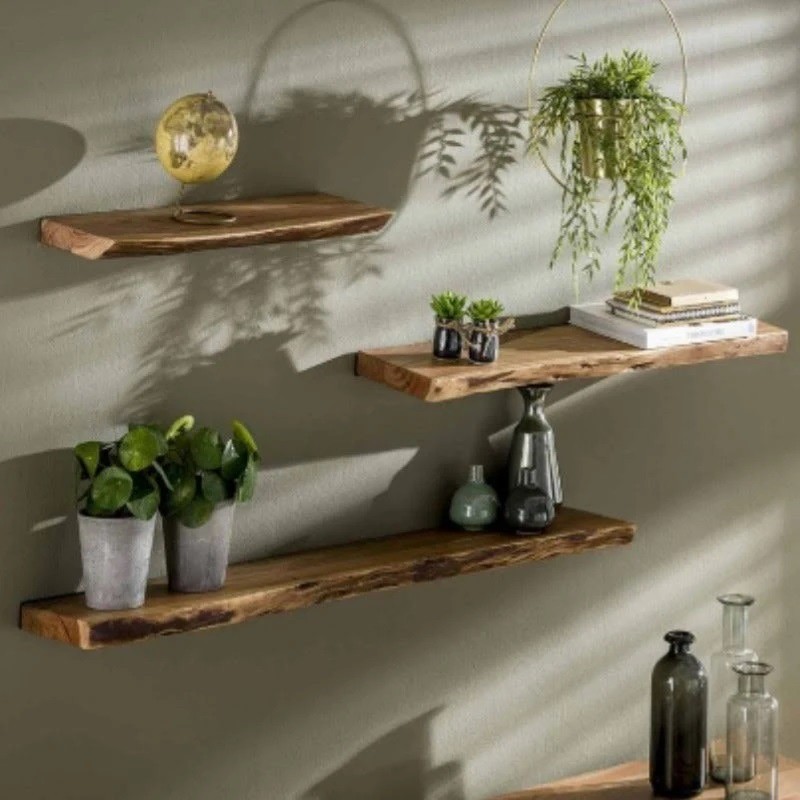
If you want to bring natural warmth and deep texture into your home, solid wood wall shelves are unmatched. For a highly organic, rustic, or modern-industrial living room, using live edge wall shelves preserves the natural, curvilinear outer edge of the tree. This makes every single piece entirely unique.
Epoxy Resin Wall Shelves
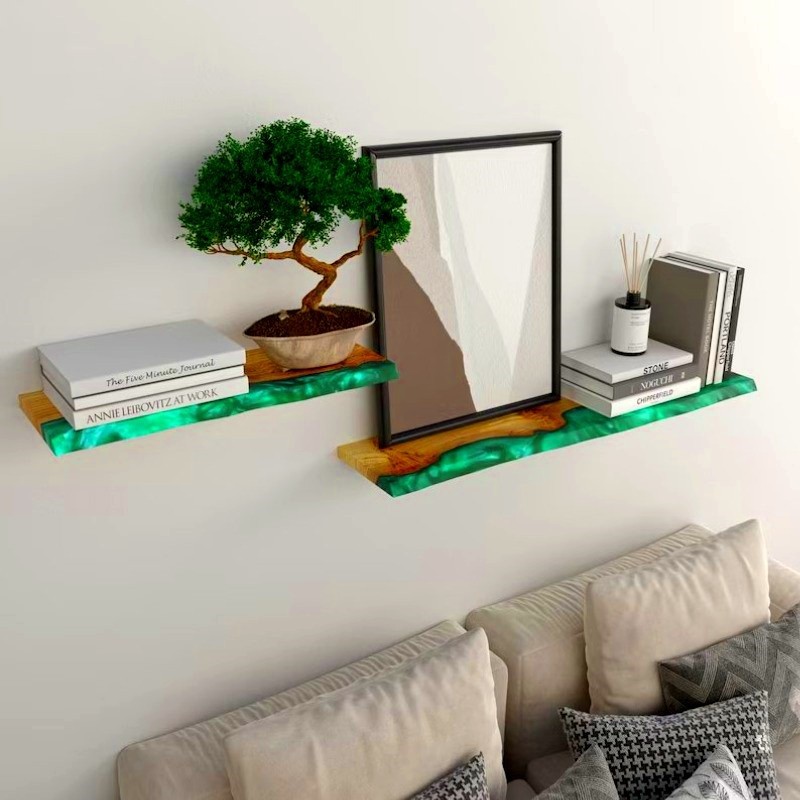
For high-end luxury, contemporary, or minimalist apartments, epoxy resin wall shelves integrate vibrant lines of glossy color directly into raw wooden slabs. This style catches natural light beautifully, serving as a built-in statement piece.
Smart Configurations
Depending on your total wall surface area, choosing a coordinated layout is crucial:
- Set of 2: Ideal for stacking vertically over a side chair or adjacent to a media console.
- Set of 3: The golden standard for staggering across a large accent wall to create dynamic movement.
Beyond the main gathering space, these versatile storage features translate perfectly to other areas of the house. For instance, durable kitchen shelves hold everyday glassware, while moisture-treated bathroom shelves gracefully display rolled towels and apothecary jars.
Interested in exploring more ways to elevate your communal spaces? Check out the curated artisan collections in our Living Room catalog to discover handcrafted statement furniture.
2. The Step-by-Step Guide on How to Decorate with Wall Shelves
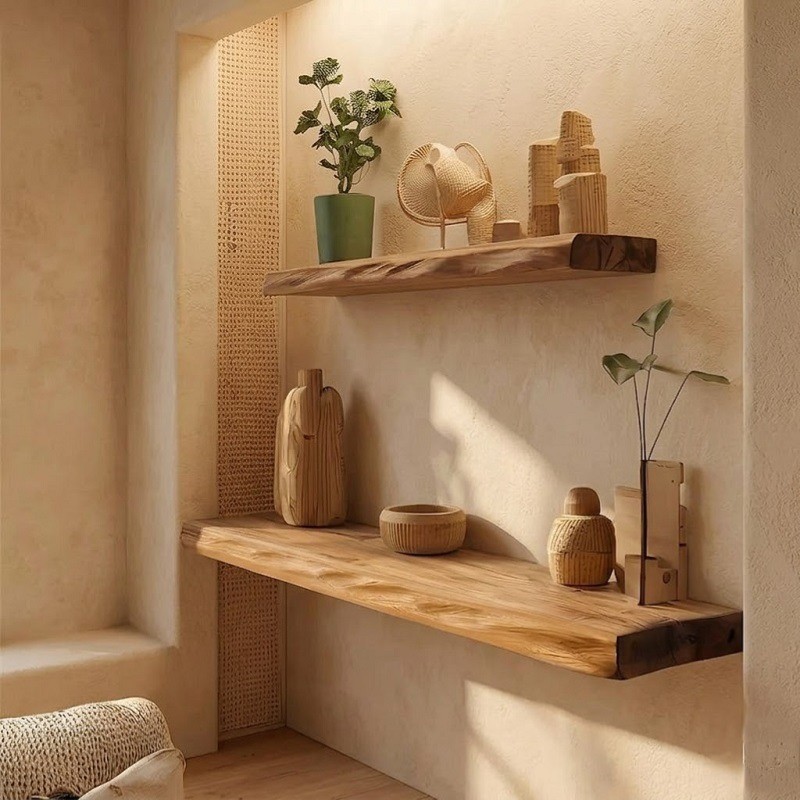
Once your platforms are securely mounted, it is time to build your display. Use this proven five-step method to organize your items without overcrowding the surface.
Start with a Clean Slate: Clear the Space.
Remove absolutely everything from your shelves. Step back to evaluate the lighting, background wall color, and available vertical distance between tiers.
Anchor with Large Items First: Create Focal Points.
Place your largest items onto the shelves first. This could include large framed canvas prints, thick ceramic vases, or heavy decorative sculptures. Space these focal pieces out diagonally across different shelf tiers so they do not cluster in one corner.
Layer in Books Vertically and Horizontally: Build Structural Blocks.
Books are a designer's secret weapon. Line up a few books vertically using elegant bookends, and stack others flat horizontally. Horizontal book stacks act as elevated riser platforms to hold smaller trinkets.
Introduce Organic Textures and Life: Soften the Lines.
Add natural elements like trailing pothos plants, small succulents, faux eucalyptus, or raw crystal clusters. Plants break up rigid horizontal wooden lines by spilling gracefully over the raw edges.
Edit and Embrace Negative Space: Leave Breathing Room.
Step back 10 feet to review the visual weight. If one side feels heavy, move an item. Leave at least 30% of the shelf completely empty so the natural wood grain remains visible.
3. Essential Shelf Styling Rules to Remember
When figuring out how to arrange floating shelves on a wall, keeping a few core formulas in mind prevents common design mistakes:
The Rule of Threes
The human eye processes odd numbers much more efficiently than even pairings. Group smaller decorative items in clusters of three or five, mixing elements like a candle, a textured orb, and a small picture frame.
The Zig-Zag Method
To learn how to arrange 3 floating shelves on a wall, employ the zig-zag method. If you place a bright green trailing plant on the far left of the top shelf, place your next green element on the right side of the middle shelf, and back to the left on the bottom shelf. This naturally coaxes the viewer's eyes across the whole setup.
Designing Media Wall Shelves
When planning what to put in media wall shelves surrounding a flat-screen television, avoid bright or flashing decor that causes eye strain. Opt for matte pottery, dark leather-bound books, and warm ambient backlighting to compliment the screen smoothly.
4. Understanding Depth and the Latest Trends
Before buying or building your storage setups, consider these ongoing shifts in interior architecture.
| Feature | Standard | Current Design Trend |
|---|---|---|
| Shelf Depth | 6 to 8 inches | 10 to 12 inches (Deep Utility) |
| Edge Profile | Squared Machine Cut | Organic Live-Edge / Curved Profiles |
| Material Finish | High-Gloss Paint | Matte Hardwax Oils / Raw Natural Textures |
If you are asking yourself how deep should floating wall shelves be, the industry standard sits safely between 8 to 12 inches. A 10-inch deep shelf easily accommodates larger art books, deep storage baskets, and wide statement ceramics without hanging precariously over the lip.
What are the latest trends in floating shelves?
Modern homeowners are moving away from concealed, artificial laminates toward rich, visible raw materials. Thick, heavy-timber floating wall shelves crafted from sustainably sourced lumber are dominating contemporary spaces.
Additionally, integrated hidden LED strip channels underneath the rear edge are highly sought after to cast a soft glow on the wall below. Homeowners are also embracing floating nightstands in compact bedrooms to clear up floor space while keeping installation fast and simple.
Looking to tie your wall accents together with your hosting area? Browse our premium solid wood Dining Table collections to coordinate matching live-edge timbers across your open-concept layout.
5. Technical Installation: How to Hang & Mount Shelves
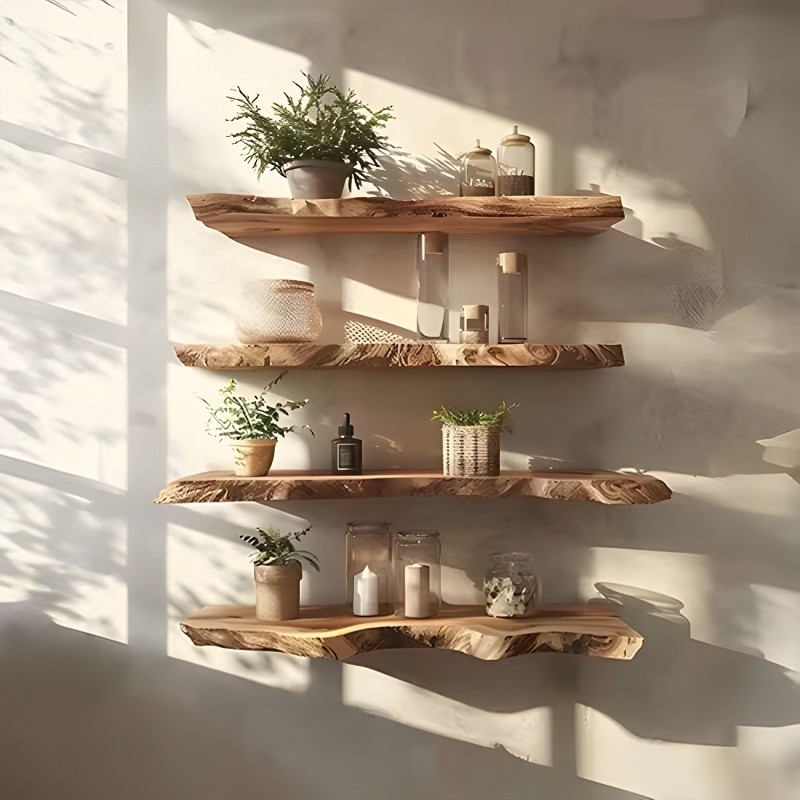
A stunning shelf setup means very little if it sags forward or pulls out of the plaster. Follow these straightforward steps to safely mount your heavy timbers.
How to install wall shelves with brackets
- Locate the wooden wall studs inside your wall using a reliable magnetic stud finder.
- Hold your bracket up to the wall, place a spirit bubble level across it, and mark the screw holes with a pencil.
- Drill pilot holes into the wall studs, clear out the dust, and drive heavy-duty wood screws through the bracket directly into the timber frame.
- Secure the wood plank to the top side of the brackets using small anchor screws underneath.
How to mount shelves on wall surfaces using hidden brackets
To achieve a true floating look without external visual supports, you need to learn how to attach floating shelves to wall brackets hidden inside the wood block. Premium pre-drilled shelves feature deep circular holes bored into the back edge.
Simply screw the heavy-gauge steel rod bracket flat onto your wall studs, slide the hollowed wood shelf over the projecting metal rods, and tighten the small set-screws underneath to lock it firmly in place.
[Wall Surface] ──> [Steel Bracket Plate fastened to Stud] ──> [Internal Rods] ──> [Slid-On Wood Shelf]
Can you mount shelves without drilling holes?
Renters often search for how to hang wall shelves without drilling or how to find damage-free hanging options. While heavy solid wood pieces absolutely require structural anchors, lightweight decorative frames can sometimes utilize heavy-duty adhesive strips or hook systems. However, be strictly warned: adhesive backing is only safe for holding feathers, small paper pictures, or empty frames. Never put valued breakable ceramics on unanchored platforms!
6. Sourcing Fine Handcrafted Shelves
What are the best decorative wall shelves?
The highest quality options are built using dense hardwoods like Acacia, Walnut, Oak, or Teak. Investing in premium wood ensures that the planks will never bend or sag under the weight of heavy book collections.
What are the best corner wall shelves?
If you are dealing with tight architectural corners, custom triangular or L-shaped radial shelves maximize unused corners beautifully while opening up small rooms.
Where can I find rustic wall shelves locally or online?
While you can hunt through local architectural salvage yards, finding perfectly dried, straight planks can be difficult. For precision-machined options that preserve gorgeous organic flaws, you can find premium collections online shipped directly to your door.
Want to add the finishing touches to your shelving project? Check out our artisanal Home Decor pieces to source unique accents, or update your workspace using our specialized Office Collection. For culinary inspiration, see our latest functional Kitchen Collection.
Ready to Elevate Your Living Room?
Decorating wall shelves is an enjoyable, creative process that instantly updates your home's personality. By starting with stunning solid wood wall shelves and layering your items with balance in mind, you create a timeless look that friends and family will admire.
Don't let your walls stay empty or cluttered. Explore the premium, custom-crafted floating wall shelves at Woodensure today to find the perfect natural foundation for your home!
Related Blogs: