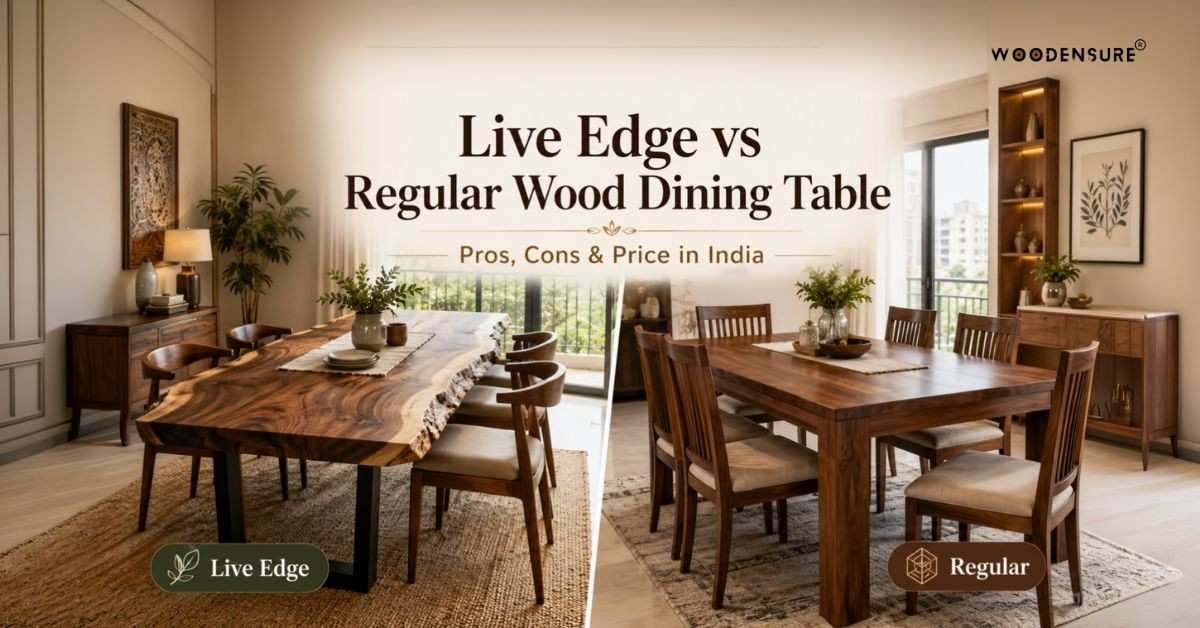

Live Edge vs Regular Wood Dining Table — Pros, Cons, Price
Live edge dining tables preserve the natural, organic edge of the wood slab — no two pieces are identical. Regular dining tables have clean, straight machine-cut edges for a uniform look. Live edge tables cost ₹80,000–₹200,000+ in India; regular solid wood tables start from ₹25,000–₹70,000. The right choice depends on your budget, interior style, and how much uniqueness you want. Here's the complete comparison.
Last updated: 29-May-2026
When comparing a live edge vs regular dining table, the biggest difference is not only design — it is personality, craftsmanship, pricing, and how the table fits into your home. At Woodensure, we manufacture both live edge dining tables and regular solid wood dining tables in Udaipur, Rajasthan. That gives us genuine first-hand experience with both styles — from wood slab selection and kiln drying to finishing, polishing, epoxy work, base design, and delivery across India.
This guide will help you understand the pros, cons, price, maintenance, and best use cases for both types of dining tables.
What is a live edge dining table?
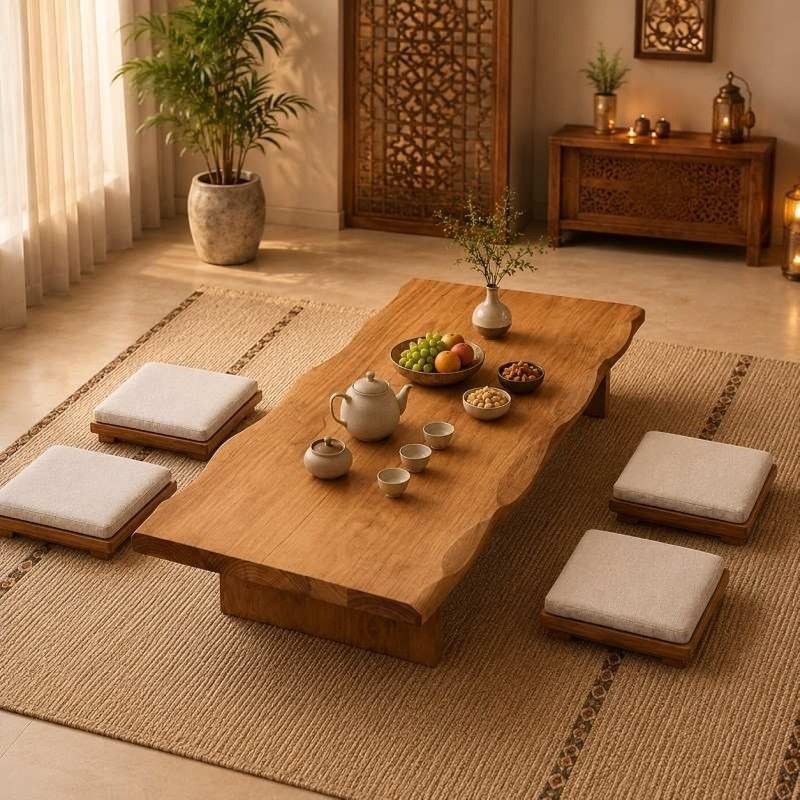
A live edge dining table is made from a natural solid wood slab where the organic edge of the tree is preserved instead of being cut into a perfectly straight line. The natural curves, grains, knots, cracks, and flowing edges remain visible, giving each table a one-of-a-kind character.
No two live edge tables look exactly the same. Even if two slabs come from the same tree, the grain pattern, edge movement, colour tone, and natural markings will be different. This is why live edge dining tables are often treated as statement furniture, not just functional tables.
Live edge tables can be finished in multiple ways:
- Natural oil finish for a raw, earthy look
- Lacquer finish for extra surface protection
- Epoxy resin finish for a modern river table effect
- Matte or glossy coating depending on interior style
In 2025–26, live edge + epoxy resin dining tables have become one of the most popular premium dining table trends in India. The combination of natural wood and coloured resin creates a luxury statement piece for modern homes, villas, farmhouses, and office conference rooms.
Common base styles include industrial metal legs, hairpin legs, trapezium metal bases, X-shaped bases, and solid wood bases. Popular wood choices include Acacia, Walnut, Teak, Sheesham, Mango wood, and River Wood.
Explore Woodensure’s Live Edge Dining Table Collection
If you prefer a modern river-table look, an epoxy resin dining table can give your dining space a more premium and artistic finish.
What is a regular solid wood dining table?
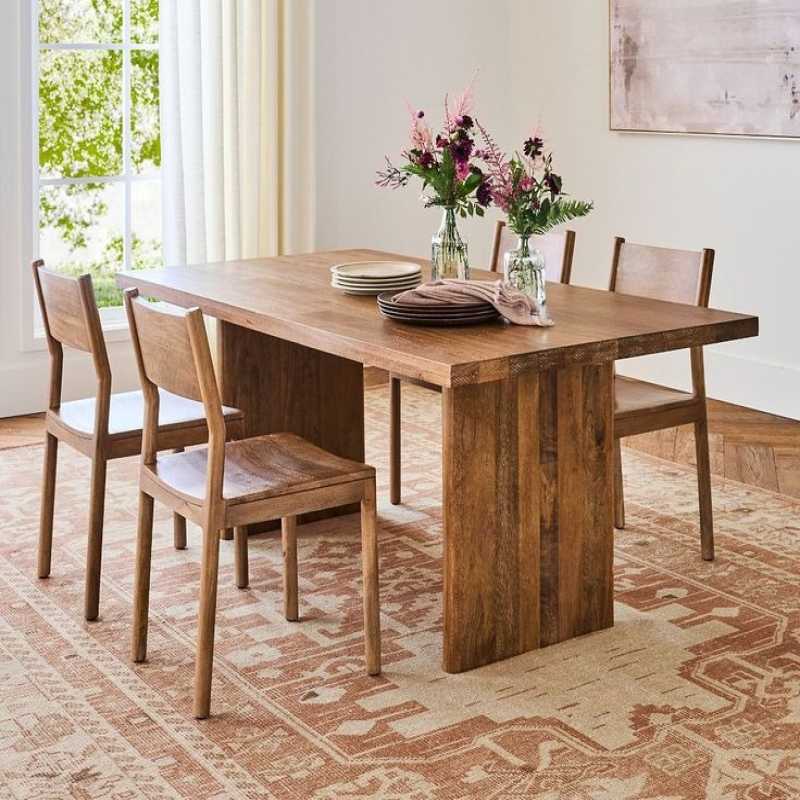
A regular solid wood dining table has straight, machine-cut edges and a clean, symmetrical shape. Unlike live edge tables, the sides are processed to create uniform dimensions, making the table easier to match with standard chairs, benches, dining rooms, and interior themes.
Regular dining tables may be made from solid wood planks joined together or from a single slab with finished straight edges. They are available in more common shapes such as rectangular, oval, round, square, and extendable designs.
The biggest advantage of a regular solid wood dining table is versatility. It fits easily into apartments, 2BHK homes, 3BHK homes, formal dining rooms, compact dining areas, and traditional Indian interiors. It is also generally more affordable than a live edge table.
Common wood types used in India include Acacia, Sheesham, Mango wood, and Teak. For long-term durability, always choose solid wood over engineered wood or veneer.
Explore Woodensure’s Solid Wood Dining Table Collection
Live edge vs regular dining table: full comparison
| Factor | Live Edge Table | Regular Solid Wood Table | Winner |
|---|---|---|---|
| Looks & Style | Organic, unique, statement piece — each table is one-of-a-kind | Clean, symmetrical, versatile — fits more decor styles | Live Edge |
| Price (India) | ₹80,000 – ₹2,00,000+ | ₹25,000 – ₹70,000 | Regular |
| Durability | Excellent — solid hardwood slab, lasts generations | Excellent — especially Acacia & Sheesham | Tie |
| Uniqueness | 100% unique — no two tables alike | Consistent look — design repeatable | Live Edge |
| Maintenance | Needs oiling every 3–6 months; epoxy finish = easier | Occasional polish + standard cleaning | Regular |
| Fits Indian Homes | Best for villas, open plan homes, statement dining rooms | Best for apartments, standard dining rooms, all home types | Regular |
| Customisation | High — size, finish, base, epoxy options | High — but more standardised options | Live Edge |
| Long-term Value | Appreciates in value — becomes heirloom piece | Depreciates slowly — good value for money | Live Edge |
| Eco-friendliness | High — single slab, minimal waste | Good if solid wood; lower if engineered wood | Live Edge |
Live edge dining table pros cons
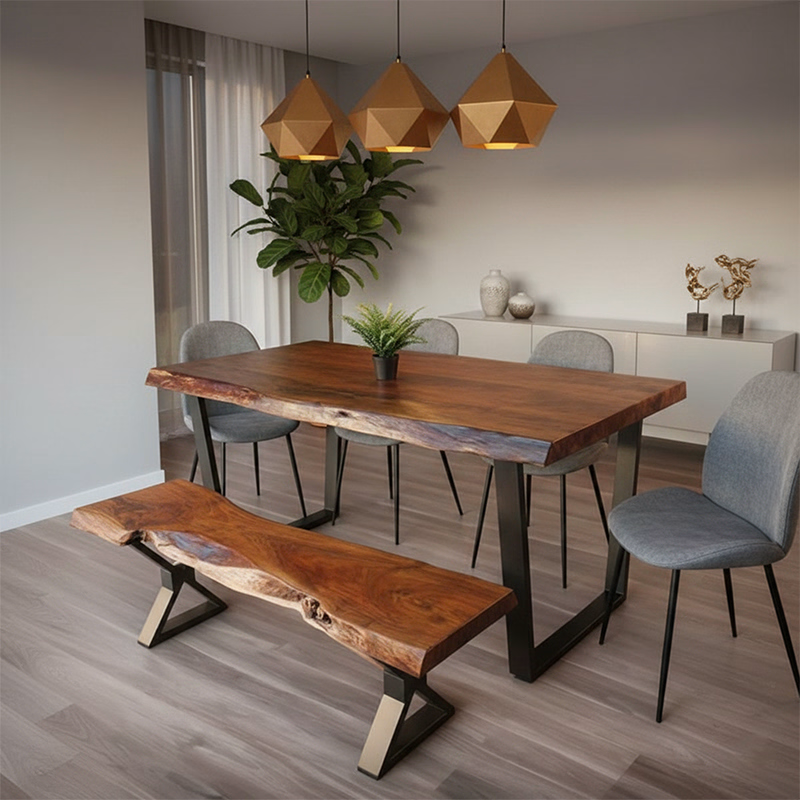
Pros of live edge dining tables
A live edge dining table is completely unique. Since the natural slab edge is preserved, no other buyer will have the exact same table. This makes it ideal for homeowners who want furniture with personality.
Live edge tables are also extremely durable when made from solid hardwood. With proper seasoning, kiln drying, finishing, and maintenance, a quality live edge slab can last 50+ years. It can become an heirloom piece passed from one generation to another.
Another major benefit is visual impact. A live edge table instantly becomes the focal point of the dining room. It suits rustic, modern, industrial, boho, farmhouse, and luxury interiors. It can also be used beyond dining — as an office desk, conference table, restaurant table, or creative studio table.
Because a live edge slab uses the natural shape of wood, it can also reduce unnecessary cutting waste. For buyers who value natural materials and craftsmanship, it offers strong long-term value.
Cons of live edge dining tables
The biggest disadvantage is price. In India, a genuine live edge dining table generally starts from ₹80,000 and can go above ₹2,00,000 depending on size, slab quality, epoxy work, base design, and wood species.
Irregular edges may also make tablecloth fitting difficult. If you prefer a perfectly formal dining setup with symmetrical covers, mats, and accessories, a regular table may feel easier.
Natural oil-finished live edge tables need more maintenance. Oiling every 3–6 months helps protect the wood from dryness, stains, and surface dullness. They are also heavy, which means moving them after installation is not easy.
Live edge tables usually have a longer lead time because they are custom-made. They are not ideal for very small rooms because their natural shape and bold look can dominate the space.
Pros and cons of regular solid wood dining table
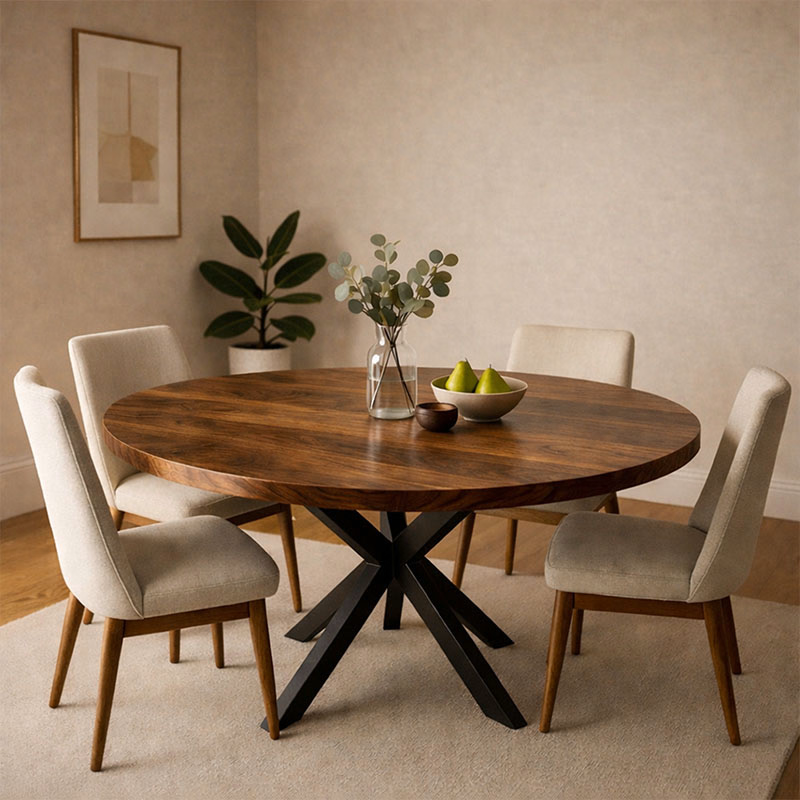
Pros of regular solid wood dining tables
A regular solid wood dining table is more affordable and practical for most Indian homes. Good quality Acacia or Sheesham dining tables can start from around ₹25,000 depending on size, finish, and design.
They fit almost every room size and interior style. Whether your dining area is compact, formal, traditional, modern, or minimal, a regular table blends in easily. Matching chairs, benches, table runners, and accessories are also easier to find.
Regular solid wood tables are lower maintenance than natural live edge slabs. Standard cleaning, occasional polishing, and basic protection from heat and moisture are usually enough.
They are also faster to produce and deliver because the dimensions and designs are more standardised. For families who want durability, comfort, and clean design without a premium budget, regular solid wood is the most practical option.
For family dining spaces, dining table sets with bench seating can save space and create a more casual, comfortable setup.
Cons of regular solid wood dining tables
The main drawback is that regular dining tables are less unique. Similar designs are available from many brands, especially in standard rectangular and six-seater formats.
They are also less of a statement piece compared to a live edge slab. While a regular table can look premium, it usually does not create the same natural wow factor.
Another important point: if the table is made from engineered wood, MDF, particle board, or veneer instead of solid wood, durability drops significantly. Always check the material before buying. A solid wood regular table is a great investment; a cheap veneer table may not last long in Indian humidity.
Live edge vs regular dining table price in India (2026)
Here is a practical live edge table price India guide for 2026. Prices vary based on size, wood species, slab thickness, epoxy design, base type, and finish.
| Table Type | Size | Price Range (India 2026) | Notes |
|---|---|---|---|
| Regular Solid Wood (Acacia/Sheesham) | 4-seater | ₹25,000 – ₹45,000 | Table only; chairs extra |
| Regular Solid Wood (Acacia/Sheesham) | 6-seater | ₹40,000 – ₹70,000 | Table only; chairs extra |
| Live Edge (Acacia / Mango slab) | 4–6 seater | ₹80,000 – ₹1,20,000 | Natural oil finish, metal legs |
| Live Edge + Epoxy Resin (River Table) | 6–8 seater | ₹1,20,000 – ₹2,00,000 | Custom colour epoxy, metal base |
| Live Edge (Premium Teak / Walnut slab) | 8–10 seater | ₹2,00,000+ | Large custom slab, statement piece |
You can also customise your dining table by selecting the size, wood type, finish, base design, epoxy colour, and seating style as per your home.
Which dining table is right for you?
Choose a live edge table if you want a one-of-a-kind piece that no one else will have. It is best for open-plan homes, villas, farmhouses, modern interiors, rustic interiors, and statement dining rooms.
A live edge table is also right for you if your budget is ₹80,000 or above and you treat furniture as a long-term investment. If you want the dining table to become the centrepiece of your home, live edge is the stronger choice.
Choose a regular solid wood table if you live in a standard apartment, 2BHK, or 3BHK home. It is better if your budget is ₹25,000–₹70,000 and you prefer a clean, symmetrical, low-maintenance dining table.
Regular solid wood is also ideal when you need quicker delivery, easy chair matching, and a design that blends with existing furniture.
For Indian homes with high monsoon humidity, both live edge and regular solid wood tables can work well — but only if the wood is kiln-dried and seasoned properly. At Woodensure, all our slabs are kiln-dried and seasoned to handle India’s climate variations from Rajasthan dry heat to coastal humidity.
Related Blog: How to Choose Perfect Dining Table: 4 vs 6 Seater Buying Guide
How to buy a genuine live edge table in India
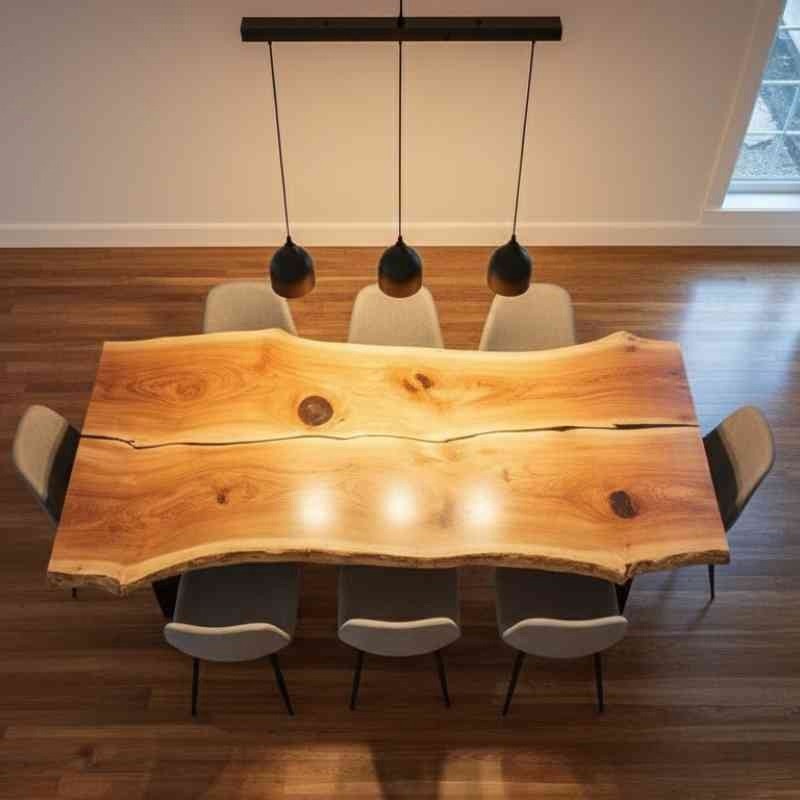
Not every “live edge” table sold online is a real solid wood slab. Many low-cost products use veneer over plywood and copy the look of live edge without offering the durability of real wood.
If a large “live edge dining table” is priced under ₹30,000, it is almost certainly not a genuine solid slab. A real live edge table requires a thick hardwood slab, proper drying, finishing, sanding, base fabrication, and careful handling.
Before buying, ask these questions:
- What wood species is used?
- Is the slab kiln-dried?
- What is the slab thickness?
- Is it solid wood or veneer?
- What finish is used — oil, lacquer, or epoxy?
- Can you see the underside of the table?
The underside is one of the easiest ways to check authenticity. A solid slab shows continuous wood grain. A veneer or plywood table may show layers or artificial surfacing.
At Woodensure, all live edge tables are crafted in Udaipur from verified solid wood slabs. Each slab is kiln-dried, moisture-tested, finished, and customized before delivery.
Conclusion
When comparing a live edge vs regular dining table, the best choice depends on your budget, space, and design preference. A live edge dining table is ideal if you want a unique, premium, statement piece that becomes the centre of your dining room. A regular solid wood dining table is better if you want a practical, affordable, low-maintenance option for everyday Indian homes.
Both options can last for decades when made from kiln-dried solid wood like Acacia, Sheesham, or Mango. At Woodensure, we manufacture both live edge and regular solid wood dining tables, so you can choose based on your home size, interior style, and budget — without compromising on quality.
Author Bio
Written by the Woodensure craftsmanship team, backed by 4+ years of experience in solid wood furniture manufacturing. Based in Udaipur, Rajasthan, Woodensure specialises in handcrafted Acacia, Sheesham, and Mango wood furniture, with a strong focus on durable quality, functional design, and reliable after-sale furniture care guidance.
Also read:
How to Remove Scratches from Solid Wood Dining Table at Home