Vastu Colours for Wooden Furniture in Living Room
Jun 01 - 2026
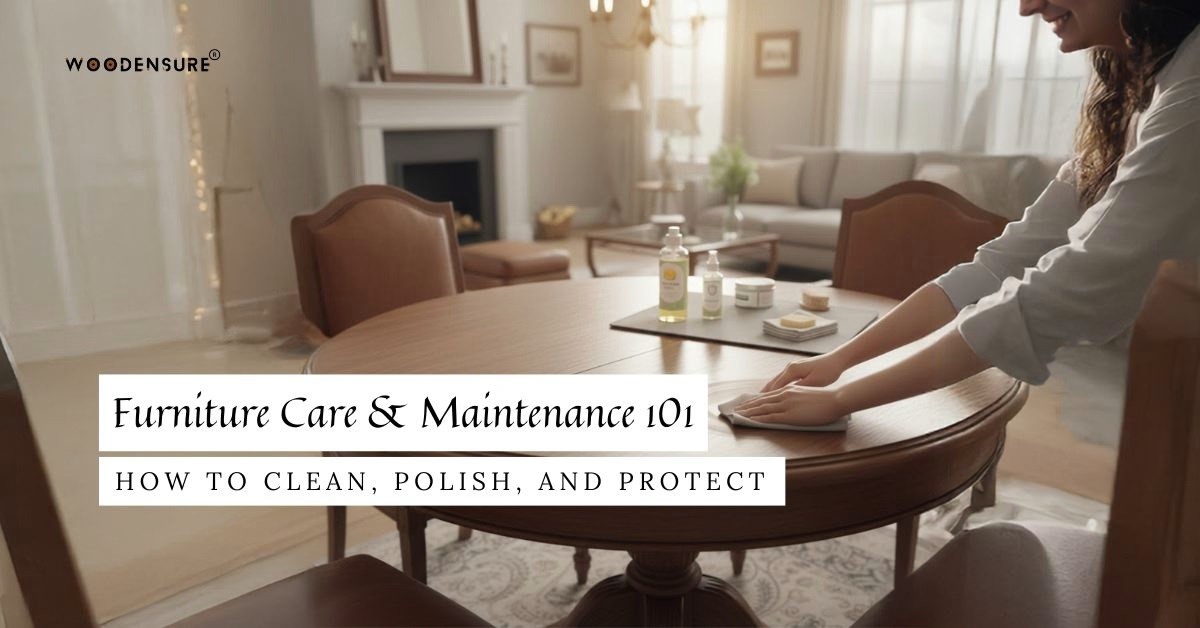
Furniture is more than a functional necessity—it is an investment in comfort, aesthetics, and lifestyle. Whether you own live edge furniture, solid wood furniture, epoxy resin tables, marble furniture, or ergonomic designs with metal legs, proper furniture care and maintenance is essential to preserve durability, appearance, and value.
According to industry data, well-maintained furniture can last 40–60% longer than neglected pieces, significantly reducing replacement costs and environmental waste. Yet, many homeowners unknowingly damage furniture by using incorrect cleaning methods, harsh chemicals, or ignoring environmental factors such as humidity and sunlight.
This furniture maintenance guide provides a complete, expert-backed approach to how to clean furniture, polish surfaces, protect materials, and prevent common damage—with material-specific care instructions tailored to premium furniture types.
Proper furniture care is not only about keeping surfaces clean; it directly impacts structural integrity, comfort, and long-term usability.
Research from wood science institutes shows that moisture imbalance alone causes over 70% of wooden furniture damage, including cracking, warping, and joint failure.
Furniture maintenance is not complicated—it simply requires material awareness and consistency.
Every furniture material reacts differently to moisture, heat, pressure, and cleaning agents. Treating all furniture the same is one of the most common causes of premature damage.

Live edge furniture celebrates the organic shape of natural wood slabs, often retaining bark edges and raw contours. Because of its natural structure, live edge furniture care requires special attention.
Live edge table care should focus on gentle, dry cleaning and moisture control.
Excess moisture can loosen bark, while dryness can cause cracking.
Wood is hygroscopic—it absorbs and releases moisture based on its environment. Proper hydration prevents splitting and surface dullness.
Best practices for live edge wood slab care:
Well-maintained live edge furniture develops a richer patina over time rather than deteriorating.

Solid wood furniture maintenance differs from veneer or MDF furniture because solid wood responds naturally to environmental changes.
The best way to care for wood furniture starts with mild, non-invasive cleaning.
This applies equally to solid wood dining tables, beds, cabinets, and pedestal tables.
Acacia is a dense hardwood known for durability and water resistance, but it still requires regular care.
How to care for an acacia wood dining table:
Acacia wood furniture care ensures rich color retention and surface strength.
Wood expands in humidity and contracts in dry air.
To prevent cracking and warping:
Hardwood furniture protection is as much about environment as it is about cleaning.

Epoxy resin furniture combines modern aesthetics with durability, but improper care can dull surfaces or cause micro-scratches.
Epoxy resin furniture cleaning should be gentle and consistent.
Minor scratches can often be minimized with:
Avoid DIY sanding unless professionally trained.
Although epoxy is heat-resistant, direct heat can cause clouding.
Protect epoxy resin tables by:
With proper care, epoxy resin table care preserves clarity for decades.

Marble is porous and chemically sensitive, making proper marble furniture care critical.
The golden rule of marble table care is speed and neutrality.
Marble table maintenance includes periodic sealing.
Benefits of sealing:
Reseal marble every 6–12 months depending on usage.
Proper marble furniture care tips protect both beauty and investment value.
Metal legs and frames provide stability and modern aesthetics, but they still need regular care.
Metal furniture care is low-maintenance but essential for structural integrity.
Ergonomic furniture maintenance ensures continued support and performance.
Well-maintained ergonomic furniture supports posture, health, and productivity.
Also read out: How to Choose Standard Dining Table Height, Size and Dimensions
Although not your primary product, upholstery care enhances overall furniture longevity.
Polishing is not cleaning—it is conditioning and protection.
Over-polishing can attract dust and dull surfaces.
Preventive care is the most effective furniture treatment.
These habits significantly reduce wear over time.
Many furniture issues are caused by well-intended but incorrect care.
Avoiding these mistakes protects furniture longevity.
From live edge furniture care and solid wood maintenance to epoxy resin furniture cleaning and marble table maintenance, proper furniture care preserves beauty, strength, and value.
Well-maintained furniture doesn’t just last longer—it looks better, performs better, and tells a story of craftsmanship and care.
By following this furniture care and maintenance guide, you ensure that your furniture remains a timeless part of your space for generations.
Jun 01 - 2026

May 30 - 2026
To submit your design drawings or CAD drawing for a quote, call +91- 9358676060, email [email protected] or fill out the form on this page.
Use a dry or slightly damp cloth, avoid harsh cleaners, apply wood oil periodically, and protect from heat and moisture.
Maintain humidity levels, clean gently, polish occasionally, and protect from sunlight and heat.
Clean spills quickly, oil twice yearly, avoid direct sunlight, and use protective mats.
Dust regularly, avoid excess water, and maintain a stable indoor environment.
Follow material-specific cleaning, avoid harsh chemicals, and manage seasonal wood movement.
Vacuum underneath, wipe surfaces dry, tighten joints annually, and maintain humidity balance.
Clean with mild soap, dry immediately, avoid heavy weight on edges, and polish periodically.