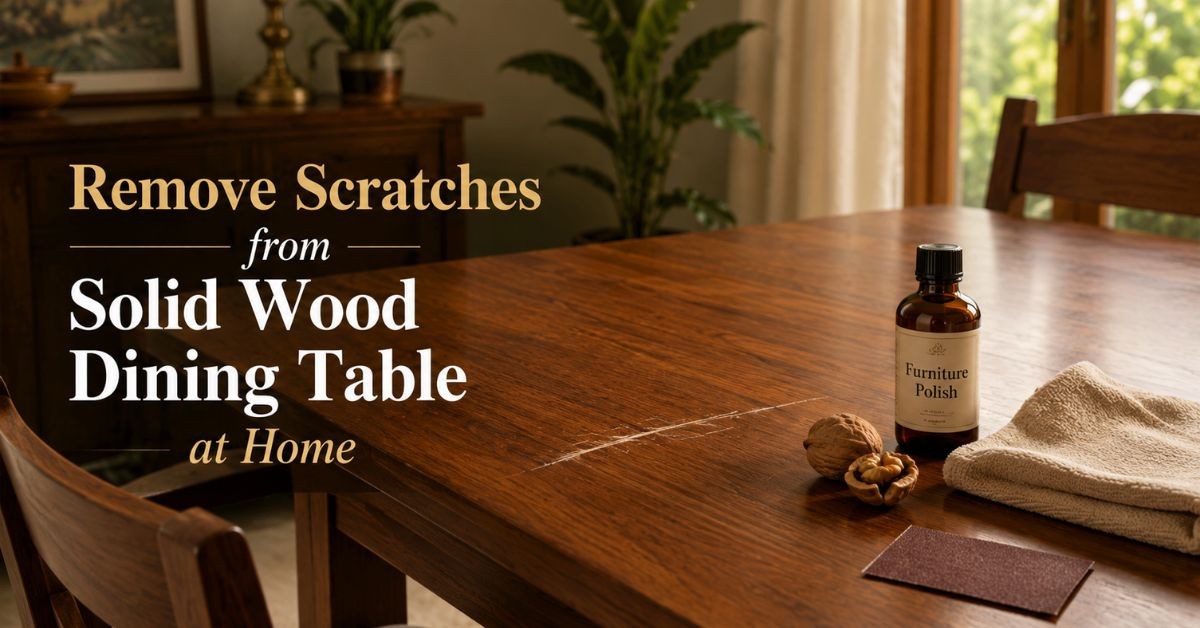

How to Remove Scratches from Solid Wood Dining Table at Home
Scratches on a solid wood dining table can be removed at home using simple methods — walnut rubbing for light scratches, vinegar-oil solution for surface marks, wood filler for deep gouges, and fine sandpaper (240 grit) for finish-level damage. The method depends on the depth of the scratch. This guide covers all types with step-by-step instructions for Indian wood species like Acacia, Sheesham, and Mango wood.
Solid wood dining tables are made to last for years, but daily use can leave small marks, dull lines, stains, and scratches. In Indian homes, dining tables are used for much more than meals — kids’ homework, laptop work, tea time, family gatherings, festivals, and daily serving. Because of this, scratches are common on dining tables.
The good news is that most scratches do not mean your table is damaged permanently. If you identify the scratch correctly, you can repair many marks at home using simple items like walnut, furniture markers, wax sticks, petroleum jelly, wood filler, or fine sandpaper. This guide explains how to remove scratches from a solid wood dining table safely, without damaging the natural grain or finish.
Identify the Type of Scratch First

Before trying any wood scratch repair at home, first check what type of scratch you are dealing with. A light surface scratch needs a very different repair method than a deep gouge. If you use sanding or filler on a light mark, you may damage the finish unnecessarily. If you use only oil on a deep scratch, it will not repair the damaged wood fibres.
Light Surface Scratch: Finish Level Only
A light surface scratch usually appears as a white, dull, or faded line on the top surface of the dining table. In this case, the wood itself is not damaged. Only the polish, wax, or top protective finish has been disturbed.
You can identify a light scratch by applying a tiny drop of water on the mark. If the scratch temporarily disappears when wet and comes back after drying, it is mostly a finish-level scratch.
Best fixes for light surface scratches include walnut rubbing, almond oil, vinegar-oil mix, petroleum jelly, or furniture polish. These methods help darken the mark, restore moisture, and blend the scratch with the surrounding finish.
Medium Scratch: Into the Stain Layer
A medium scratch goes slightly deeper than the top finish. You may notice a colour difference because the stain layer has been affected. The scratch may feel slightly rough when touched, but it is not a deep groove.
These scratches are common when sharp objects, utensils, keys, toys, or serving trays are dragged across the dining table. For medium scratches, oil alone is usually not enough because the colour needs to be restored.
Best fixes include furniture markers, wax fill sticks, iodine for dark wood, and wax crayons. These methods help fill the colour gap and make the scratch blend with the natural wood grain.
Deep Gouge: Into the Wood Itself
A deep gouge means the scratch has gone into the actual wood. You can feel a groove clearly with your fingernail, and the wood fibres may look broken or raised.
Deep scratches usually happen due to heavy impact, dragging sharp metal objects, moving appliances, or accidental cuts. These need more serious repair because the damaged area must be filled, levelled, sanded, and refinished.
Best fixes include wood filler, sanding, staining, and refinishing. If the gouge is large or wider than 5mm, professional repair is usually better.
How to Remove Light Scratches from Solid Wood Dining Table

Light scratches are the easiest to repair at home. These marks usually sit on the finish and do not affect the actual wood. Always start with the gentlest method first and test on a hidden corner before applying anything on the visible table surface.
Method 1: Walnut Rubbing: Best for Acacia and Mango Wood
Walnut rubbing is one of the simplest ways to fix wood table scratches naturally. A raw walnut contains natural oils that can darken and blend light scratches on wooden surfaces.
Take a raw walnut and rub it directly over the scratch in a circular motion. After rubbing for 30–60 seconds, let the walnut oil sit on the scratch for about 5 minutes. Then buff the area with a dry, soft cloth in the direction of the wood grain.
For slightly deeper light scratches, repeat the process 2–3 times. Do not press too aggressively. The goal is to let the natural walnut oil settle into the scratch and reduce the visible white line.
This method works especially well for Acacia and Mango wood dining tables because both have warm natural tones that respond well to oil-based blending. In India, walnuts, or akhrot, are easily available in kirana stores, dry fruit shops, supermarkets, and on Amazon India.
Method 2: Vinegar and Olive Oil Solution
A vinegar and olive oil solution can help reduce light surface marks and dull scratches. The vinegar helps clean the mark, while olive oil moisturises the surface and improves the appearance of the scratch.
Mix 1 part white vinegar with 3 parts olive oil. Dip a lint-free cloth into the mixture and apply it only over the scratched area. Rub gently in the direction of the wood grain and leave it for 5 minutes. After that, wipe the surface clean with a dry cloth.
This method is useful for light marks on oiled or waxed wood surfaces. However, avoid using vinegar on polyurethane-finished dining tables. Vinegar is acidic and can create a hazy or dull patch on some coated finishes.
If you are not sure whether your table has a polyurethane finish, test the solution on the underside or a hidden corner first.
Method 3: Petroleum Jelly Overnight Fix
Petroleum jelly, commonly known as Vaseline, can help reduce the appearance of light scratches by softening and slightly swelling the surrounding wood fibres.
Apply a small amount of petroleum jelly generously over the scratch. Let it sit overnight. The next morning, wipe the area with a clean, dry cloth and polish gently in the direction of the grain.
This method works well for dry-looking surface scratches and slightly dull marks. It is especially helpful for Mango wood because Mango wood is more porous than Acacia and can respond well to mild oil-based treatments.
Do not use too much petroleum jelly on the entire table surface. Apply it only to the scratch area and clean the excess properly the next day.
How to Fix Medium Scratches on Wooden Dining Table

Medium scratches need colour correction and light filling. These scratches are deeper than finish-level marks, so walnut or oil may not fully hide them. The main goal is to restore colour, fill the scratch line, and blend it with the surrounding grain.
Method 1: Furniture Marker and Wax Fill Stick
Furniture markers and wax fill sticks are among the best tools to fix wood table scratches at home. They are affordable, easy to use, and available in common wood shades like light oak, teak, walnut, dark brown, honey, and mahogany.
Choose a furniture marker that matches your table finish. If you are confused between two shades, select the slightly darker one because markers often dry lighter after wiping.
Clean the scratched area first with a dry cloth. Then draw into the scratch using the marker, following the grain direction. Do not colour the surrounding area unnecessarily. Wipe away excess marker immediately with a dry cloth.
After the colour sets, use a matching wax fill stick to fill the scratch line. Rub the wax into the scratch, then scrape the extra wax gently with a plastic card. Buff the area with a soft cloth until the repair blends into the table surface.
This method works well on Acacia, Sheesham, Mango wood, and walnut-finish dining tables.
Method 2: Iodine for Dark Wood: Sheesham and Walnut Finish
Iodine is a useful colour-matching trick for dark wooden dining tables. It works particularly well on Sheesham wood and East India Walnut finish because both have deeper brown tones.
Dip a cotton swab in iodine, such as Betadine, and apply it carefully inside the scratch. Do not spread iodine on the surrounding surface. Let it sit for a few seconds, then wipe the excess immediately with a clean cloth.
If the scratch still looks light, repeat the process once more. Avoid over-applying iodine because it can create a dark patch if left too long.
In India, iodine or Betadine is easily available at most medical stores for around ₹50–₹80. This makes it a practical home solution for Sheesham wood dining tables, which are common in Indian homes.
Method 3: Wax Crayon Colour Match
A wax crayon can be a quick fix for medium scratches, especially if the scratch is narrow and the colour gap is visible. Choose a crayon shade that closely matches the dining table finish.
For Mango wood, warm beige, honey, or bisque shades usually work better. For Sheesham, dark brown or reddish-brown shades are more suitable. For Acacia, choose warm brown or golden-brown tones.
Colour into the scratch in the direction of the wood grain. Then blend it gently with your fingertip or a soft cloth. Buff lightly until the wax sits inside the scratch and the surface looks even.
This method is not a permanent professional repair, but it is useful for small visible scratches before guests arrive or before a festival cleaning routine.
How to Repair Deep Gouges in Solid Wood Dining Table

Deep gouges require filling and refinishing. Since the actual wood is damaged, simple oils or markers will not be enough. Solid wood has one major advantage over veneer: it can be sanded, filled, and refinished multiple times if done carefully.
Method 1: Wood Filler: Best for Deep Gouges
Wood filler is one of the best ways to repair a deep gouge in a solid wood dining table. Choose a stainable wood filler if you plan to apply matching colour later.
First, clean the gouge area thoroughly. Remove dust, loose wood fibres, food particles, or polish residue. Use a dry brush or soft cloth.
Apply wood filler into the gouge using a putty knife. Slightly overfill the area because filler may shrink while drying. Let it dry fully according to the product instructions. Most fillers need around 30–60 minutes, but some may need longer.
Once dry, sand the area gently with 240 grit sandpaper. Always sand in the direction of the wood grain. Do not sand in circles because circular sanding marks are difficult to hide.
After the surface becomes level, apply a matching wood stain, polish, or finish to blend the repaired area with the rest of the table.
Method 2: Sanding and Refinishing for Severe Damage
If the scratch is long, rough, or has affected the table finish badly, sanding and refinishing may be required. This method should be done carefully because over-sanding can create an uneven patch.
Start with 180 grit sandpaper to smooth the damaged area gently. Then move to 240 grit sandpaper for a finer finish. Always sand along the wood grain, never across it and never in circular motion.
After sanding, clean the dust completely with a dry cloth. Apply a matching wood oil, polish, or stain according to the existing finish of your table. If your table has a matt finish, use a matt polish. If it has a semi-gloss or gloss finish, choose a suitable matching polish.
Let the area dry for at least 24 hours before using the dining table again. Avoid placing hot plates, water glasses, or heavy items on the repaired area immediately.
If the gouge is wider than 5mm or covers a large area, professional refinishing gives a better and more even result. You can contact Woodensure’s care team for guidance if your solid wood dining table needs deeper repair.
Wood-Specific Scratch Repair Guide for Indian Homes

Indian homes have different wood care needs because of heat, dust, monsoon humidity, and regular daily use. Acacia, Sheesham, and Mango wood are commonly used in solid wood furniture, but each wood reacts differently to scratches and repairs.
Acacia Wood Dining Table Scratch Repair
Acacia wood is hard, dense, and naturally durable. It is more scratch-resistant than many softer woods, which makes it a good choice for Indian dining tables. However, when Acacia does get scratched, the repair may need slightly more pressure and patience.
For light scratches, walnut rubbing works well, but you may need to repeat it 2–3 times. Because Acacia is dense, the oil may take longer to blend into the scratch.
Avoid strong chemical cleaners on Acacia wood, especially if the table has a polyurethane coating. Vinegar may haze the coating if used too aggressively.
Best methods for Acacia wood scratch repair are walnut rubbing, furniture markers, and wood wax sticks.
Sheesham: Indian Rosewood Scratch Repair
Sheesham, also known as Indian Rosewood, has rich dark grains and beautiful natural patterns. Scratches on Sheesham may look more visible when the lighter inner layer shows through the dark finish.
Iodine works exceptionally well for dark Sheesham tables because it helps restore brown colour inside the scratch. Dark brown furniture markers and walnut rubbing are also useful.
After repairing a scratch on Sheesham, apply a small amount of lemon oil or suitable wood polish to restore the natural sheen. Buff gently with a soft cloth.
Best methods for Sheesham scratch repair are iodine, dark brown furniture marker, wax fill stick, and walnut rubbing.
Mango Wood Dining Table Scratch Repair
Mango wood has a lighter grain with warm tones. It is usually more porous than Acacia, which means it can respond well to petroleum jelly, walnut oil, and wax-based treatments.
For light scratches, petroleum jelly overnight treatment works very well. Walnut rubbing is also useful for small white marks. For medium scratches, choose lighter furniture markers instead of dark brown shades.
Wax crayons in warm beige, bisque, honey, or light brown tones can blend well with Mango wood dining tables.
Best methods for Mango wood scratch repair are petroleum jelly, walnut rubbing, light furniture markers, and wax crayons.
6 Tips to Prevent Scratches on Solid Wood Dining Table

Prevention is always easier than repair. A solid wood dining table can last for decades if protected from daily friction, moisture, heat, and harsh cleaning habits.
- First, always use placemats and coasters. Avoid placing hot plates, steel glasses, ceramic bowls, or serving dishes directly on the table. Even small movements can create surface scratches over time.
- Second, use felt pads under decorative items, trays, vases, and table accessories. If you keep a centrepiece on your dining table, add soft padding underneath it.
- Third, wipe spills immediately with a dry cloth. Water left on the surface can damage polish, create white marks, or slowly affect the wood. This is especially important during Indian monsoon season.
- Fourth, maintain indoor humidity between 40–50% where possible. During monsoon months, from June to September, solid wood expands slightly due to moisture in the air. Avoid pushing furniture tightly against walls during this period.
- Fifth, polish your table every 3–6 months to maintain a protective finish layer. Regular polishing keeps the surface nourished and reduces the chance of visible scratches.
- Sixth, avoid placing the dining table in direct sunlight. Strong UV exposure can fade the finish, dry the wood faster, and make scratches more noticeable.
For Indian homes, monsoon care is very important. During June to September, keep the dining area ventilated and avoid leaving wet cloths, damp mats, or water-heavy items on the table surface.
Common Mistakes to Avoid While Repairing Wood Scratches
Many people make scratches worse by using the wrong repair method. Before trying any fix, avoid these common mistakes:
- Do not use harsh scrub pads or steel wool on finished dining tables. These can create more scratches instead of removing the existing ones.
- Do not sand a light surface scratch unless absolutely necessary. Sanding removes finish, and if done unevenly, it can create a visible patch.
- Do not apply vinegar on all wooden tables without testing. Vinegar can work on some oiled finishes, but it may dull or haze polyurethane-coated surfaces.
- Do not use too much water while cleaning scratches. Solid wood does not need soaking. Excess water can enter the grain and cause swelling.
- Do not use a random dark marker on light wood. A wrong colour can make the scratch more visible.
- Do not drag table decor, trays, laptops, or serving bowls across the surface. Always lift and place items carefully.
Final Thoughts
You can remove scratches from a solid wood dining table at home if you first identify the scratch depth. Light surface marks can often be fixed with walnut, petroleum jelly, or vinegar-oil solution. Medium scratches need furniture markers, wax sticks, or iodine for dark wood. Deep gouges need wood filler, sanding, and refinishing.
For Indian homes, wood type matters. Acacia needs patience because it is hard and dense. Sheesham responds beautifully to dark colour correction. Mango wood works well with oil and wax-based treatments. With the right method, your dining table can look clean, polished, and well-maintained again.
Woodensure solid wood dining tables are crafted in Udaipur, Rajasthan using premium wood — built to last decades with proper care.
Explore our Solid Wood Dining Table Collection
Also read:
How to Clean Outdoor Furniture
Have a scratch that won’t budge? Chat with our care team on WhatsApp for quick guidance.
Author Bio
Written by the Woodensure craftsmanship team with 4+ years of experience in solid wood furniture manufacturing. Woodensure works with premium Acacia, Sheesham, and Mango wood furniture, handcrafted in Udaipur, Rajasthan, with a focus on long-lasting quality, practical design, and after-sale furniture care guidance.
Last updated: 28-May-2026