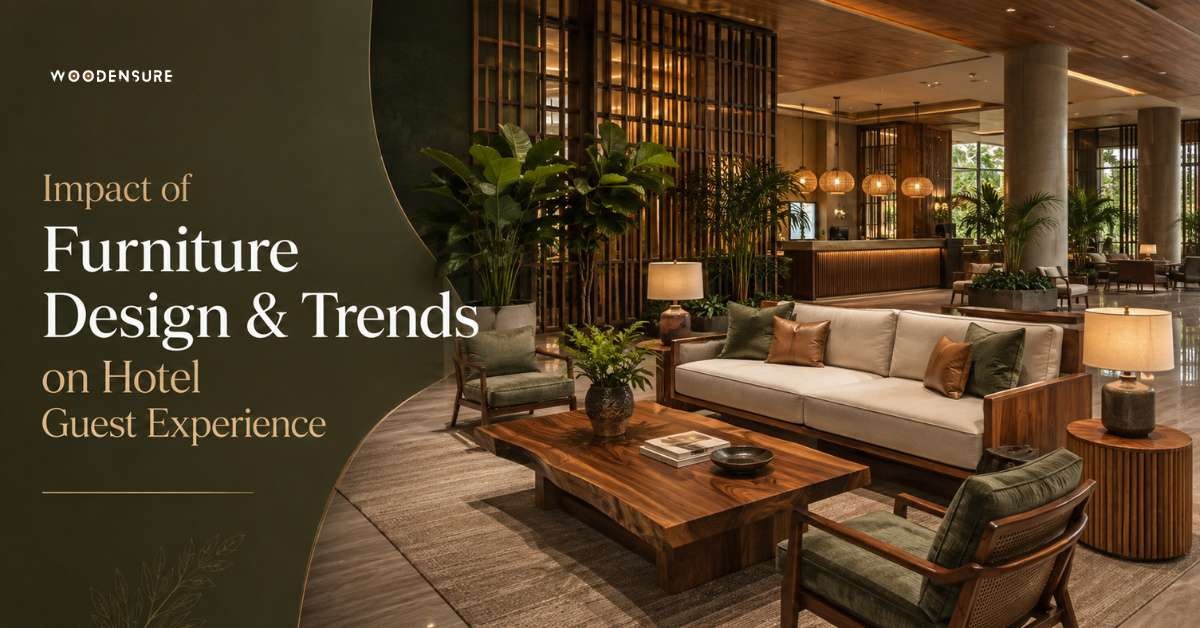

Impact of Furniture Design & Trends on Hotel Guest Experience
Hotel guests may book a property because of its location, price, reviews or amenities, but once they arrive, much of their experience is shaped by the physical environment around them. The lobby sofa they sit on during check-in, the bedside table they use at night, the chair they work from, and the furniture in the restaurant all influence how comfortable, convenient and premium the hotel feels.
Furniture is therefore more than part of a hotel's décor. It is one of the physical elements through which guests interact with the property.
A 2024 systematic review covering 199 hospitality studies found that the physical environment—including spatial layout, furnishings, ambience and design—is an important part of the hospitality experience and can influence customer perceptions and behaviour.
For hotel owners, general managers, architects and procurement teams, understanding the impact of furniture on hotel guests can lead to better design decisions and stronger long-term value.
How Does Furniture Design Affect Hotel Guest Experience?
Hotel furniture design affects guest experience through comfort, functionality, aesthetics, space utilisation, accessibility and perceived quality. Well-designed furniture makes a hotel easier and more enjoyable to use while helping communicate the property's identity.
Guests may not consciously analyse every chair, table or cabinet, but they notice when furniture is uncomfortable, difficult to use, poorly positioned or visibly worn.
The best hospitality interiors therefore combine five elements:
- Comfort
- Functionality
- Visual identity
- Durability
- Appropriate scale and placement
Research into hotel environments has also linked positive hotel design with guest well-being and brand-related responses, demonstrating that design can influence more than appearance alone.
Why Furniture Has Such a Strong Impact on Hotel Guests
Furniture is one of the few elements of a hotel interior that guests continuously touch and use.
A decorative wall may create atmosphere, but guests physically interact with beds, chairs, tables, wardrobes, benches and desks throughout their stay.
Comfort influences satisfaction
A visually impressive chair that becomes uncomfortable after ten minutes does not deliver a good hospitality experience. Seating dimensions, cushioning, posture support, table height and furniture proportions all matter.
Functionality influences convenience
Guests increasingly expect rooms to support multiple activities—from sleeping and dressing to working, eating and relaxing.
A well-positioned bedside table, accessible charging point, practical luggage unit or comfortable work chair can make everyday activities significantly easier.
Design influences perceived quality
Furniture also communicates the hotel's positioning.
A boutique resort may use handcrafted furniture and natural materials to create warmth, while an urban business hotel may prefer clean lines, efficient storage and compact multifunctional pieces.
Research has even shown that hotel-room design preferences can influence satisfaction and behavioural responses, although preferences vary across different guest groups.
First Impressions Begin With Hotel Lobby Furniture

The lobby is often the first major interior space a guest experiences.
Furniture plays several roles here simultaneously. It provides waiting areas, supports conversations and meetings, manages movement through the space and establishes the visual language guests will associate with the property.
Lobby furniture may include:
- Sofas and lounge chairs
- Coffee and centre tables
- Console tables
- Benches
- Reception-area seating
- Side tables and occasional furniture
For luxury properties, furniture may communicate craftsmanship and exclusivity. Resorts may use more organic forms and natural materials, while business hotels frequently favour structured arrangements and easy circulation.
The objective should not simply be to fill an empty lobby.
Every furniture piece should contribute to comfort, movement or identity—ideally all three.
Guest-Room Furniture Directly Influences Comfort

Guest rooms present an even greater furniture challenge because limited space must support several activities.
Sofa Beds and headboards
The sofa bed is naturally the focal point, while the headboard contributes to comfort, acoustic perception and overall room character.
Bedside furniture
Bedside tables need enough practical surface area for phones, personal items, lighting and charging access without overwhelming the sleeping zone.
Desks and chairs
With business travel and blended business-leisure stays continuing to shape hotel use, a functional work area can improve the room's versatility.
Wardrobes and luggage units
Storage should allow guests to unpack and organise belongings without creating obstacles in circulation areas.
Lounge seating
Where space permits, a comfortable chair, small sofa or bench creates another usable zone so guests are not restricted to sitting on the bed.
The lesson is simple: hotel room furniture should be planned around guest activities rather than selected only because individual pieces look attractive.
Hotel Furniture Trends Shaping Guest Experience in 2026
The strongest hotel furniture trends in 2026 are moving beyond purely visual fashion. Industry forecasts increasingly emphasise emotional connection, natural materials, local identity, wellness, flexibility and spaces that feel human rather than generic.
1. Natural materials and biophilic influence

Wood, stone, natural textures and nature-inspired environments continue to influence hospitality design.
Research involving hotel environments has found that well-executed biophilic design can positively affect perceived value and guest well-being. A 2025 study involving 428 hotel guests found significant relationships between high-quality biophilic design, well-being, perceived value and future patronage intentions.
Earlier experimental research also found stronger positive emotional responses and higher perceived quality in lodging environments incorporating biophilic design.
This does not mean simply adding plants. Natural materials, daylight, tactile surfaces, landscape views and thoughtfully selected furniture can work together.
2. More authentic, locally connected interiors
Generic hotel interiors are increasingly giving way to spaces that reflect their destination.
Regional materials, indigenous patterns, local craft traditions and locally inspired furniture can create a stronger sense of place.
For hotels and resorts in India, this could mean interpreting regional woodworking, stone, textile or craft traditions in a contemporary way rather than copying a standard international aesthetic.
3. Tactile and sensory design
Materiality is becoming increasingly important.
Guests experience timber grain, upholstery, stone, leather and furniture finishes through touch as well as sight. Current hospitality design discussions increasingly emphasise material texture because surfaces affect perceptions of comfort, atmosphere, durability and quality.
4. Flexible and multifunctional furniture
Hotels need spaces capable of supporting more than one activity.
Movable tables, modular seating, compact workspaces and multifunctional pieces can allow guestrooms and common areas to adapt to changing guest behaviour.
The objective is not necessarily to add more furniture, but to make every piece work harder.
5. Longevity over short-lived trends
Hotels are also paying greater attention to how interiors age.
Furniture that looks impressive during opening month but deteriorates quickly can create both operational costs and a weaker guest impression.
For hospitality projects, material quality, repairability, joinery, finish performance and ease of maintenance should therefore be considered alongside design.
Different Hotel Areas Require Different Furniture Priorities

Furniture specifications should change according to how each hotel zone is used.
| Hotel Area | Main Guest Need | Furniture Priority |
|---|---|---|
| Lobby | Arrival and socialising | Comfort + identity |
| Guest room | Rest and convenience | Ergonomics + functionality |
| Restaurant | Comfortable dining | Seating + durability |
| Bar/lounge | Social interaction | Flexibility + atmosphere |
| Suite | Premium experience | Comfort + customisation |
| Outdoor area | Relaxation | Weather-appropriate materials |
| Banquet space | Events | Mobility + commercial durability |
Using identical specifications everywhere can create problems because furniture in a restaurant, lobby and guest room experiences very different usage patterns.
Beautiful Hotel Furniture Is Not Enough

A major hospitality furniture mistake is focusing heavily on appearance while underestimating commercial use.
A chair in a busy hotel restaurant may be moved and occupied repeatedly every day. Lobby furniture experiences continuous public use, while housekeeping practices can expose room furniture to frequent cleaning and movement.
Over time, problems such as loose joints, scratched surfaces, damaged edges, unstable chairs or worn finishes become visible to guests.
That means durability eventually becomes part of the guest experience.
From our furniture manufacturing experience at Woodensure, we find that hospitality projects benefit from specifying details before bulk production—including dimensions, material, finish shade, upholstery, hardware and intended usage.
For repeated hotel-room designs, approving a full prototype can also reveal practical issues involving comfort, room movement, furniture scale, cable access or finish before production begins across multiple rooms.
Internal link opportunity: Hotel Furniture Buying Guide 2026.
What Should Hotels Consider When Choosing Furniture?

Hotel owners and procurement teams can use the following framework:
- Define the target guest. Business travellers, families, luxury travellers and resort guests have different needs.
- Understand usage intensity. Public spaces usually require greater commercial durability.
- Measure the space accurately. Furniture should support circulation rather than restrict it.
- Evaluate ergonomics and comfort.
- Select materials according to climate and application.
- Consider housekeeping and maintenance requirements.
- Match furniture with the hotel's brand identity.
- Specify finishes, hardware and upholstery clearly.
- Prototype important repeated furniture pieces where practical.
- Evaluate lifecycle value rather than purchase price alone.
This approach helps create interiors that perform operationally as well as aesthetically.
A Furniture Manufacturer's Perspective on Better Guest Experience

Successful hotel furniture projects usually begin before manufacturing.
The process should start by understanding the floor plan, guest profile, room dimensions, desired design language, quantity, material requirements and expected level of commercial use.
For custom projects, coordination between the hotel owner, architect, interior designer, procurement team and manufacturer can help maintain consistency across repeated furniture pieces.
Woodensure's hotel furniture manufacturing capabilities include customised dimensions, finishes, upholstery choices and design adaptations for guest rooms, restaurants, lounges and common areas.
The goal should not simply be to manufacture furniture that fits the drawing. It should be to produce furniture that continues to support the intended guest experience after years of use.
Conclusion
Furniture design plays a direct role in how guests experience a hotel.
The most successful hospitality furniture is not simply attractive. It supports comfort, movement, functionality, brand identity and long-term commercial performance.
As hotel furniture design and guest experience become increasingly connected, hotels should view furniture decisions as part of experience design—not simply interior decoration.
By combining thoughtful design with appropriate materials, ergonomics, durability and a clear understanding of guest behaviour, hotels can create spaces that feel better to arrive in, easier to use and more memorable to leave.
Author Bio
Woodensure Editorial Team: The Woodensure Editorial Team develops educational content on solid wood furniture, custom furniture manufacturing and hospitality furniture planning. Drawing on Woodensure's experience working with custom furniture, bulk hospitality requirements, architects and interior designers, the team focuses on practical insights around furniture materials, design, manufacturing, durability and project execution.