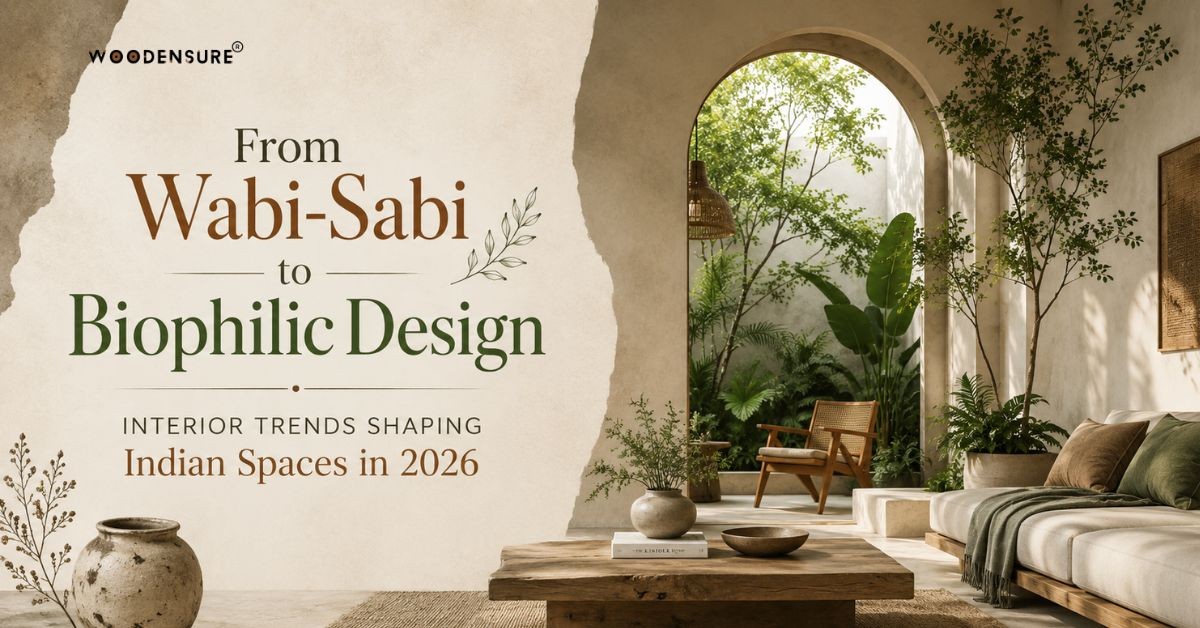
From Wabi-Sabi to Biophilic Design: Interior Trends Shaping Indian Spaces in 2026
Indian interiors in 2026 are becoming warmer, more natural, adaptable and personal. Instead of highly polished, uniform rooms, designers are exploring Wabi-Sabi textures, biophilic planning, regional materials, multifunctional layouts, artisan craftsmanship and discreet technology. Current design coverage similarly points toward natural surfaces, patina, patterned textiles and spaces that feel layered rather than showroom-perfect.
These directions are especially relevant in India, where compact apartments, multigenerational living, varied climates and regional craft traditions shape design decisions. The strongest projects will not copy a trend literally. They will adapt its principles to the residents, architecture, location and long-term maintenance needs.
Last Updated: 20 July 2026
What Are the Biggest Interior Design Trends in India for 2026?
The most influential trends include Wabi-Sabi, biophilic design, warm minimalism, evolved Japandi, earthy regional palettes, quiet luxury, multifunctional spaces, artisan-led interiors, statement lighting, organic shapes, Dopamine Decor, Grandmillennial style, circular design, personalized storytelling and smart luxury.
Together, these design directions favour natural materials, flexible planning, visible craftsmanship, emotional character and technology that supports everyday life without dominating the interior.
What Is Driving Interior Design Trends in Indian Homes in 2026?
Urban apartments increasingly need rooms that can support working, dining, entertaining, storage and occasional guests. Homeowners are also showing greater interest in wood, stone, cane, clay, lime plaster and handwoven textiles instead of overly synthetic finishes.
At the same time, copy-paste luxury is losing relevance. People want homes connected to their routines, memories and cultural background. Technology is also becoming less visible, with lighting, charging, climate control, entertainment and security planned into the interior rather than added later as separate gadgets.
1. What Is Wabi-Sabi Interior Design?

Wabi-Sabi is a Japanese philosophy that finds beauty in imperfection, natural ageing and authenticity. In interiors, it appears through visible wood grain, irregular plaster, handmade ceramics, raw stone and muted colours.
Indian homes can interpret Wabi-Sabi through reclaimed timber, woven textiles, antique furniture and handmade pottery. The result should feel calm and intentional—not unfinished or poorly maintained. Indian residential projects already demonstrate its compatibility with tactile materials, asymmetry and practical storage.
2. How Can Biophilic Design Go Beyond Indoor Plants?

Biophilic design connects people with nature through daylight, ventilation, outdoor views, vegetation, water and natural materials. It is a spatial-planning approach, not simply a room filled with decorative plants.
In Indian homes, it may involve shaded balconies, courtyards, window seats, cross-ventilation, timber, stone and plants suited to the available light. Designers must resolve drainage, waterproofing, humidity and maintenance early. Even apartments without large balconies can use framed outdoor views, natural textures and a limited number of healthy plants effectively.
3. Why Is Warm Minimalism Replacing Stark Minimalism?

Warm minimalism keeps the visual simplicity of minimal design but removes its coldness. Warm whites, sand, taupe, timber, linen, textured walls and soft lighting create comfort without clutter.
It suits compact Indian apartments because fewer, better-scaled pieces improve circulation and make storage easier to conceal. However, an entirely beige room can feel flat. Contrast should come from wood grain, shadow, texture, material variation and a few meaningful objects rather than excessive decoration.
4. How Is Japandi Design Evolving for Indian Lifestyles?

Japandi combines Japanese simplicity with Scandinavian comfort and functionality. Its Indian evolution uses warmer wood tones, practical storage, low-profile furniture, natural textiles and carefully selected craft objects.
The design must also support hosting, family gatherings, puja areas and the storage needs of Indian households. A successful Indian Japandi home feels calm but not empty. Copying an extremely sparse international reference may create an attractive photograph while failing to support the family’s actual routines.
Also read: Epoxy Resin Furniture vs Solid Wood Furniture — Which Should You Choose for Your Home?
5. How Are Earthy and Regional Material Palettes Shaping Indian Interiors?

Regional palettes draw inspiration from local landscapes, architecture and craft traditions. Rajasthan may suggest sandstone, lime plaster and muted ochre. Kerala may inspire dark timber, cane and clay tiles. Goa may inform limewashed walls and patterned flooring, while Himalayan settings may favour stone, timber, wool and earthy greys.
These references should not become rigid regional formulas. Designers must consider climate, availability, transportation, finish behaviour and maintenance. Regional identity is strongest when materials serve the space meaningfully rather than appearing as superficial decorative symbols.
6. What Does Quiet Luxury Mean in Indian Interior Design?

Quiet luxury communicates refinement through material quality, proportion and craftsmanship rather than obvious ornament, branding or visual excess. It may include well-finished timber, natural stone, tailored upholstery, precise joinery, integrated storage and layered lighting.
Indian craftsmanship and regional materials can add depth without making the room visually loud. Quiet luxury is not simply an all-beige colour palette. Its real value lies in detailing, comfort, material authenticity and how gracefully the interior performs and ages over time.
In dining spaces, material quality can be introduced through carefully proportioned solid wood dining table designs rather than excessive decorative detailing.
7. How Can Smart and Multifunctional Spaces Improve Compact Homes?

Multifunctional design allows one room or furniture element to support several activities. Foldable desks, extendable dining tables, sofa beds, storage benches, nesting tables and sliding partitions can help urban homes accommodate work, meals, guests and storage.
Each function must remain comfortable, stable and easy to access. Clearances, movement, hardware durability and storage for loose components require careful planning. Complexity is not useful when converting the furniture from one function to another becomes inconvenient in daily life.
8. Why Are Artisan-Led Interiors Becoming More Relevant?

Artisan-led interiors use identifiable craft processes rather than generic craft-inspired decoration. Hand-carved wood, cane weaving, block printing, handmade tiles, ceramics, metalwork and handloom fabrics introduce variation, cultural context and visible evidence of the maker.
Designers should verify sourcing, credit artisans where possible and combine crafts selectively. Too many unrelated techniques can weaken the overall design story. A few well-positioned handmade elements often create greater impact than applying decorative craft to every available surface. Renewed interest in tactile finishes and materials with provenance is also visible in current design reporting.
9. How Is Statement Lighting Becoming Part of Spatial Architecture?

Statement lighting can shape a room’s hierarchy, proportions and atmosphere rather than simply decorating its ceiling. Sculptural pendants may define dining zones, linear lights can guide movement, and wall washing can reveal the texture of stone, plaster or artwork.
Fixture selection must consider ceiling height, scale, glare, colour temperature, task-lighting requirements and maintenance access. A dramatic fixture that blocks views, produces uncomfortable light or overwhelms the furniture is not successful, regardless of how striking it appears.
10. Why Are Curves and Organic Shapes Returning to Interiors?

Curves soften rigid architectural lines and can make movement through a room feel more natural. They appear in rounded seating, oval tables, arched openings, curved partitions, organic rugs and sculptural wall niches.
Soft edges can be particularly useful in family homes and tight circulation areas. However, oversized rounded furniture may consume more floor space than straight-edged alternatives. Repeating arches and curves throughout every element can also remove visual hierarchy. One or two controlled organic gestures usually create a stronger result.
11. How Can Dopamine Decor Add Colour Without Creating Clutter?

Dopamine Decor uses colour, pattern and playful objects to create an energetic and emotionally expressive interior. In India, it can draw inspiration from block prints, folk art, painted furniture, festive colours and patterned textiles.
The room should still follow a visual system: one dominant colour, one supporting colour and a limited number of accents. Bold upholstery, artwork or a colour-blocked wall can create the main focal point. When every object competes equally for attention, the result feels chaotic rather than joyful.
12. What Is Grandmillennial Style and How Can It Work in India?

Grandmillennial style reinterprets traditional and nostalgic interiors for contemporary living. It combines familiar decorative elements with a younger and more relaxed approach to traditional design.
Indian interpretations may include inherited furniture, floral or block-printed fabrics, brass objects, classic lamps, carved wood and family collections. The aim is to create a home that feels collected over time, not staged as a period set. Traditional pieces work best with cleaner layouts, thoughtful lighting and sufficient negative space.
One meaningful restored heirloom can contribute more character than a room filled with newly manufactured “vintage” objects.
13. How Does Sustainable and Circular Design Affect Interior Choices?

Sustainable design aims to reduce environmental impact through responsible sourcing, durability and efficient resource use. Circular design also considers how products can remain in use through repair, reuse, refurbishment, disassembly and recycling.
For interiors, this may mean reclaimed materials, replaceable upholstery, repairable furniture, low-emission finishes and adaptable components. Natural-looking materials are not automatically sustainable; their origin, transportation, expected lifespan and end-of-life options also matter.
Circular thinking begins during the design stage, before waste is created. Its broader principles include eliminating waste, keeping products and materials in circulation and designing systems that can retain value over time.
Also read: 20+ Trending Bedroom Wall Colour Combinations You’ll Love in 2026
14. How Can Personalized Storytelling Create Timeless Interiors?

Personalized storytelling begins with the people using the home. Family heirlooms, books, travel objects, art, hobbies, cultural traditions and daily rituals can influence layout, storage, lighting and material choices.
This approach makes a home feel specific rather than copied from a mood board. Personalization is not limited to displaying family photographs. A reading habit may shape a window seat, frequent hosting may require flexible dining, and a craft collection may determine how display furniture and lighting are planned.
15. What Is Smart Luxury and How Is It Different from a Smart Home?

Smart luxury combines intuitive technology, comfort and refined design. It may include automated lighting, climate control, concealed speakers, motorised curtains, integrated charging, energy monitoring and discreet security.
A conventional smart home may focus on the number of connected devices, while smart luxury focuses on the complete user experience. Controls should be simple, visually unobtrusive and accessible to different generations. Technology works best when coordinated with architecture and interiors rather than added later as visible equipment, separate controls and exposed wiring.
Interior Design Trends 2026 at a Glance
| Trend | Main Characteristic | Best Suited Spaces |
|---|---|---|
| Wabi-Sabi | Natural imperfection and calm | Bedrooms and relaxed living rooms |
| Biophilic Design | Connection with nature | Living rooms, balconies and offices |
| Warm Minimalism | Simplicity with comfort | Compact apartments |
| Quiet Luxury | Refined materials and detailing | Premium homes |
| Multifunctional Design | Flexible daily use | Small urban homes |
| Dopamine Decor | Colour and creative energy | Studies and social spaces |
Which Interior Trend Is Right for Different Indian Homes?
Compact apartments may benefit from warm minimalism, Japandi and multifunctional design. Villas can support deeper biophilic planning, regional materials and quiet luxury.
Multigenerational homes need flexible layouts, accessible technology and storage shaped around different age groups. Rental homes work well with movable furniture, textiles and modular storage, while heritage properties can combine Wabi-Sabi, Grandmillennial style and artisan-led restoration.
Climate, lifestyle, budget, architectural character and maintenance expectations should determine the final combination.
Can Different Interior Design Trends Be Combined?
Different trends can be combined, provided the combination has a clear hierarchy. Select one dominant design direction, one supporting influence and one accent trend.
Wabi-Sabi pairs naturally with biophilic design because both value natural materials. Warm minimalism provides a quiet background for artisan pieces. Quiet luxury gains local identity through regional stone or craft, while Grandmillennial style supports personalized storytelling.
A shared colour palette, material language or emotional objective keeps the result coherent.
How Should Architects Translate a Trend into a Design Brief?
Begin by defining the intended mood and the activities the space must support. Establish a colour and material hierarchy, then test furniture scale, circulation and storage.
Specify finishes, construction details, lighting, technology and maintenance expectations before approving the direction. Samples and mock-ups are valuable when natural variation, texture or ageing is central to the concept.
These decisions can then be translated into drawings, finish references and project-specific furniture solutions for interior designers and architects.
Which Interior Trends Are Likely to Last Beyond 2026?
The most durable design directions are based on function, material value and human needs rather than a recognisable visual formula.
Biophilic planning, multifunctional spaces, regional materials, circular design, craftsmanship, personalization and discreet technology are therefore likely to remain relevant. Specific colour combinations, dramatic lighting shapes and highly identifiable furniture silhouettes may change faster.
Long-term value ultimately depends on whether a design remains useful, maintainable and meaningful to its occupants.
The Future of Indian Interior Design Is Personal and Adaptive
Indian interiors in 2026 will not be defined by one dominant style. Strong spaces will combine natural materials, climate-responsive planning, flexible layouts, regional identity, skilled craftsmanship, personal meaning and integrated technology.
Architects and interior designers do not need to reproduce every trend. Their role is to select the principles that improve the comfort, function and character of a particular home—and translate those ideas into spaces that remain relevant after the trend cycle moves on.
Author Bio:
Woodensure Editorial Team: The Woodensure Editorial Team shares practical insights on furniture, interior trends, materials and space planning for Indian homes and design professionals.
Planning a Design-Led Interior Project?
Translate your design concept into custom furniture with the right dimensions, materials and finishes. Explore Woodensure’s furniture solutions for interior designers and architects.