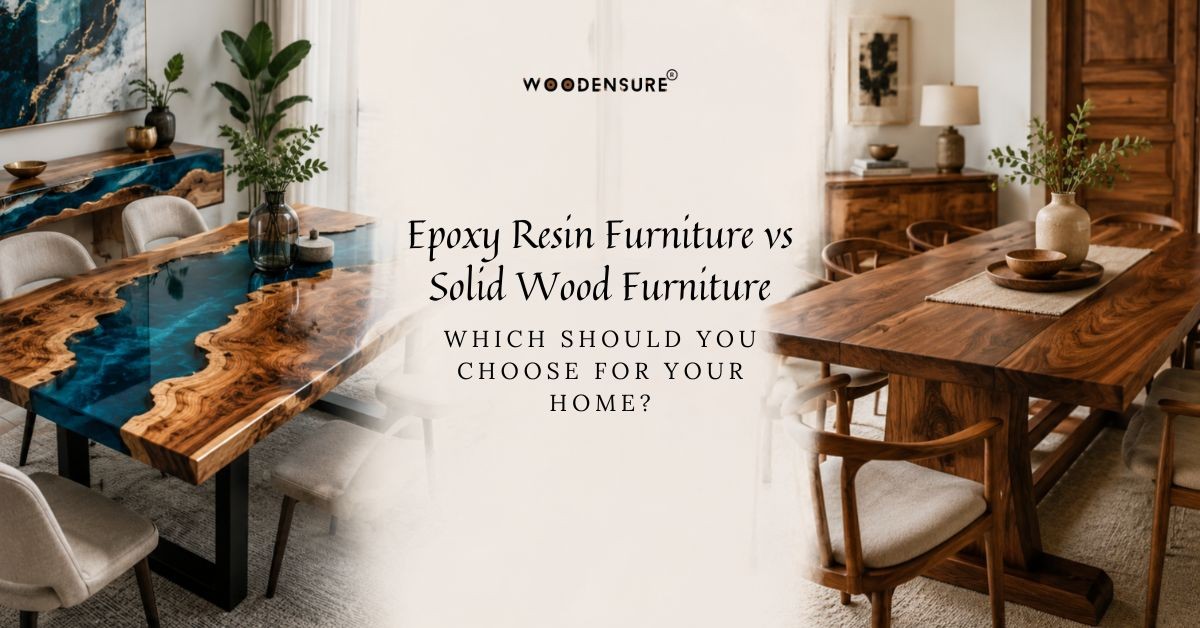

Epoxy Resin Furniture vs Solid Wood Furniture — Which Should You Choose for Your Home?
Epoxy resin furniture is generally better for busy households needing low-maintenance, scratch- and water-resistant surfaces, while solid wood furniture is better for buyers who want natural grain, easy refinishing, and a more budget-friendly entry point. At Woodensure, epoxy resin dining tables range from ₹28,499 to ₹1,88,500, while solid wood dining tables start lower. Epoxy is more stable in humid climates; solid wood is more sustainable and repairable long-term. Here is the complete comparison.
Last Updated: 27 June 2026
Choosing between epoxy resin furniture and solid wood furniture is not only about looks. It is also about how your home is used every day. A dining table in a family home, a standing desk in a work-from-home setup, a side table in a high-traffic living room, and a statement door at the entrance all face different levels of wear, moisture, sunlight, cleaning, and movement.
That is why the better question is not simply “Is epoxy better than wood?” or “Is solid wood better than epoxy?” The right question is: which material fits your lifestyle, budget, climate, and design preference better?
Epoxy resin furniture is known for its bold river-style designs, glossy finish, resistance to stains, and strong performance in humid conditions. Solid wood furniture, on the other hand, is valued for natural grain, long-term repairability, timeless warmth, and a more accessible entry price.
At Woodensure, many epoxy resin products are not purely resin. They are epoxy-wood hybrids, especially river dining tables, where high-quality solid wood forms the base and resin is used to create the flowing “river” or statement design. So in real buying decisions, the comparison is often not epoxy versus wood as separate worlds. It is about how much resin you want on the surface versus how much natural wood grain you want to keep visible.
Epoxy Resin vs Solid Wood Furniture — Quick Comparison
| Factor | Epoxy Resin Furniture | Solid Wood Furniture |
|---|---|---|
| Durability | Better — scratch, stain, and water resistant | Durable, but can scratch or dent more easily |
| Stability in Humid Climates | Better — will not warp or crack easily | Can expand or contract with humidity unless kiln-dried |
| Maintenance | Easier — wipe clean, no special treatment | Needs periodic oiling or polishing |
| Repairability | Harder — cracks or chips need professional repair | Better — can be sanded and refinished |
| Aesthetics | Bold, artistic, "river" and statement designs | Natural, warm, classic grain patterns |
| Weight | Heavier — harder to move | Heavy, but generally lighter than epoxy-wood combos |
| Upfront Cost | Higher — ₹28,499–₹1,88,500 in Woodensure dining range | More budget-friendly entry point |
| Sustainability | Resin is petroleum-based and harder to recycle | Better — natural material and biodegradable |
| Sun/UV Exposure | Caution — clear resin can yellow with prolonged UV | Generally more UV-stable with proper finish |
| Best For | Busy households, statement pieces, humid climates | Budget buyers, long-term refinishing, natural aesthetic lovers |
This comparison is intentionally balanced. Epoxy wins strongly on water resistance, stain resistance, surface stability, design customisation, and low maintenance. Solid wood wins on repairability, sustainability, warmer natural aesthetics, and lower entry pricing. Sun exposure is more of a caution point for epoxy, while design preference depends on your taste.
Epoxy Resin Furniture: Real Pros and Real Cons
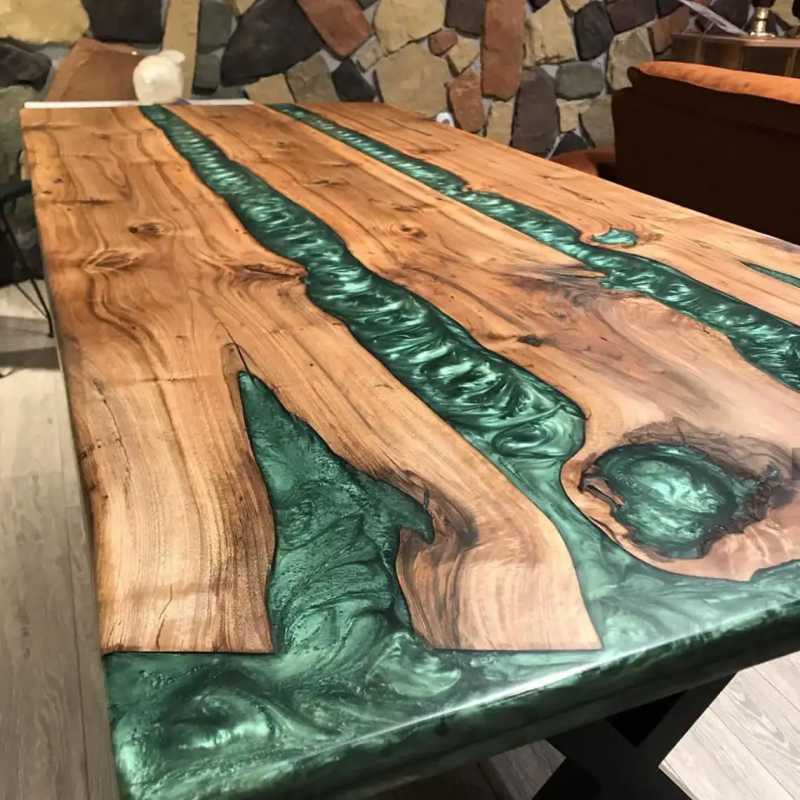
Epoxy resin furniture has become popular in India because it gives a premium, artistic look that traditional furniture materials cannot easily replicate. A good epoxy resin table can become the centrepiece of a dining room, café, office cabin, or luxury home interior.
But epoxy is not perfect for every buyer. Before choosing it, it is important to understand both the benefits and limitations.
Pros of Epoxy Resin Furniture
1. Highly resistant to scratches, stains, and daily wear
A properly cured epoxy resin surface is tough and non-porous. This makes it suitable for busy families, homes with kids, pet-friendly spaces, cafés, and dining areas where spills are common. Tea, coffee, water rings, food stains, and light everyday scratches are easier to manage on epoxy than on many untreated wooden surfaces.
2. Better stability in humid climates
Humidity is one of the biggest challenges for Indian homes, especially in coastal cities and monsoon-heavy regions. Epoxy resin does not expand and contract like natural wood. This gives epoxy furniture an advantage in homes where moisture levels change throughout the year.
3. Easy cleaning and low maintenance
Epoxy furniture does not need complicated care. In most cases, a soft damp cloth is enough for daily cleaning. There is no need for frequent oiling, waxing, or polishing. For buyers who want a beautiful table without regular maintenance effort, epoxy is a practical choice.
4. Unmatched customisation
This is where epoxy truly stands apart. You can create blue river effects, black translucent designs, ocean-style patterns, metallic pigment flows, embedded stones, LED inlays, and artistic centre channels. For people who want their dining table, desk, or door to look different from standard furniture, epoxy offers much more creative flexibility.
5. Long functional lifespan
Because epoxy resists water, stains, and everyday surface wear, it can stay functional for years with minimal care. A well-made epoxy resin table or desk can handle daily household use better than many delicate polished surfaces.
Cons of Epoxy Resin Furniture
1. Higher upfront cost
Epoxy resin furniture usually costs more than standard solid wood furniture. At Woodensure, epoxy resin dining tables range from ₹28,499 to ₹1,88,500, depending on size, design, wood base, resin work, and craftsmanship. The extra cost comes from material, pouring process, curing time, finishing, and custom artistry.
2. Heavy and difficult to move
Epoxy-wood combination pieces are often heavier than regular solid wood pieces of the same size. A large epoxy dining table, bar table, or desk is not something you will want to move frequently. If you often rearrange furniture, this weight can be a drawback.
3. Clear resin can yellow with prolonged UV exposure
Direct sunlight is not ideal for clear epoxy. Over time, prolonged UV exposure may cause yellowing or dullness, especially in clear or light-coloured resin sections. This does not mean epoxy furniture cannot be used in bright homes, but it should not be placed where harsh sunlight falls directly for long hours every day.
4. Repairs are more complicated
Solid wood can often be sanded, polished, and refinished. Epoxy is different. Minor scratches may be polished, but deeper cracks, chips, or damaged resin sections usually need professional repair. DIY repair is not as simple as sanding a wooden surface.
5. Resin is petroleum-based
From a sustainability point of view, epoxy resin is not as eco-friendly as responsibly sourced solid wood. It is petroleum-based and difficult to recycle at the end of life. Buyers who prioritise natural, biodegradable materials may prefer solid wood.
6. Longer manufacturing time
Epoxy furniture needs pouring, curing, levelling, sanding, polishing, and finishing. This process takes time. If you need furniture urgently, a ready-made solid wood piece may be easier to deliver quickly than a custom epoxy piece.
Solid Wood Furniture: Real Pros and Real Cons
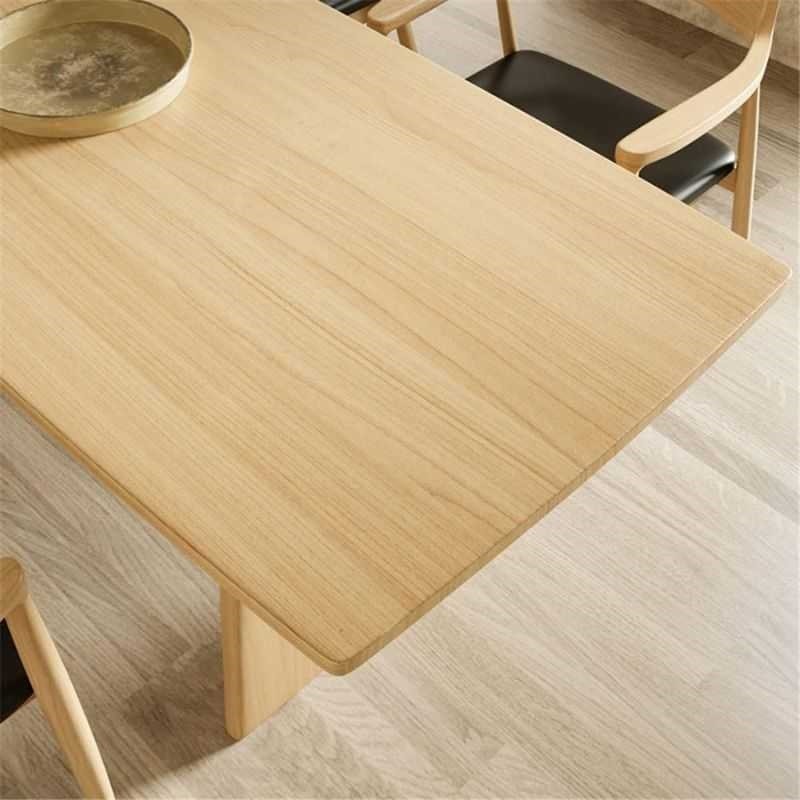
Solid wood has been trusted for generations because it is strong, natural, repairable, and timeless. Whether it is a Sheesham dining table, Acacia side table, Mango wood desk, or live edge door, solid wood brings warmth that manufactured materials often fail to match.
Still, solid wood also needs responsible care, especially in Indian homes where humidity, heat, dust, and daily usage can affect the surface.
Pros of Solid Wood Furniture
1. Natural, unique grain
Every solid wood piece has its own grain pattern, knots, tone variations, and character. No two solid wood tables look exactly the same. This makes solid wood ideal for homeowners who love natural textures and organic imperfections.
2. Can be sanded, refinished, and restored
This is one of solid wood’s biggest advantages. Over time, if the surface gets scratched, dull, or stained, it can often be sanded and refinished. This gives solid wood furniture a long life and makes it easier to pass down across generations.
3. More affordable entry point
Solid wood furniture generally starts lower than epoxy resin furniture. At Woodensure, solid wood dining tables start from a more budget-friendly range compared to premium epoxy resin dining tables. This makes solid wood a practical option for first homes, rental apartments, family dining spaces, and budget-conscious buyers.
4. Better sustainability
When responsibly sourced, solid wood is a natural and biodegradable material. It does not carry the same end-of-life recycling challenge as epoxy resin. For eco-conscious homes, solid wood is usually the stronger material choice.
5. Lighter than epoxy-wood combinations
Solid wood is still heavy and durable, but it is generally easier to move than epoxy resin and wood combination pieces. This matters for side tables, desks, and dining tables that may need shifting during cleaning or room rearrangement.
6. Timeless look
Solid wood suits both traditional and modern Indian interiors. It works with warm homes, neutral apartments, luxury villas, rustic cafés, and professional workspaces. A clean solid wood table rarely goes out of style.
Cons of Solid Wood Furniture
1. Sensitive to humidity changes
Wood is a natural material, so it can expand and contract with changes in moisture. If the wood is not properly kiln-dried or finished, it may warp, crack, or develop gaps over time. This is especially important in humid or coastal regions.
2. Needs periodic maintenance
Solid wood furniture benefits from occasional oiling, polishing, or refinishing. This helps protect the surface from dryness, moisture, and dullness. Buyers who want zero-maintenance furniture may find epoxy easier.
3. Scratches and dents more easily
A cured epoxy surface is generally more resistant to light scratches and dents than exposed wood. Solid wood is strong, but sharp objects, dragging items, pet claws, or rough use can leave marks.
4. Needs caution with hot dishes and standing water
Hot utensils, spilled water, and wet glasses can affect wooden surfaces if the finish is not protected. Coasters, mats, and trivets are recommended for daily use.
5. Less design customisation than epoxy
Solid wood offers many design options in shape, finish, edges, legs, and polish. But it cannot match epoxy’s colour effects, river patterns, transparent sections, or embedded artistic elements.
Who Should Genuinely Choose Epoxy Resin — And Who Should Choose Solid Wood?
Choose epoxy resin furniture if:
You should choose epoxy resin furniture if you have young children or pets and want a surface that is easy to clean and more resistant to everyday spills. Epoxy is also a strong choice if you live in a high-humidity region and want maximum dimensional stability.
It is especially good for buyers who want a statement piece. A blue river dining table, pearl resin standing desk, or transparent epoxy door can instantly become the visual highlight of a room. If you are comfortable with a higher upfront investment in exchange for lower day-to-day maintenance, epoxy makes sense.
Epoxy resin furniture is also ideal for cafés, boutique offices, premium home offices, creative studios, and modern dining rooms where visual impact matters as much as utility.
Choose solid wood furniture if:
You should choose solid wood furniture if budget is a primary constraint and you want a durable, natural material at a more accessible entry point. Solid wood is also better if you love natural grain, warm tones, and a traditional furniture feel.
It is the better choice if you want furniture that can be repaired, sanded, refinished, and restored over decades. If long-term sustainability matters to you, solid wood is generally more natural and biodegradable than epoxy resin.
Solid wood is also a safer choice for buyers who prefer subtle design over bold statement pieces. It blends easily with Indian homes, whether your interior style is modern, rustic, traditional, or minimal.
Honest Note: Many Woodensure pieces are not purely “one or the other.” Epoxy resin river tables are built on a solid wood base, combining the strengths of both materials. The real choice is usually about how much of the surface is resin versus exposed wood grain — not an all-or-nothing decision.
Where Epoxy Resin and Solid Wood Compete Across Your Home — Beyond Dining Tables
Most people compare epoxy resin and solid wood only for dining tables. But the same material decision applies across multiple categories, including side tables, standing desks, nesting tables, and doors.
Dining Tables
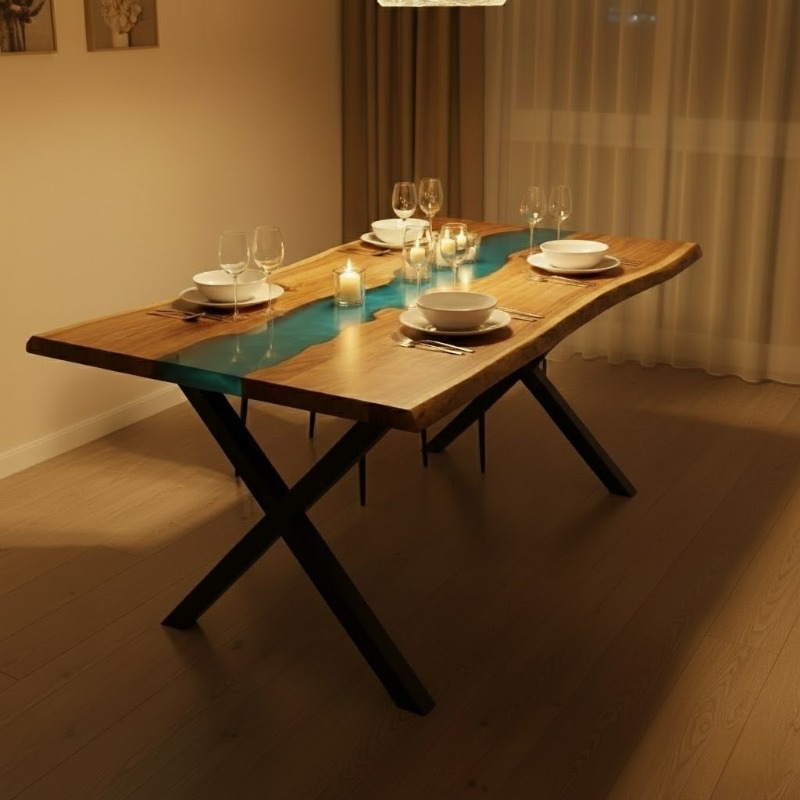
The most common comparison is solid wood vs epoxy dining table. A solid wood dining table gives a warm, natural, family-friendly look. An epoxy resin dining table adds bold colour, river effects, and a more premium statement feel.
For everyday Indian homes, both can work well. Choose solid wood if you want a classic dining setup. Choose epoxy if your dining table is also meant to be a conversation piece.
Side Tables
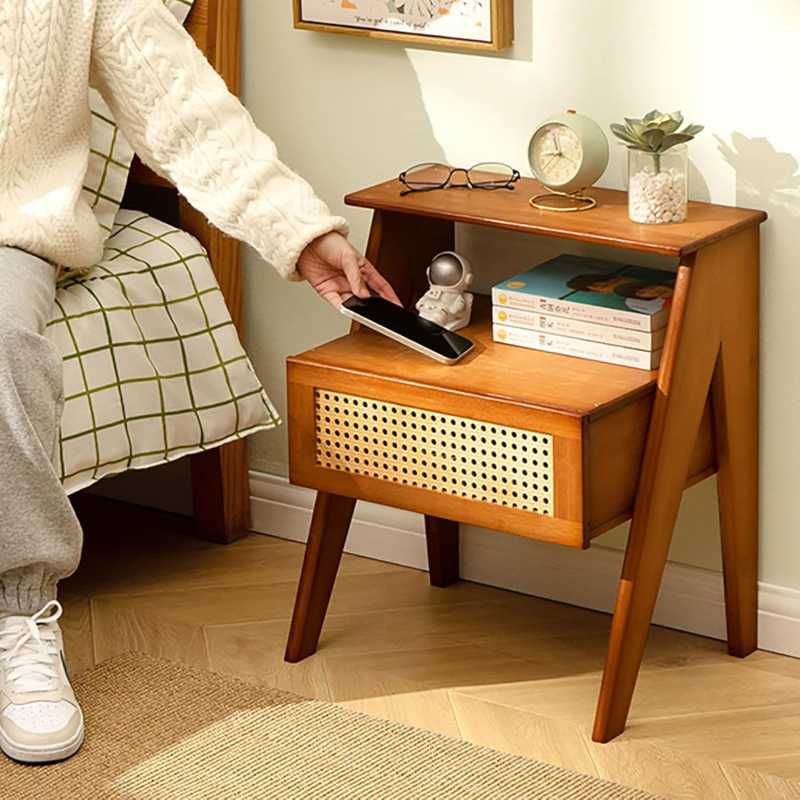
Epoxy resin side tables suit high-traffic living rooms where tea, coffee, snacks, and decorative objects are used daily. Their wipe-clean surface makes them practical near sofas.
Solid wood side tables are better for bedrooms, reading corners, and calmer spaces where impact resistance is less important. They add warmth without visually overpowering the room.
Standing Desks
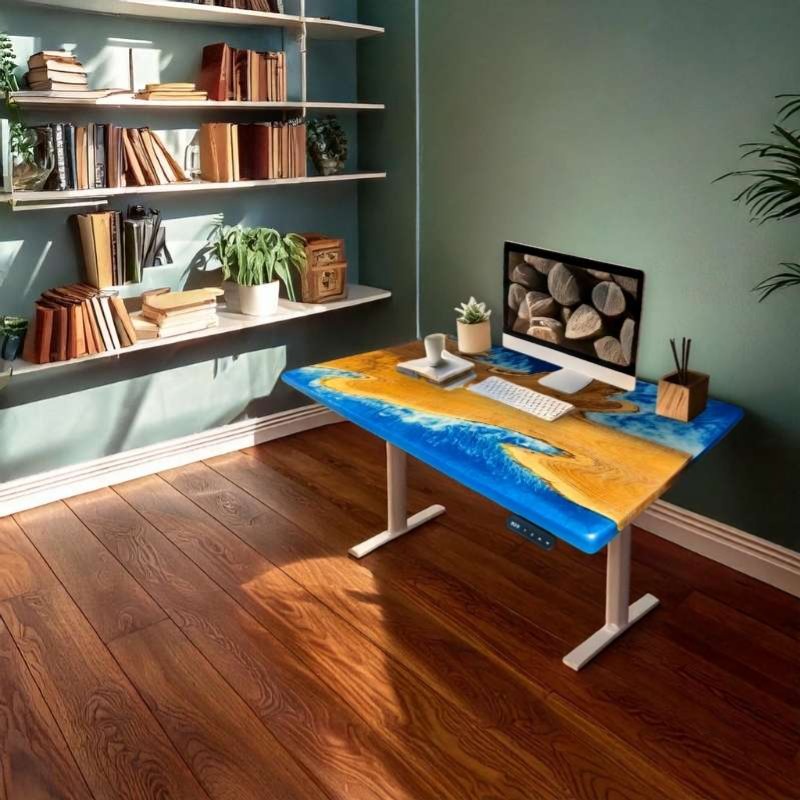
A standing desk is not only a work surface anymore. In premium home offices, it also becomes part of the room’s design identity.
Epoxy resin desktops, such as Woodensure’s Suprema Epoxy Resin Standing Desk at ₹43,000, add a striking visual statement to work-from-home setups. Solid wood desktops, starting from a lower range, are better for buyers who want a classic, professional, and understated look.
Doors
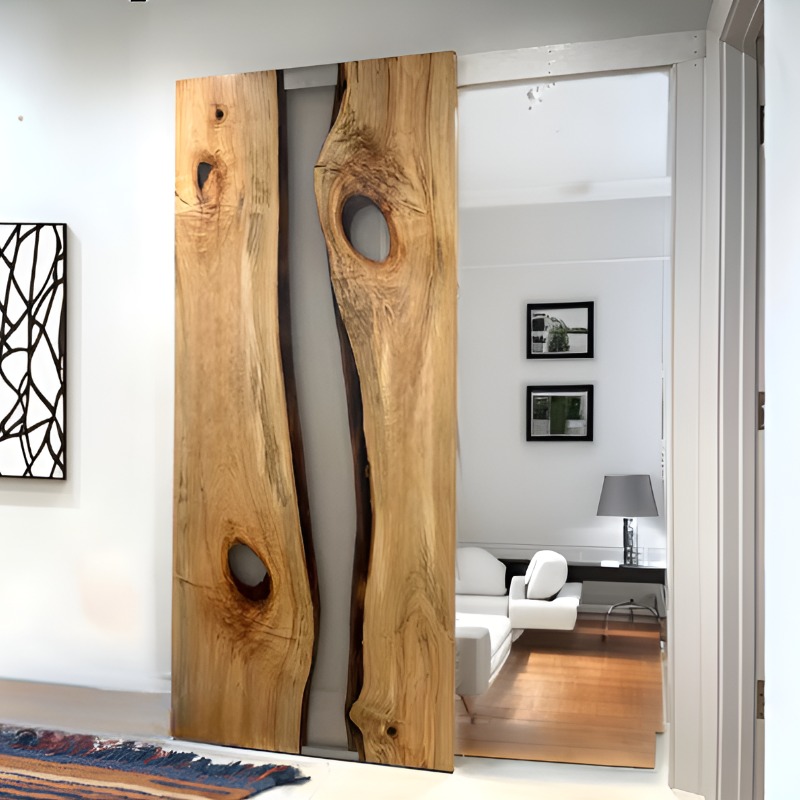
Epoxy resin doors create a dramatic entrance statement. Woodensure’s Lucid Clear Transparent Epoxy Resin and Solid Acacia Wood Door at ₹66,000 is an example of how resin can turn a functional door into a design feature.
Solid wood and live edge wood doors suit homes that prefer a more traditional, rustic, or natural entrance. They feel warmer and more grounded, while epoxy doors feel more artistic and premium.
Nesting Tables
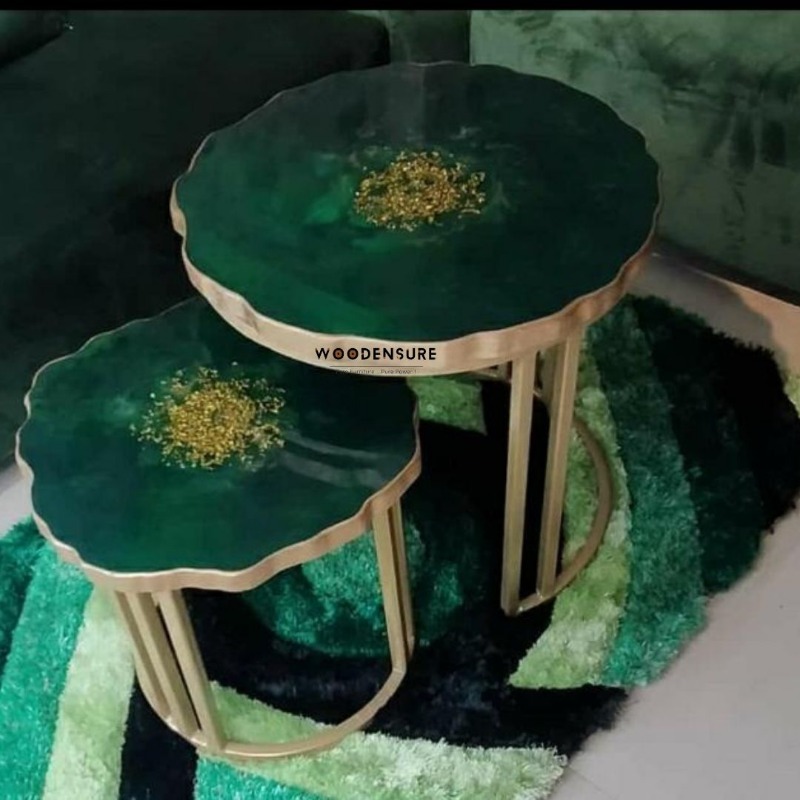
Both epoxy and solid wood work well for nesting tables. Epoxy adds contrast between stacked pieces, especially if each tabletop has a unique resin flow. Solid wood keeps the set cohesive, natural, and easy to blend with existing furniture.
Epoxy Resin vs Solid Wood — Real Woodensure Pricing Across Categories
| Category | Epoxy Resin Range | Solid Wood Range |
|---|---|---|
| Dining Table | ₹28,499 – ₹1,88,500 | ₹22,500 – ₹70,000 |
| Standing Desk | ₹43,000 | ₹23,500 – ₹93,500 |
| Door | ₹66,000 | Custom / live edge pricing on request |
| Side / Nesting Table | Varies by design | Generally lower entry point |
Important pricing note: Many “epoxy resin” Woodensure products are epoxy-wood hybrids. This means the quality of the wood underneath still matters. A good resin pour cannot compensate for poor wood selection, weak joinery, or unstable slabs. When buying an epoxy resin table in India, always check the wood species, slab quality, finish, thickness, and craftsmanship — not just the resin colour.
Woodensure Epoxy Resin Furniture — By Style
If you want a bold, artistic, and durable surface, Woodensure’s epoxy resin dining range offers multiple styles across budgets.
Minimal 6-Seater Epoxy Resin & Wood Dining Table
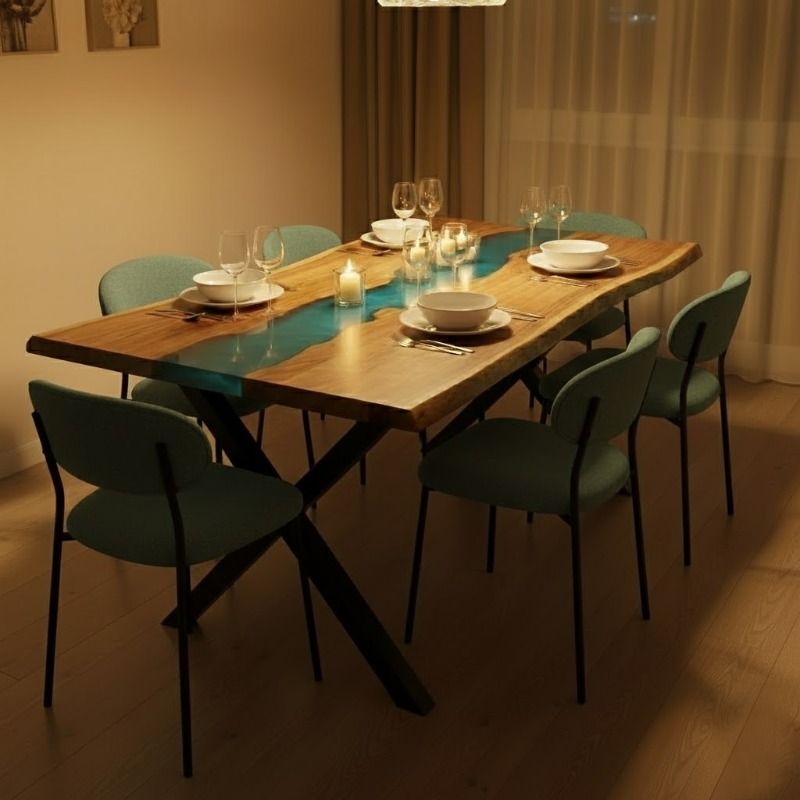
This Minimal 6 Seater Dining Table is one of the most affordable entry points into epoxy resin furniture. It is suitable for buyers who want the epoxy look without moving into a very high luxury budget.
Best for: First epoxy buyers, modern dining rooms, compact statement spaces
EmeraldGlow Epoxy Resin Dining Table
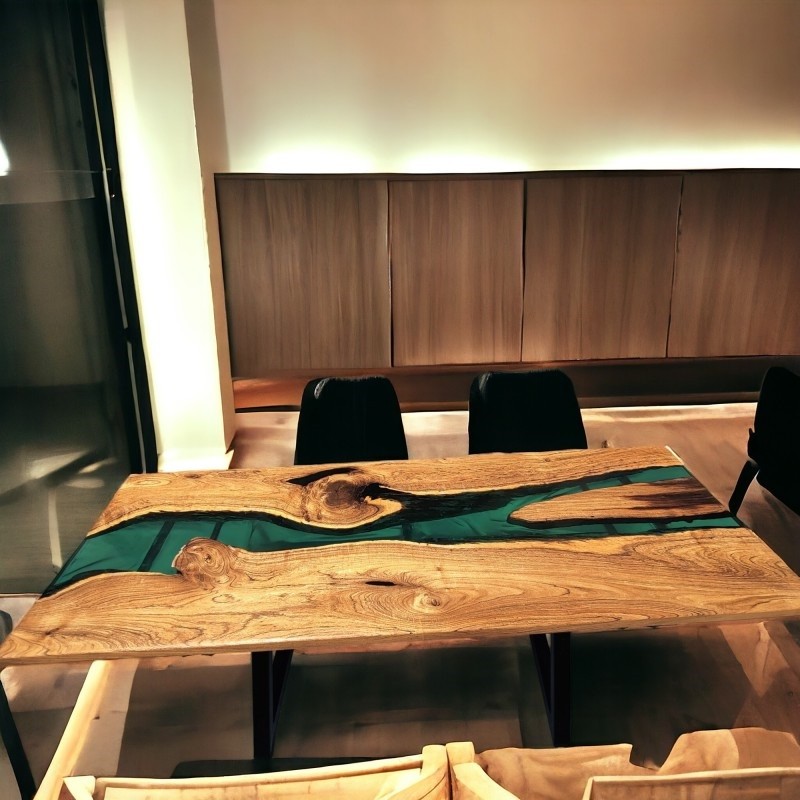
The EmeraldGlow Dining table style is suited for homes that want colour, shine, and a stronger design presence. It works well in modern apartments and premium dining areas.
Best for: Stylish homes, statement dining corners, contemporary interiors
Varnishé Luxury Resin River Dining Table
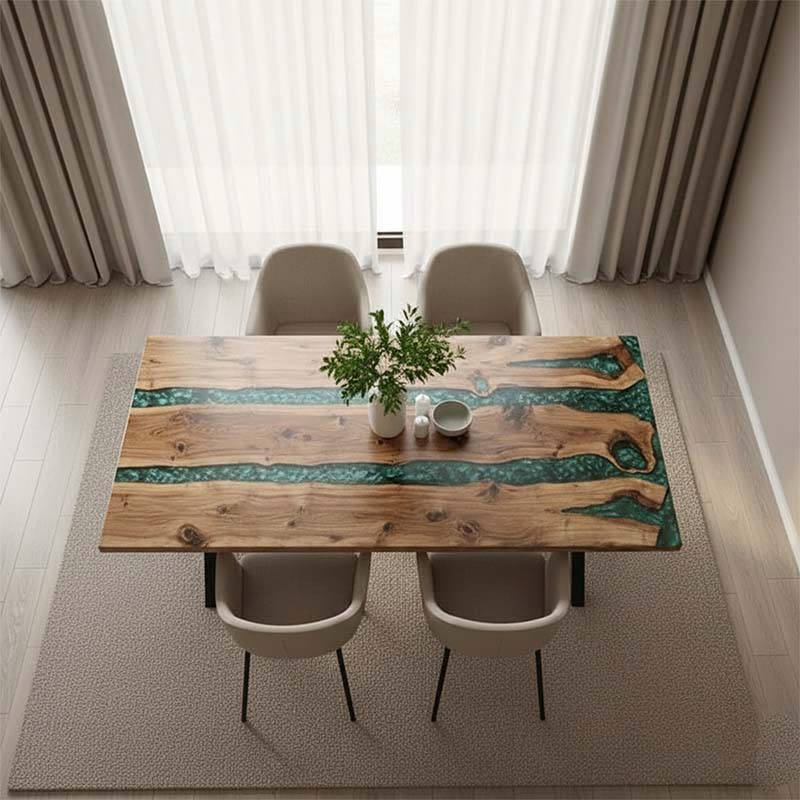
This Varnishé river table is designed for homes, offices, and café spaces where the table needs to feel premium and memorable. The resin river look gives it strong visual identity.
Best for: Home, office, and café spaces
Luxora Solid Wood Epoxy Table — Blue River Style
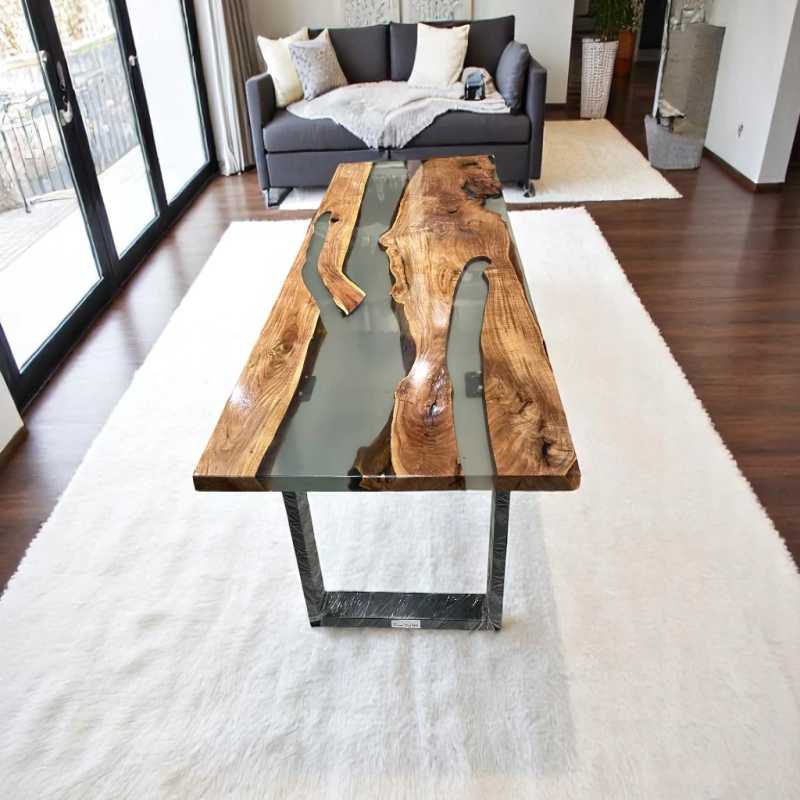
This Luxora Solid Wood Epoxy Table style is ideal for buyers who want the best of both worlds: visible solid wood grain and a bold blue river effect. It works well as a 4–6 seater dining table.
Best for: Premium homes, river table lovers, artistic dining rooms
Artwood Solid Wood Bar Table with Epoxy Resin Top & Chairs
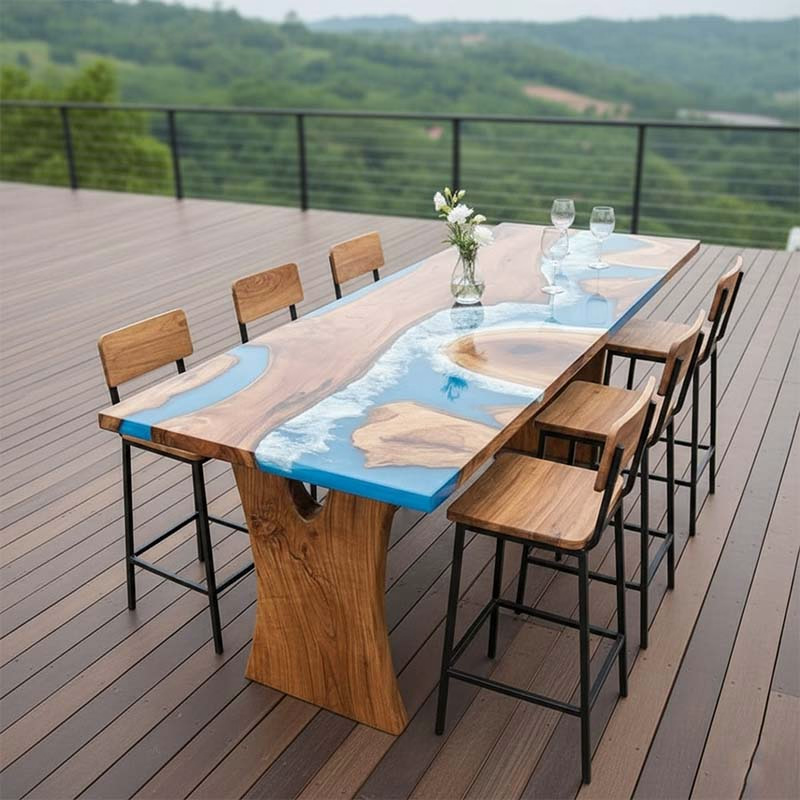
This Artwood Solid Wood Bar Table is a flagship epoxy furniture set for buyers who want a premium bar-table setup with strong visual appeal. It is not just a utility piece; it is a design investment.
Best for: Luxury homes, bar corners, cafés, premium entertainment spaces
Woodensure Solid Wood Furniture — By Style
If you prefer natural grain, repairability, and a timeless look, solid wood remains one of the most reliable furniture choices for Indian homes.
Modern Acacia Solid Wood Round Dining Table
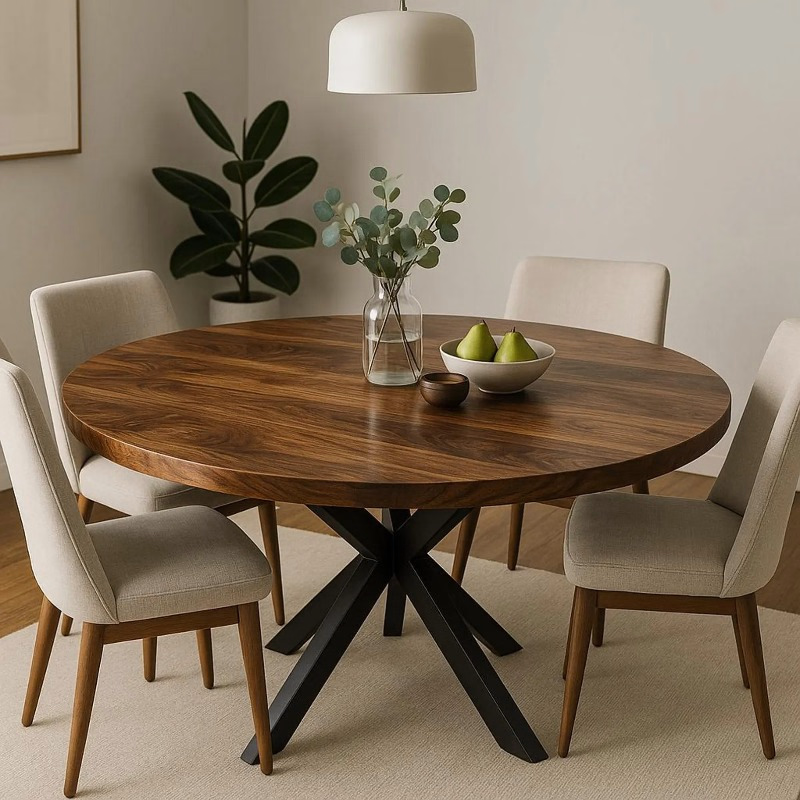
This is a practical entry point into solid wood dining furniture. The round shape dining table works well for compact homes, apartments, and family dining corners.
Best for: Small families, apartments, compact dining areas
Solara Dining Table Set — Solid Sheesham with Bench
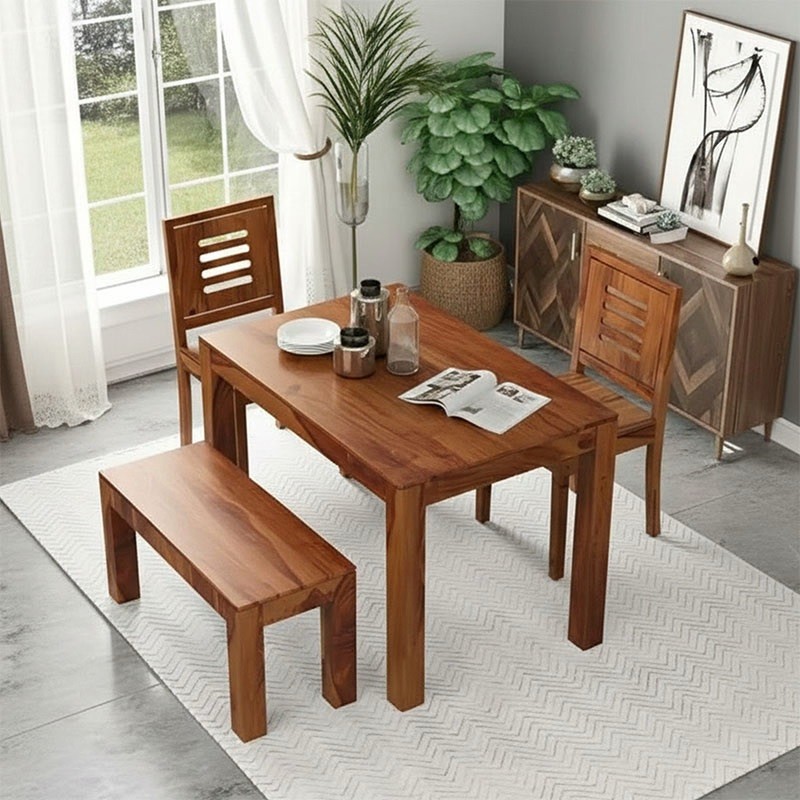
The Solara set dining table is a warm and functional option for homes that want both seating comfort and solid wood durability. The bench makes it useful for family dining and flexible seating.
Best for: Indian family dining rooms, warm interiors, practical seating
Mili Minimalist Solid Wood Acacia — 4/6/8 Seater
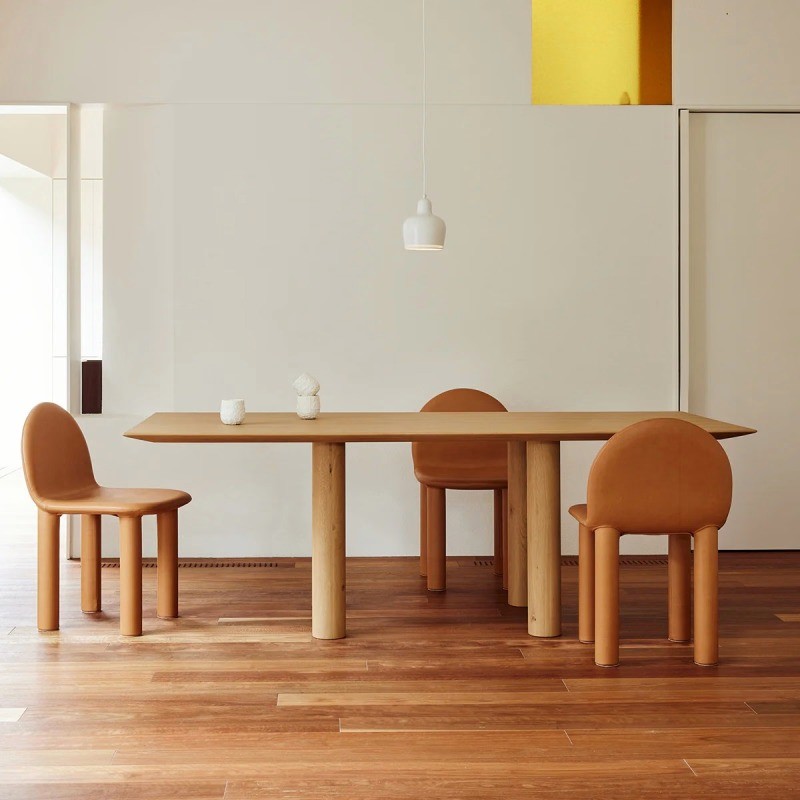
The Mili table suits buyers who want a more premium solid wood dining setup with a clean minimalist design. It is ideal for larger homes and buyers who prefer natural elegance over bold resin effects.
Best for: Premium dining spaces, minimalist interiors, natural wood lovers
Final Verdict: Which One Should You Choose?
Choose epoxy resin furniture if your top priorities are low maintenance, water resistance, stain resistance, humidity stability, and bold design. It is especially suitable for busy households, statement dining rooms, home offices, cafés, and homes in humid climates.
Choose solid wood furniture if your top priorities are natural beauty, repairability, sustainability, long-term refinishing, and a more budget-friendly entry point. It is ideal for buyers who want furniture that feels warm, timeless, and restorable over decades.
The most practical answer is this: epoxy resin is better for convenience and statement design, while solid wood is better for natural warmth and long-term repairability. If you want both, an epoxy resin river table with a high-quality solid wood base gives you a strong middle path.
Related Reading
To compare more premium material choices before buying, read these guides next:
Author Bio
Written by the Woodensure Editorial Team
Woodensure creates handcrafted solid wood, epoxy resin, marble, and live edge furniture for Indian homes, offices, cafés, and premium interiors. Our team works closely with furniture makers, designers, and material specialists to create practical buying guides that help customers choose the right furniture based on lifestyle, climate, budget, durability, and long-term value.