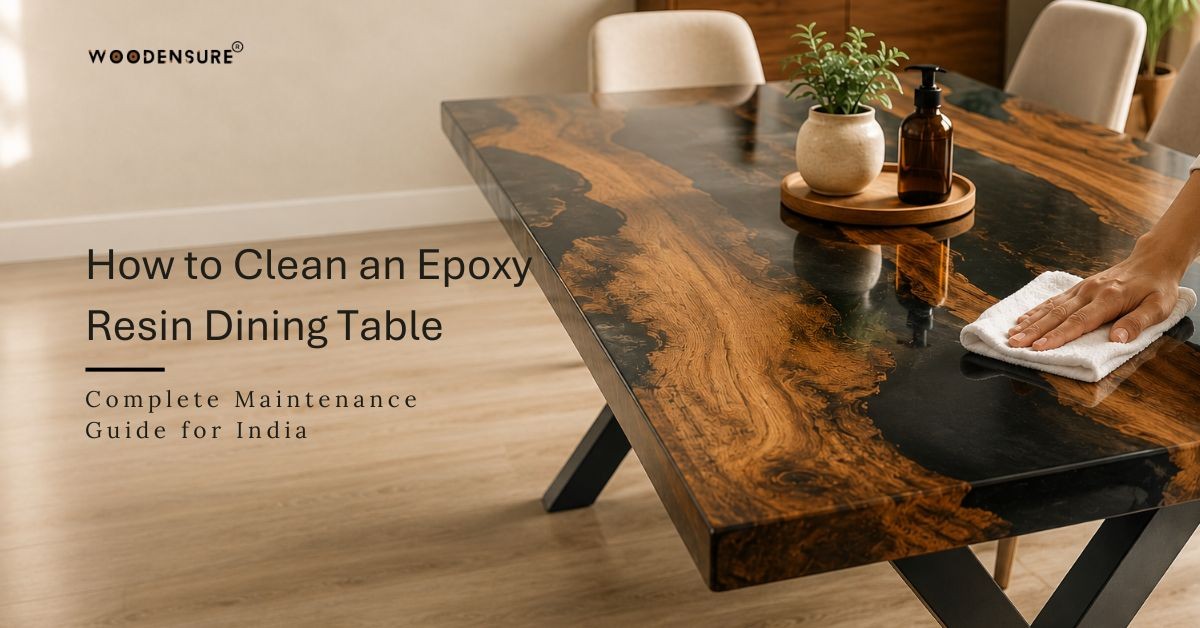



How to Clean an Epoxy Resin Dining Table: Complete Maintenance Guide for India
An epoxy resin dining table can be a striking centrepiece in an Indian home, combining the natural character of solid wood with the smooth, contemporary finish of epoxy resin. But like any premium furniture, it needs the right cleaning and maintenance routine to stay beautiful for years.
If you are wondering how to clean an epoxy resin dining table, the good news is that the routine is simple. Regular dusting, gentle cleaning, immediate spill removal, protection from direct heat, and periodic care for the solid wood elements are usually enough to maintain the table's appearance.
Last Updated: September 2026
How do you clean an epoxy resin dining table?
To clean an epoxy resin dining table, wipe the surface daily with a soft microfiber cloth dampened with warm water and a few drops of mild dish soap, then dry it immediately with a clean cloth. Avoid bleach, ammonia, acetone for regular cleaning, abrasive sponges, steel wool, and harsh chemical cleaners. In Indian kitchens, wipe haldi, oil, chai, coffee, and other spills immediately rather than allowing them to dry.
Epoxy resin tables are low-maintenance, but not maintenance-free. The resin surface is resistant to everyday spills and moisture, but scratches, excessive heat, prolonged sunlight, and poor cleaning practices can damage the finish.
This epoxy table care guide for India explains exactly how to clean, protect, repair, and maintain an epoxy resin dining table throughout the year.
Why Proper Care Matters for an Epoxy Resin Dining Table

Understanding what can damage your table makes maintenance much easier.
Epoxy is scratch-resistant, but not scratch-proof
A fully cured epoxy surface can handle everyday dining use extremely well. However, sharp objects, abrasive cleaning pads, and repeatedly dragging heavy decorative pieces across the surface can create scratches.
Never use the dining table as a cutting surface. Knives should always be used on a cutting board.
For decorative objects, vases, serving pieces, and other items that remain on the table, felt pads can help reduce surface abrasion.
Prolonged sunlight can cause yellowing
Clear epoxy resin can gradually develop a yellowish appearance after prolonged exposure to direct UV light. UV-stabilised resin can significantly delay this process, but positioning still matters.
When installing or placing an epoxy dining table, avoid locations where the tabletop receives strong direct sunlight for several hours every day.
Indirect natural light is generally a better choice for maintaining the clarity of the resin.
Excessive heat can damage the resin
One of the most important rules for epoxy resin table maintenance in India is to keep very hot cookware away from the tabletop.
Pressure cookers, hot kadais, baking trays, and cookware coming directly from the stove can expose the resin to temperatures that may cause permanent white rings, surface softening, or other heat damage.
Always use a trivet, wooden board, or heat-resistant pad.
Water resistance does not mean every area is waterproof
The epoxy portion of the table is non-porous and resistant to water. However, epoxy river tables also contain solid wood.
The wood-resin junction and exposed wood edges need additional care. Leaving water standing around these areas for long periods can allow moisture to interact with the wood grain.
The easiest solution is simple: wipe and dry the table after cleaning or spills.
The solid wood needs separate maintenance
An epoxy river table is not made entirely from resin. It combines resin with solid wood slabs.
The resin surface does not require oiling, but exposed wood elements can benefit from periodic oiling to maintain their appearance and help prevent the wood from becoming excessively dry.
Daily and Weekly Epoxy Table Cleaning Routine
A consistent cleaning routine is much better than aggressive deep cleaning once in a while.
Daily Cleaning: What to Do Every Day
1. Dust the surface first
Use a soft, dry microfiber cloth to remove dust, crumbs, and loose particles.
This step is easy to overlook, but it matters. If dust particles remain on the surface and you drag a damp cloth across them repeatedly, they can contribute to fine surface marks over time.
2. Wipe with a damp microfiber cloth
Dampen a clean microfiber cloth with warm water.
You can wipe the tabletop using gentle circular motions. Avoid soaking the cloth or pouring water directly onto the table.
The goal is to clean the surface rather than saturate it.
3. Dry the table immediately
After wiping, use a second dry microfiber cloth.
Pay particular attention to:
- The live edge table
- Wood-resin joins
- Table edges
- Areas around decorative objects
- Areas where water tends to collect
4. Clean spills immediately
For Indian homes, this is particularly important.
Common dining-table spills include:
- Haldi
- Mustard oil
- Cooking oil
- Chai
- Coffee
- Tamarind-based food
- Sauces
- Juices
- Red wine
Although epoxy is resistant to many everyday spills, allowing strongly coloured or oily substances to remain on the surface can make cleaning more difficult.
The best rule is simple: wipe spills within seconds whenever possible.
Weekly Cleaning: A Deeper Wipe-Down
For your weekly cleaning routine, mix 2–3 drops of mild dish soap with warm water.
Dampen a soft sponge or microfiber cloth with the solution and gently wipe the surface.
Avoid scratchy scrubbers.
After cleaning:
- Rinse the cloth or sponge with clean water.
- Wipe the table again to remove soap residue.
- Dry the entire surface with a clean microfiber cloth.
- Check the table legs and base joints for dust or grease accumulation.
If the table is positioned close to a kitchen or cooking area, pay additional attention to the table base because airborne cooking grease can accumulate around metal-frame joints.
Can you use glass cleaner on an epoxy table?
A mild, ammonia-free glass cleaner may be used sparingly on a soft cloth when you want a streak-free finish.
Always check the product label first. Avoid ammonia-based cleaners.
For routine cleaning, warm water and mild dish soap remain the simpler choice.
Complete Do's and Don'ts for Epoxy Resin Table Care
| Do | Don't |
|---|---|
| Use a soft microfiber cloth | Don't use steel wool |
| Use warm water | Don't pour water directly onto the table |
| Use mild dish soap | Don't use bleach |
| Dry the surface after wiping | Don't leave water standing |
| Use coasters | Don't place hot cookware directly on resin |
| Use trivets and heat pads | Don't cut directly on the tabletop |
| Lift heavy objects | Don't drag heavy objects |
| Use felt pads under decor | Don't use abrasive scrubbers |
| Wipe spills immediately | Don't leave haldi or oil sitting |
| Use resin-safe polish | Don't use harsh solvents for regular cleaning |
| Protect the table from direct sunlight | Don't place it in sustained direct UV exposure |
| Oil exposed wood periodically | Don't treat resin and wood as the same material |
This simple list covers the majority of everyday epoxy resin table maintenance mistakes.
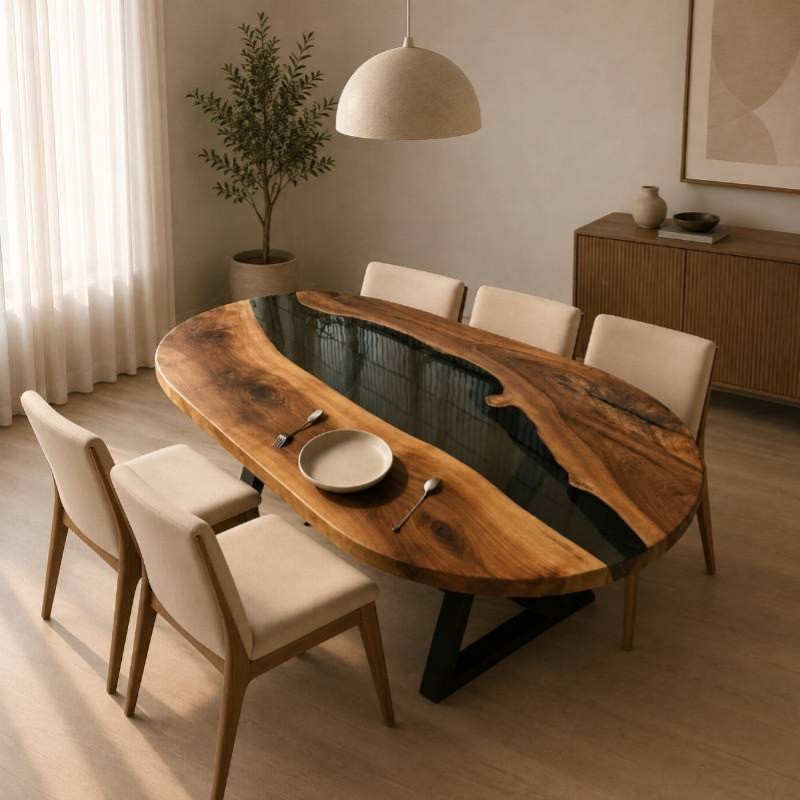
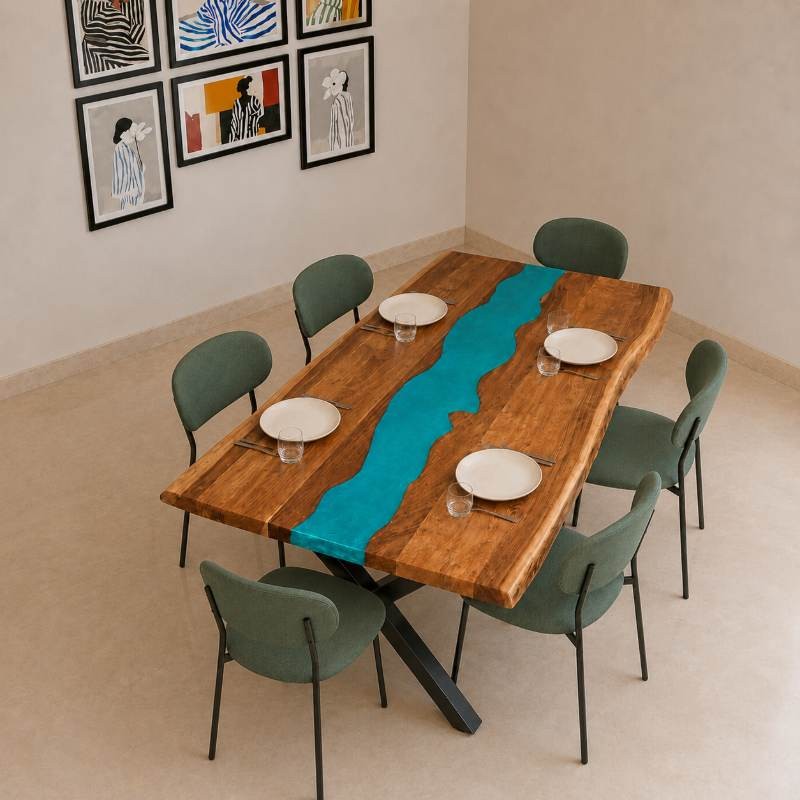
Woodensure's Best Epoxy Resin Dining Table Collection
India-Specific Epoxy Table Care: What Nobody Tells You
Indian homes have a few specific cleaning and environmental conditions that deserve special attention.
How to Remove Haldi Stains from an Epoxy Table
Turmeric is highly pigmented, making haldi one of the most important kitchen spills to clean quickly.
If haldi has just spilled:
- Wipe it immediately with a damp microfiber cloth.
- Do not allow the turmeric paste or liquid to dry.
- Follow with mild soap and warm water if necessary.
- Dry the area completely.
If the haldi stain has already dried:
A baking soda and water paste can be applied gently for a short period, followed by careful wiping with a soft cloth.
For stubborn pigmentation, a diluted white vinegar solution can be used cautiously. A 1:5 ratio of vinegar to water is suggested in this care routine.
Always avoid aggressive scrubbing.
How to Remove Mustard Oil and Cooking Oil
Oil does not normally penetrate the non-porous epoxy surface, but it can leave behind a greasy film.
For an oily spill, apply a few drops of mild dish soap directly to the affected area and gently wipe using a soft cloth.
Then rinse the area with clean water and dry immediately.
This is generally more effective than repeatedly wiping an oily surface with plain water.
Epoxy Table Care During Monsoon Season in India
Monsoon humidity is another important consideration for epoxy river tables.
The epoxy itself is resistant to humidity and does not behave like untreated wood. However, the solid wood components can respond to changes in moisture levels.
During periods of high humidity, wood can expand slightly. At the wood-resin interface, repeated environmental changes can place additional stress on the joint.
How to protect your epoxy table during monsoon:
- Keep the room adequately ventilated.
- Avoid leaving water on the tabletop.
- Pay attention to exposed wood edges.
- Check the wood-resin interface periodically.
- Avoid placing the table directly under a very cold AC vent.
- Try to avoid sudden and extreme temperature changes.
The goal isn't to keep your home perfectly dry. Instead, maintain a relatively stable indoor environment and prevent unnecessary moisture exposure.
Diwali Diya and Candle Care for Epoxy Tables
Diwali decorations can create a completely different type of risk.
Many Indian families place diyas and candles around the dining area. Direct heat and hot wax can damage or mark the surface.
Never place a diya directly on epoxy resin.
Instead, place diyas and candles on:
- A wooden tray
- A heat-resistant tray
- A decorative metal tray
- A suitable heat-resistant mat
What if candle wax spills on the table?
Do not try to wipe hot wax.
Allow it to cool and harden completely. Once hardened, gently lift or flex the wax so it separates from the surface.
Then clean any remaining residue with a soft cloth dampened with warm water.
Avoid scraping aggressively because sharp tools can create scratches.
Can You Place a Pressure Cooker on an Epoxy Resin Table?
No. A hot pressure cooker should not be placed directly on an epoxy resin dining table.
This is especially relevant in Indian households where cookware may move directly from the kitchen to the dining table.
Very hot cookware can cause permanent white marks, surface softening, or other heat-related damage.
Always use:
- A trivet
- Wooden cutting board
- Heat pad
- Heat-resistant serving tray
The same rule applies to hot kadais, baking trays, casserole dishes, and other cookware.
If it is hot enough to require caution when touching or carrying, it should not be placed directly on the epoxy surface.
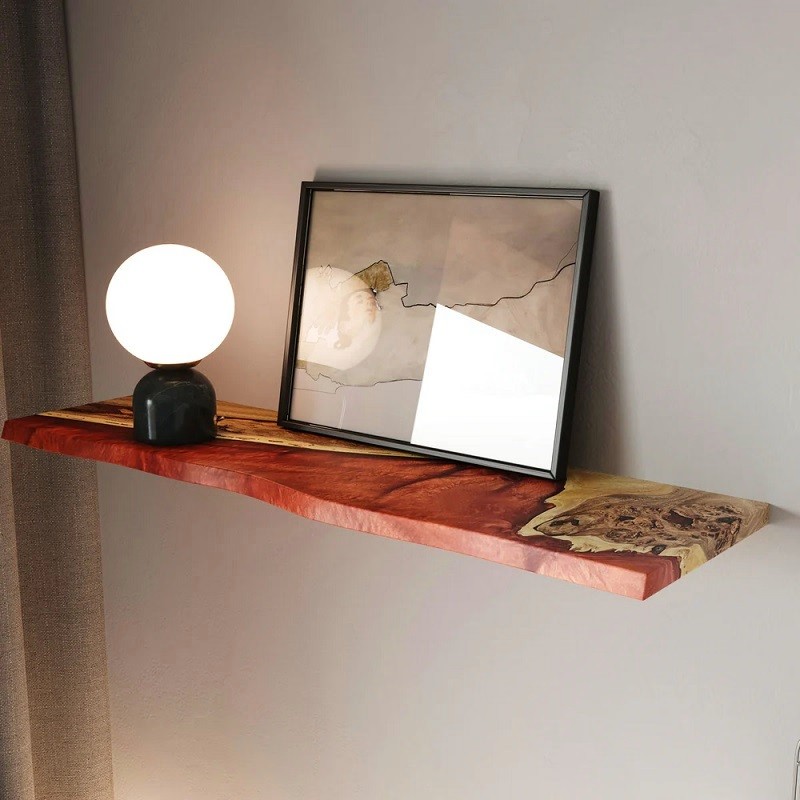
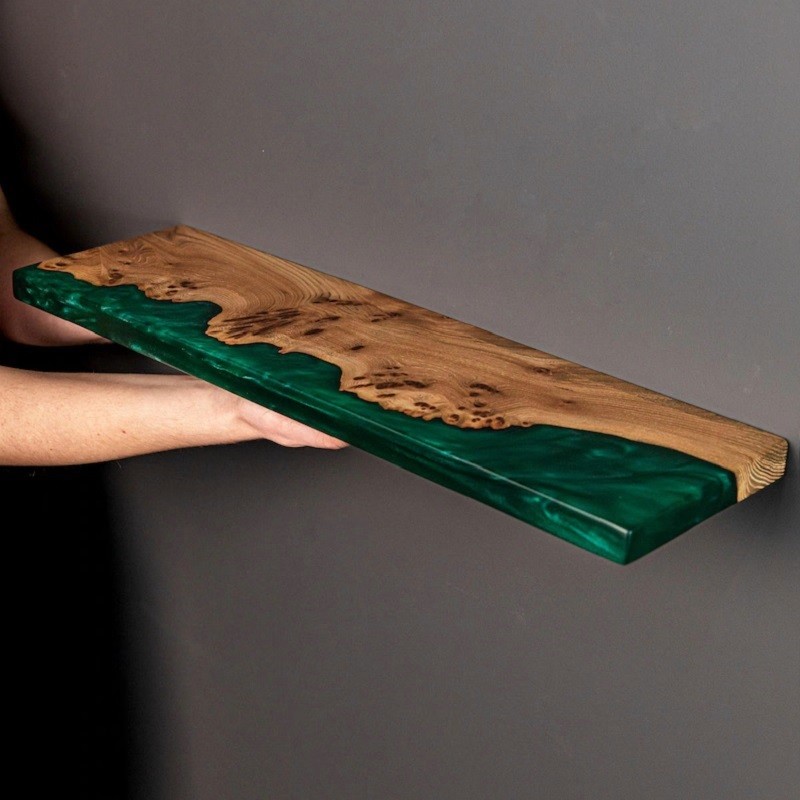
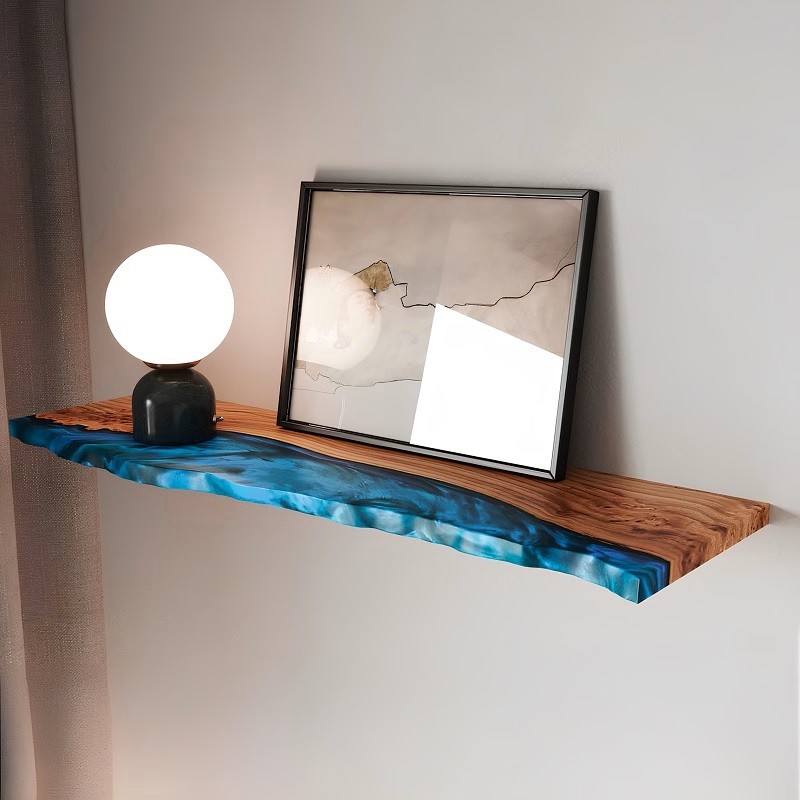
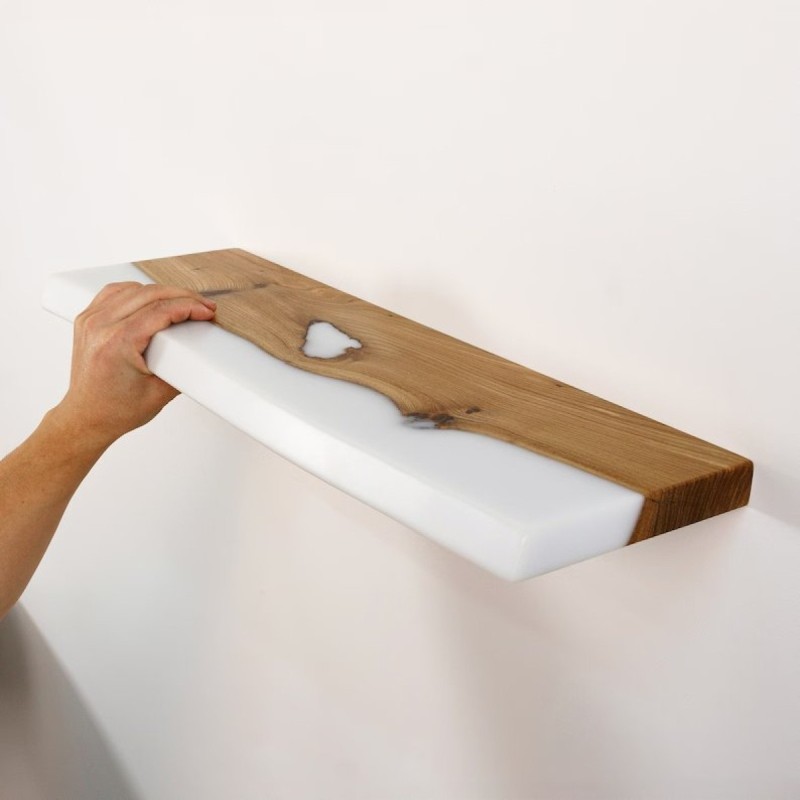
Woodensure's Best Epoxy Resin Floating Wall Shelves Collection
How to Remove Common Stains from an Epoxy Resin Table
Different stains require different approaches.
Chai, Coffee and Red Wine
For fresh spills, wipe immediately with a damp microfiber cloth.
For dried marks:
- Use warm water and mild dish soap.
- Wipe gently using a soft cloth.
- If necessary, use diluted white vinegar cautiously.
- Rinse with clean water.
- Dry immediately.
Ink and Marker
Use a small amount of rubbing alcohol or isopropyl alcohol on a cotton ball.
Dab rather than aggressively rub.
Always test an inconspicuous area first, then rinse the treated area with plain water.
Avoid confusing rubbing alcohol with acetone.
They are not the same cleaning product.
Grease and Oil
Apply a few drops of mild dish soap directly to the affected area.
Gently work the soap into the oily residue with a soft cloth or non-abrasive sponge, then rinse and dry.
Water Spots and White Haze
For light surface haze, a resin-safe furniture polish or suitable carnauba-based wax can help restore surface clarity and shine.
Apply sparingly with a soft cloth and buff gently.
How to Repair Scratches on an Epoxy Resin Dining Table
Not every scratch needs professional refinishing.
The first step is determining how deep the damage is.
Minor Surface Scratches
If the scratch does not catch your fingernail, it is likely a light surface mark.
For minor marks:
- Clean the area.
- Dry completely.
- Apply a small amount of carnauba-based wax or resin-safe furniture polish.
- Work gently in small circular motions.
- Buff with a clean microfiber cloth.
This can reduce the visual appearance of fine surface abrasion.
Deep Scratches and Chips
If a scratch catches your fingernail or there is a visible chip, the damage is more significant.
A two-part epoxy resin can potentially be used for small repairs:
- Clean and dry the damaged area.
- Prepare the two-part epoxy according to its instructions.
- Fill the damaged section carefully.
- Allow adequate curing time.
- Remove excess material carefully.
- Polish the repaired area once fully cured.
However, coloured epoxy tables require additional caution.
When should you avoid DIY epoxy repair?
If your table has a coloured resin river, metallic pigment, ocean-effect resin, custom artwork, or a specific gloss finish, matching the original colour and finish can be difficult.
For a large chip, crack, or visible resin damage, professional advice is preferable.
For a Woodensure epoxy table, contact the team before attempting a significant DIY repair so the resin colour, pigment, and finish can be considered.
Complete Epoxy Resin Table Maintenance Schedule
A simple maintenance calendar makes epoxy table care easy.
| Frequency | Maintenance Task |
|---|---|
| Daily | Dust with microfiber cloth, wipe after meals, dry immediately, remove spills |
| Weekly | Mild soap + warm water cleaning, inspect stains and surface marks |
| Every 3 Months | Apply resin-safe polish or carnauba-based wax and buff the surface |
| Once a Year | Oil exposed solid wood elements and inspect wood-resin joins |
| During Monsoon | Maintain ventilation and monitor exposed wood and AC placement |
| During Festivals | Keep diyas, candles, and hot decorations on heat-resistant trays |
This routine helps prevent small issues from becoming expensive repairs.
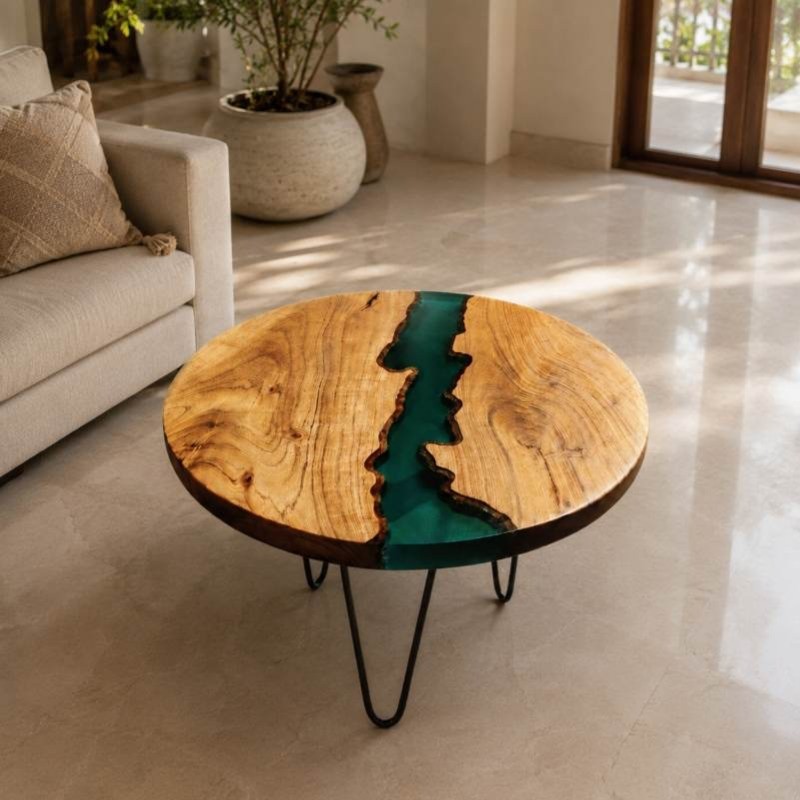
Woodesnure's Best Epoxy Resin Centre & Coffee Table Collection
Recommended Epoxy Table Cleaning Products in India
You don't need a large collection of specialised chemicals to maintain an epoxy dining table.
Best for everyday cleaning
Warm water + 2–3 drops of mild dish soap on a microfiber cloth.
This should be your primary everyday cleaning method.
Best for streak-free cleaning
An ammonia-free glass cleaner can be used sparingly when fingerprints and streaks are visible.
Always verify the formula on the label.
Best for restoring shine
A carnauba-based car wax or furniture polish specifically labelled as resin-safe can be used periodically.
Best for exposed wood
Suitable wood-care oils such as Danish Oil, Teak Oil, or food-safe linseed oil can be considered for exposed solid wood elements, depending on the wood finish and manufacturer's recommendations.
Products to avoid
Avoid harsh cleaners and solvents such as:
- Bleach
- Ammonia-based cleaners
- Strong bathroom cleaners
- Harsh disinfectants
- Turpentine
- Solvent-based cleaners
- Abrasive cleaning products
- Acetone-based nail-polish remover for routine cleaning
Acetone should never be treated as an everyday epoxy table cleaner.
Does an Epoxy Resin Dining Table Need Oiling?
The epoxy surface itself does not need oiling.
Epoxy is non-porous and sealed, so applying wood oil to the resin is unnecessary.
However, an epoxy river dining table also contains solid wood. Exposed live edges and visible wood surfaces can benefit from periodic maintenance using an appropriate wood oil.
Annual maintenance can help maintain the natural warmth and appearance of the wood.
Will an Epoxy Resin Table Turn Yellow?
It can develop some yellowing after prolonged direct UV exposure.
UV-stabilised epoxy resin and UV-resistant additives can significantly delay yellowing, but no resin should be treated as completely immune to long-term sunlight exposure.
To maximise the clarity of your tabletop:
- Avoid sustained direct sunlight.
- Keep the table away from strong direct UV exposure through windows.
- Use indirect natural light where possible.
- Consider the table's location before installation rather than waiting until visible yellowing occurs.
For custom epoxy furniture, asking the manufacturer about the resin formulation and UV resistance before purchase can also help.
Why Epoxy Resin Tables Are Still Low-Maintenance
Despite these precautions, epoxy resin dining tables remain relatively easy to maintain.
You don't need to:
- Refinish the resin every month
- Use expensive specialist cleaners daily
- Oil the resin surface
- Scrub the tabletop
- Apply complicated chemical treatments
The basic formula is:
Dust → Wipe → Dry → Protect → Maintain
Most long-term problems happen when heat, scratches, spills, sunlight, or moisture are repeatedly ignored.
Final Epoxy Resin Table Care Checklist
Before you finish your cleaning routine, remember these ten rules:
- Dust with microfiber first.
- Use warm water and mild dish soap.
- Dry the surface immediately.
- Clean haldi, chai and oil spills quickly.
- Never use abrasive scrubbers.
- Never place hot cookware directly on the resin.
- Use coasters, trivets and heat pads.
- Protect the table from prolonged direct sunlight.
- Maintain exposed wood separately.
- Get professional advice for major chips, cracks or coloured-resin damage.
With these simple habits, your epoxy resin dining table can remain a standout piece of furniture without demanding complicated maintenance.
Have a question about caring for your Woodensure epoxy table or need advice about a repair? WhatsApp the Woodensure team for guidance.
Related Guides
- Epoxy Resin Dining Table Buying Guide — understand what to check before purchasing an epoxy dining table.
- Epoxy Resin vs Solid Wood Furniture — compare the characteristics and maintenance requirements of both options.
- Live Edge Dining Table Buying Guide — learn what to consider when choosing a live edge dining table.
Author Bio
Written by the Woodensure craftsmanship team — manufacturers of custom epoxy resin and solid wood furniture in Udaipur, Rajasthan. Our team works directly with the materials, manufacturing process, finishing, and maintenance of epoxy and solid wood furniture. This guide is based on practical manufacturing and maintenance experience rather than generic furniture-care advice.