
Marble vs Solid Wood Dining Table — Pros, Cons, Price & Our Honest Pick
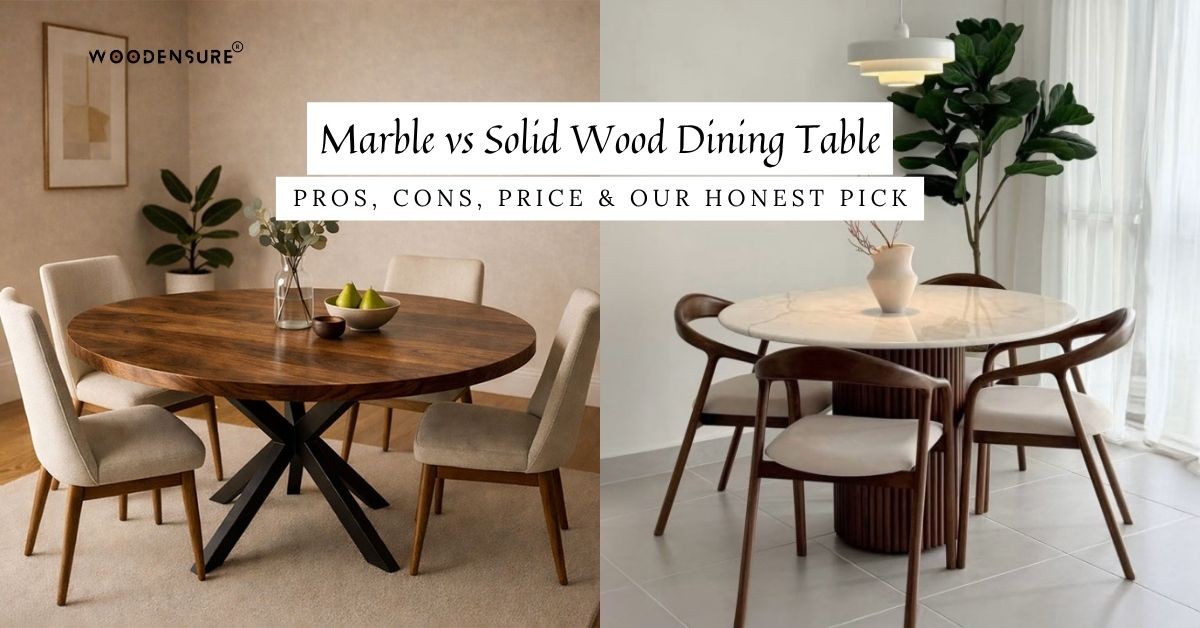
For most Indian homes, solid wood dining tables are the better choice — they handle monsoon humidity, daily heavy use, and Indian cooking acids better than marble. Solid wood Acacia dining tables start from ₹22,500; marble dining tables start from ₹45,000. Marble suits luxury apartments with light daily use and a minimalist aesthetic. Solid wood suits families, joint households, and anyone who wants furniture that lasts 30–50 years. Here is the complete comparison.
Last Updated: 15 June 2026
What Is a Solid Wood Dining Table?
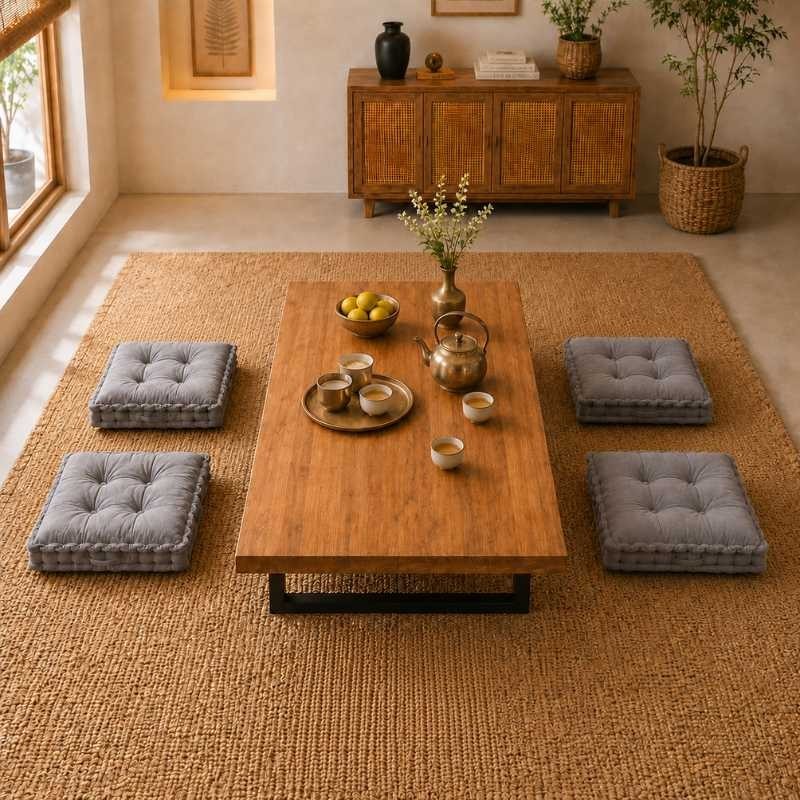
A solid wood dining table is made entirely from natural hardwood such as Acacia, Sheesham, Mango, or Teak, without MDF cores, synthetic board filling, or artificial laminate surfaces. Every solid wood table has its own grain pattern, colour variation, knots, and natural character, which means no two tables look exactly the same.
The biggest advantage of solid wood is repairability. Scratches can be sanded, the finish can be restored, joints can be re-glued, and the table can be refinished after years of use. At Woodensure, solid wood dining tables are available in plain wood designs, live edge styles, epoxy resin river tables, round tables, bench sets, and custom sizes.
Woodensure solid wood dining tables start from ₹22,500 for a 4-seater Acacia round table and go up to ₹69,300+ for premium 6–8 seater designs.
What is a Marble Dining Table?

A marble dining table usually has a natural or engineered stone top placed on a wooden, metal, or marble base. Marble is known for its polished surface, cool touch, and distinctive veining that gives every table a premium luxury look.
There are two common types: natural marble and engineered or cultured marble. Natural marble is heavier, more unique, and more expensive, while engineered marble is lighter, more uniform, and usually more affordable. Most marble dining tables in India are not full marble structures — they generally use a marble top with a solid wood, metal, or MDF-supported base.
At Woodensure, marble dining tables start from ₹45,000 and go up to ₹81,500 for premium oval 6-seater designs.
Marble vs Solid Wood Dining Table: Complete Comparison for Indian Homes
| Factor | Solid Wood Dining Table | Marble Dining Table | Winner for India |
|---|---|---|---|
| Price in India 2026 | ₹22,500 – ₹70,000+ | ₹45,000 – ₹1,80,000+ | Solid Wood |
| Durability | Lasts 30–50+ years with care; can be refinished | Durable, but chips at edges and etches with acids | Solid Wood |
| Indian cooking compatibility | Excellent with oil, masala, tamarind, lemon, and regular food spills | Poor; lemon, tamarind, imli, vinegar, and tomato can etch marble permanently | Solid Wood |
| Monsoon humidity | Kiln-dried solid wood handles humidity cycles well | Marble top is stable, but MDF or wood base can swell | Solid Wood |
| Maintenance | Wipe clean; polish every 3–6 months | Needs sealing, careful cleaning, and acid protection | Solid Wood |
| Weight | Heavy but manageable; moveable by 2 people | Very heavy; marble top can weigh 50–100kg+ | Solid Wood |
| Aesthetics | Warm, earthy, natural, and suitable for Indian traditional and modern homes | Cool, luxurious, dramatic, and premium | Depends on style |
| Repairability | Scratches can be sanded; finish can be restored | Chips and etch marks need professional restoration | Solid Wood |
| Child and family friendliness | Warm, forgiving, and practical for daily meals | Hard, cold, brittle at edges, and less forgiving | Solid Wood |
| Luxury appeal | High, especially live edge and epoxy river tables | Very high, instantly premium | Marble |
| Customisation | Very high — size, shape, finish, base, and epoxy can be customised | Limited by slab size and natural veining | Solid Wood |
| Vastu preference | Natural wood is considered auspicious by many Indian buyers | Stone is more neutral in dining furniture | Solid Wood |
| Long-term value | Can be restored and passed down for generations | Beautiful but harder to repair or repurpose | Solid Wood |
Out of these 13 practical factors, solid wood wins 10 for most Indian homes. Marble is beautiful and premium, but when the dining table is used daily for family meals, children, Indian cooking, and monsoon-season living, solid wood is more forgiving, repairable, and value-driven.
Solid Wood Dining Table: Pros, Cons, and Who Should Buy One
Pros of Solid Wood Dining Tables
1. Lasts 30–50+ years with care: A well-made solid hardwood dining table is not a short-term furniture purchase. It can stay in the home for decades, age beautifully, and even be passed down to the next generation. At Woodensure, our Acacia and Sheesham dining tables are built for daily Indian home use, not just showroom display.
2. Completely repairable: This is one of the biggest advantages of solid wood over marble. If a wooden dining table gets scratches, dullness, minor dents, or surface marks, it can be sanded, polished, refinished, or restored. Marble chips and deep etch marks usually need professional stone repair.
3. Safe with Indian cooking spills: Indian dining tables face much more than plates and glasses. They face dal, sabzi, hot rotis, masala spills, oil, pickle, lemon, tamarind, chutney, tomato gravy, and tea. A properly finished solid wood surface with PU or lacquer protection can handle these spills when wiped clean normally.
4. Better for Indian monsoon conditions: India has strong seasonal changes, especially from dry summer heat to humid monsoon air. Kiln-dried solid wood expands and contracts naturally with humidity, but good construction prevents permanent warping. Acacia and Sheesham are especially suitable for Indian climate when properly dried and finished.
5. Warmer and more family-friendly: Wood feels warm and natural to touch. It does not create the cold, formal feeling that marble can sometimes bring into a dining area. For families who eat together daily, especially homes with children and grandparents, solid wood feels more comfortable and welcoming.
6. Strong Vastu and natural-material appeal: Many Indian buyers prefer natural wood for dining furniture because it feels earthy, grounding, and warm. Acacia, Sheesham, and other hardwoods also suit homes that follow natural-material interiors, Japandi design, rustic decor, or Vastu-inspired layouts.
7. Highly customisable: Solid wood gives far more flexibility than marble. At Woodensure, buyers can customise size, seating capacity, edge style, wood finish, leg design, epoxy colour, table shape, and bench combinations. This makes it easier to build a table around your actual dining space instead of adjusting your home around the table.
8. More affordable entry point: A quality solid wood dining table starts from ₹22,500 at Woodensure, while marble dining tables usually start from ₹45,000. For buyers who want real material, long-term durability, and daily usability, solid wood gives stronger value at almost every budget.
Cons of Solid Wood Dining Tables
Solid wood does need basic care. It should be polished every 3–6 months depending on usage, especially in homes where the table is used heavily every day. It can show scratches if the protective finish is not maintained, and minor expansion or contraction during monsoon and dry seasons is normal for natural wood.
Direct sunlight for long hours should also be avoided because UV exposure can fade the finish over time. However, these are manageable maintenance points — not deal-breakers. The important thing is that solid wood can be restored, while many marble damages are permanent without professional repair.
Who Should Choose Solid Wood?
Choose a solid wood dining table if you have a joint family, children at home, heavy daily dining use, Indian kitchen-adjacent meals, or a preference for warm natural interiors. It is also the better choice if you want furniture that can be repaired, customised, and used for decades.
Solid wood is ideal for Indian homes where the dining table is not just a showpiece, but the daily centre of family life.
Marble Dining Table: Pros, Cons, and Who Should Buy One
Pros of Marble Dining Tables
1. Instantly luxurious look: Marble has a premium visual appeal that very few materials can match. A marble-top dining table immediately makes a dining room feel more polished, formal, and high-end.
2. Unique veining: Natural marble slabs have distinctive veins and patterns. This makes each marble table visually unique, especially when paired with a clean metal or solid wood base.
3. Cool to touch: In Indian summer, especially in places like Rajasthan, Delhi, Gujarat, and other hot regions, marble’s cool surface can feel refreshing. This is one reason many luxury homes still prefer marble for statement furniture.
4. Heat resistant: Marble can tolerate heat better than many synthetic surfaces. A hot serving dish will not damage marble in the same way it might damage low-quality laminate or plastic-coated furniture.
5. Easy surface wipe when sealed: If the marble is properly sealed, the surface is easy to wipe for simple dust, water, and dry food particles. However, this depends heavily on regular sealing and careful use.
Cons of Marble Dining Tables — What Indian Buyers Must Know
1. Indian cooking acids can permanently etch marble: This is the biggest practical issue. Natural marble is made largely of calcium carbonate, which reacts with acids. Lemon juice, tamarind, imli, vinegar, tomato puree, buttermilk, and many Indian chutneys can leave dull etched marks on marble if not wiped immediately. A drop of nimbu paani or tamarind chutney left on unsealed marble for even a short time can create a permanent dull spot. This is not a stain that can simply be wiped away — it is surface etching. Fixing it usually requires professional stone polishing.
2. Corners and edges can chip: Marble feels strong, but it is brittle at edges. If a heavy steel bowl, serving pot, or decorative item hits the corner, it can chip. Unlike wood, the edge cannot simply be sanded and blended at home.
3. Extremely heavy: A 6-seater marble top can weigh 80–120kg depending on thickness and size. Once placed, it is difficult to move. This becomes a problem during shifting, cleaning, renovation, or changing room layouts.
4. High maintenance: Marble needs sealing, acid protection, careful cleaning, and soft cloth care. Standard acidic cleaners, harsh chemicals, and abrasive scrubbers should be avoided. This makes it less convenient for busy family homes.
5. Not easy to repair at home: Etch marks, chips, and cracks require professional restoration. Even after repair, the restored patch may not look exactly like the original slab.
6. More expensive: Quality marble dining tables usually start at ₹45,000 in India and can go up to ₹1,80,000+ depending on marble type, size, base, thickness, and finish. Compared with solid wood, the entry price is much higher.
7. Can feel cold and formal: Marble looks elegant, but it can also feel formal. For relaxed family meals, everyday breakfasts, children’s homework, and casual gatherings, many Indian homes prefer the warmth of wood.
Who Should Choose Marble?
Choose marble if your dining table is mainly a design statement, your interior is contemporary or minimalist, and your dining area is used more for formal entertaining than daily cooking-side family meals. Marble is also suitable for luxury villas, penthouses, and homes where the owner is comfortable using placemats, coasters, gentle cleaners, and annual sealing.
Marble is not a bad choice. It is simply a more specific choice. It suits buyers who want premium aesthetics and are ready for careful maintenance.
Solid Wood vs Marble Dining Table Price in India 2026
| Table Type | Size | Price at Woodensure | Notes |
|---|---|---|---|
| Solid Wood — Acacia Round | 4-seater | ₹22,500 | Metal legs, modern design |
| Solid Wood — Sheesham with Bench | 4-seater set | ₹32,500 | Table + bench included |
| Solid Wood — Acacia Geometric | 6-seater | ₹39,500 | Industrial metal base |
| Solid Wood — Acacia Japandi | 6-seater | ₹49,500 | Minimalist wooden legs |
| Solid Wood — Mili Minimalist Acacia | 4/6/8-seater | ₹69,300 | Premium large format |
| Live Edge — Natural Grains | 6-seater | ₹37,950 | Metal legs, raw natural edge |
| Epoxy River — EmeraldGlow | 6-seater | ₹52,800 | Best seller epoxy style |
| Marble Top — Rectangular | 4-seater | ₹45,000 | Marble top with wood base |
| Marble Top — Oval 6-seater | 6-seater | ₹61,500 | Oval shape, premium look |
| Marble Top — Premium Oval | 6-seater | ₹81,500 | Top-tier marble finish |
The price difference is clear. Solid wood starts at almost half the entry price of marble, while still offering long-term durability, repairability, and daily usability. Marble becomes attractive when the buyer wants a luxury design statement and is comfortable paying more for the look and maintenance.
Want a custom size or finish? Chat with Woodensure on WhatsApp for a personalised quote. We manufacture both solid wood and marble dining tables in Udaipur, Rajasthan, and can recommend the right material based on your home, budget, and lifestyle.
Why Solid Wood Wins for Most Indian Homes — the Honest Truth From Woodensure
At Woodensure, we manufacture both solid wood and marble dining tables in our Udaipur workshop. So this comparison is not written to push one material blindly. We understand the beauty of marble. We also understand the practical strength of solid wood because we build, finish, deliver, and service both materials for Indian homes.
Our honest view is simple: marble wins in luxury appearance, but solid wood wins in everyday Indian life.
The Indian Cooking Acid Problem Marble Brands Won’t Tell You
Indian dining tables are exposed to acidic ingredients almost every day. Lemon, tamarind, imli, tomato, vinegar, buttermilk, pickles, chutneys, and citrus drinks are common in Indian meals.
Natural marble reacts with acids because marble is calcium carbonate-based. When acid touches the surface, it can create dull white or cloudy marks called etching. This can happen quickly, especially if the marble is unsealed or the spill is not wiped immediately.
This is where solid wood is far more practical. A properly finished solid wood table with PU or lacquer protection does not react chemically with lemon or tamarind in the same way. The spill can be wiped clean, and the surface can continue looking good with regular care.
For Indian kitchen-adjacent dining tables, this single factor is one of the strongest reasons to choose solid wood.
Indian Monsoon: How Each Material Actually Behaves
Marble itself is not damaged by humidity. The problem is usually the base below it. Many marble dining tables in India use MDF, plywood, or low-grade wooden bases that can absorb moisture during monsoon and swell over time.
Woodensure marble tables use stronger bases, including solid wood options, which are better than MDF-based marble tables commonly found in the market. But for overall long-term climate response, kiln-dried solid wood is still more predictable.
Kiln-dried Acacia and Sheesham handle India’s humidity swings well when constructed properly. From dry Rajasthan summers to humid monsoon months, a well-built solid wood dining table expands and contracts naturally without permanent damage.
For coastal cities like Mumbai, Chennai, Kochi, Goa, and Mangalore, Acacia is especially practical because of its natural density and moisture resistance.
Joint Family and Children — Where Solid Wood is Clearly Better
In many Indian homes, the dining table is used by 4–8 family members every day. It is used for meals, tea, snacks, homework, office calls, festivals, guests, and sometimes even food preparation.
Marble can feel cold to touch, especially in winter. It is also hard and brittle at the edges. If a child drops a steel bowl or heavy object near the corner, the marble can chip permanently.
Solid wood is more forgiving. It absorbs minor impacts better, feels warmer, and can be refinished if scratches or marks appear. For families with children, grandparents, and daily heavy use, solid wood is the safer and more practical choice.
When Marble Genuinely Makes Sense
Marble is still the right choice for some buyers. It works beautifully in contemporary minimalist apartments, luxury villas, penthouses, and formal dining rooms where the table is used mainly for entertaining guests.
If you love the cool luxury of marble, use placemats and coasters, clean spills immediately, and are ready for annual sealing, marble can be a stunning centrepiece. It is best for homes where aesthetics matter more than rough daily use.
Woodensure Solid Wood Dining Tables — Our Pick for Every Budget
1. Modern Acacia Solid Wood Round Dining Table — 4-Seater with Metal Legs
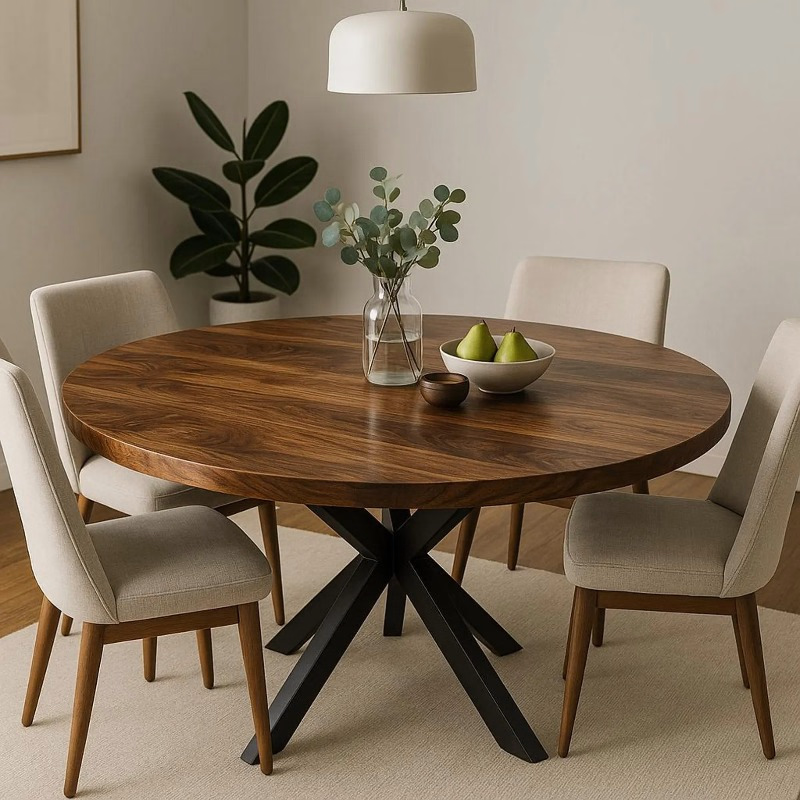
This modern solid wood 4-seater dining table is the best starting point for buyers who want real acacia wood without crossing into premium pricing. It is compact, modern, and ideal for apartments, small dining corners, and 4-member families.
2. Solara Dining Table Set — Solid Sheesham Wood with Bench
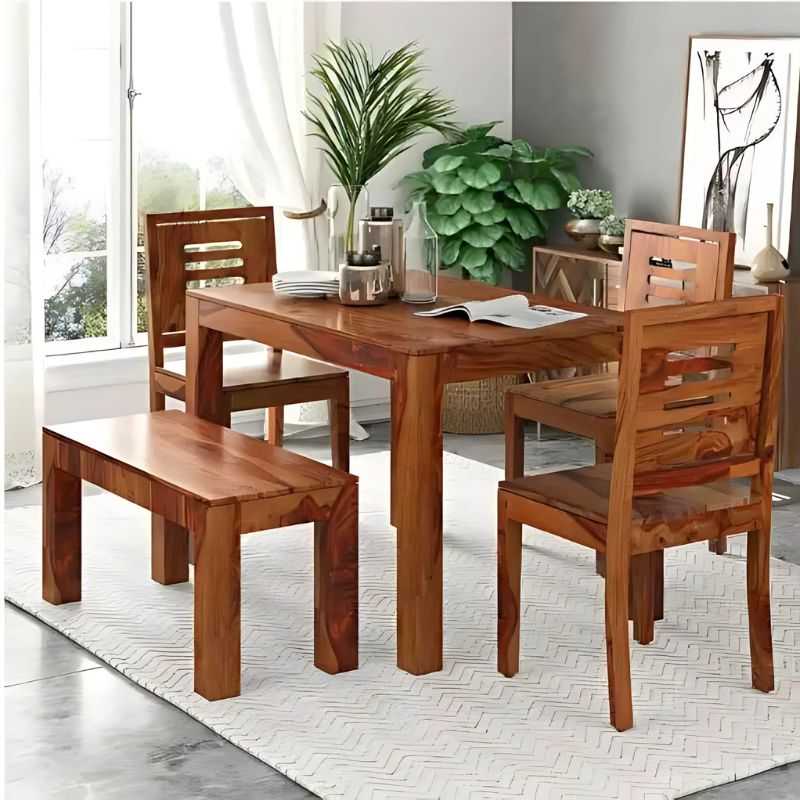
This Solara dining table set is ideal for buyers who want a table plus bench arrangement in solid Sheesham wood. It is practical for families, compact homes, and casual dining spaces where flexible seating matters.
3. Geometric Acacia Wood Dining Table — Industrial Metal Base
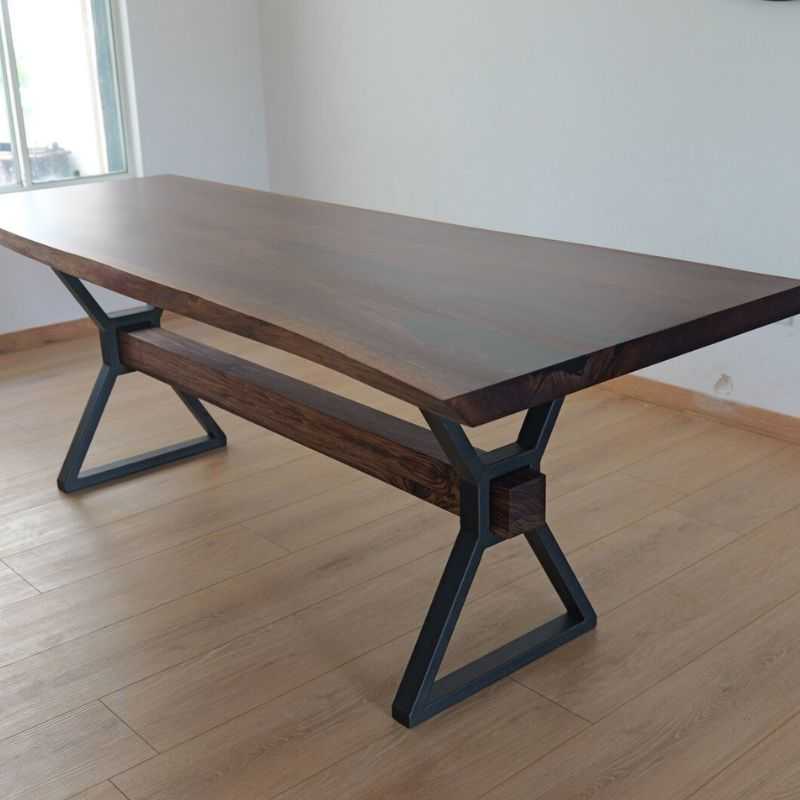
This Geometric 6-seater table combines acacia wood with a geometric metal base, making it a strong choice for modern apartments, studio-style interiors, and buyers who want a bold but practical dining table.
4. Contemporary Acacia Wood Dining Table — Minimalist Japandi
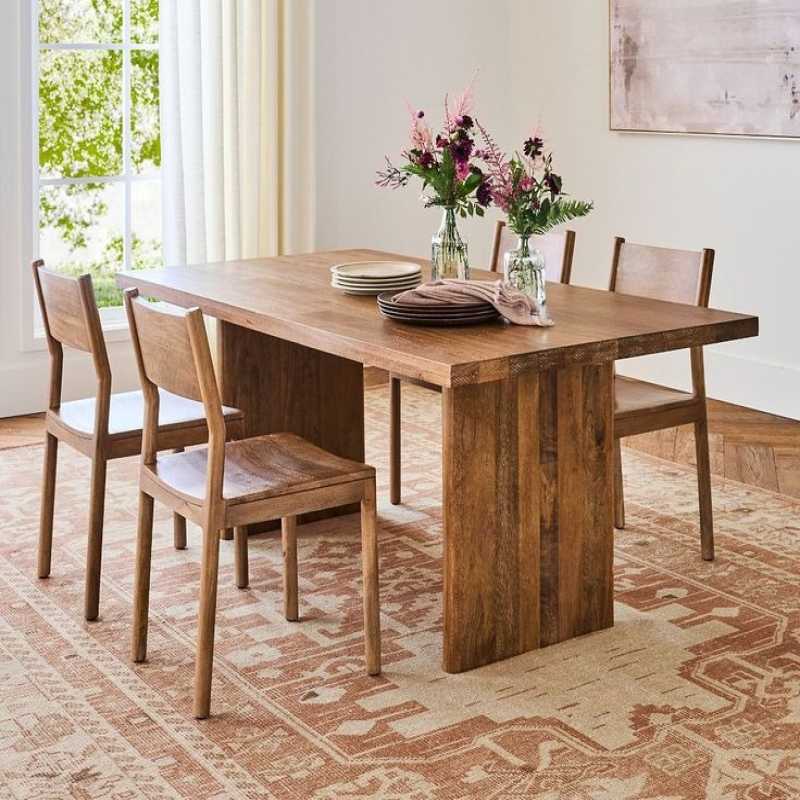
This contemporary acacia dining table is for buyers who want a calm, clean, and premium wooden dining setup. The Acacia surface brings warmth, while the minimalist design keeps the dining space light and modern.
5. Solid Acacia Wood 6-Seater with 2 Benches — Modern Rustic
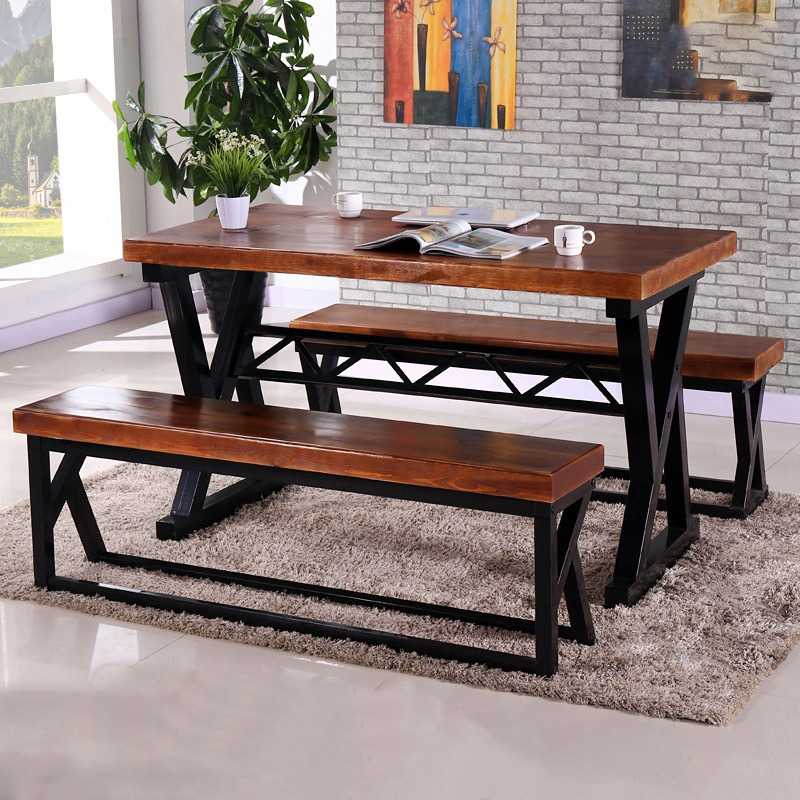
This solid wood 6 seater with 2 benches is a strong choice for joint families and homes that host guests often. The bench seating makes the setup practical, while the solid Acacia construction gives it long-term durability.
6. Mili Minimalist Solid Wood Acacia — 4/6/8 Seater
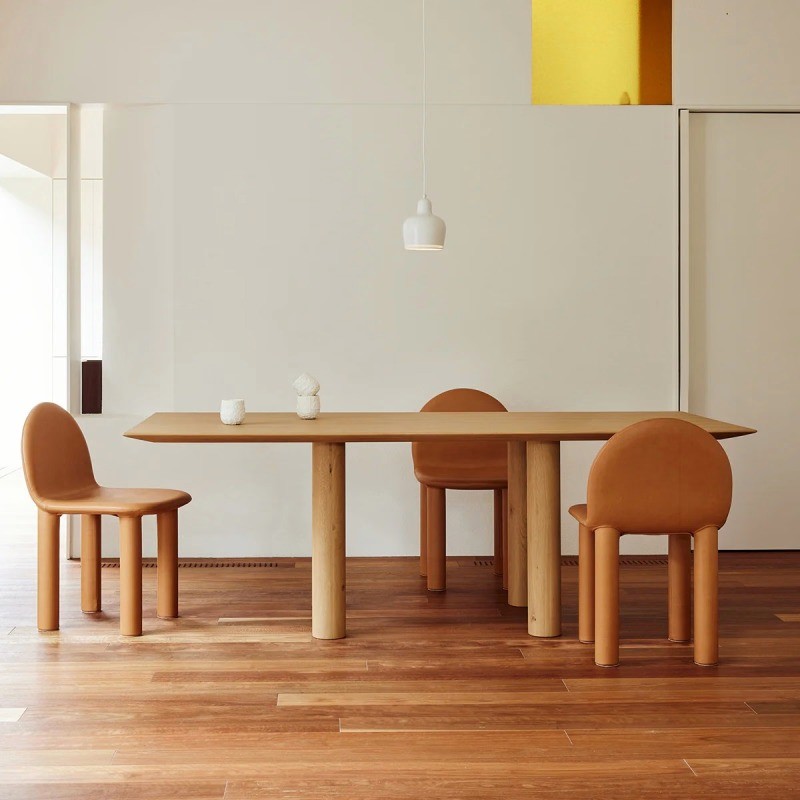
This mili minimalist acacia wood dining table is one of the best choices for buyers who want a premium, large-format solid wood dining table with a clean modern design. It works well for spacious homes, villas, and families who want one long-term dining centerpiece.
Our Honest Pick: Solid Wood or Marble?
At Woodensure, we manufacture both solid wood and marble dining tables in our Udaipur workshop—and we are asked this question every single day.
Our honest answer: for 80% of Indian homes, solid wood is the better long-term investment.
It handles Indian cooking, monsoon humidity, children, and daily family use more forgivingly than marble. It can be repaired, refinished, customized, and restored over time. At ₹22,500–₹70,000, it also offers better value than marble’s ₹45,000–₹180,000 range.
We recommend marble for buyers who have a dedicated dining room used mainly for entertaining, not daily cooking-adjacent meals. Marble is also right for buyers who want a luxury statement piece and are prepared for careful use, coasters, placemats, gentle cleaners, and regular sealing.
If you are comparing both, talk to us on WhatsApp. Our team will recommend the right table based on your dining space, interior style, budget, family size, and daily usage.
Final Buying Advice
If your dining table will be used every day by your family, choose solid wood. It is warmer, easier to maintain, repairable, customizable, and better suited for Indian food habits and monsoon conditions.
If your dining table is mainly a luxury statement piece for a formal dining room, marble can be a beautiful choice — but only if you are prepared for careful maintenance.
For most Indian homes, our honest pick is solid wood.
Shop Woodensure Dining Tables
At Woodensure, we handcraft both solid wood and marble dining tables in Udaipur, Rajasthan, with full customization in size, finish, shape, and base design. We offer free shipping pan-India.
Related reading:
Author bio
Written by the Woodensure craftsmanship team — manufacturers of solid wood, epoxy resin, live edge, and marble dining tables in Udaipur, Rajasthan, with 4+ years of experience building furniture for Indian homes.