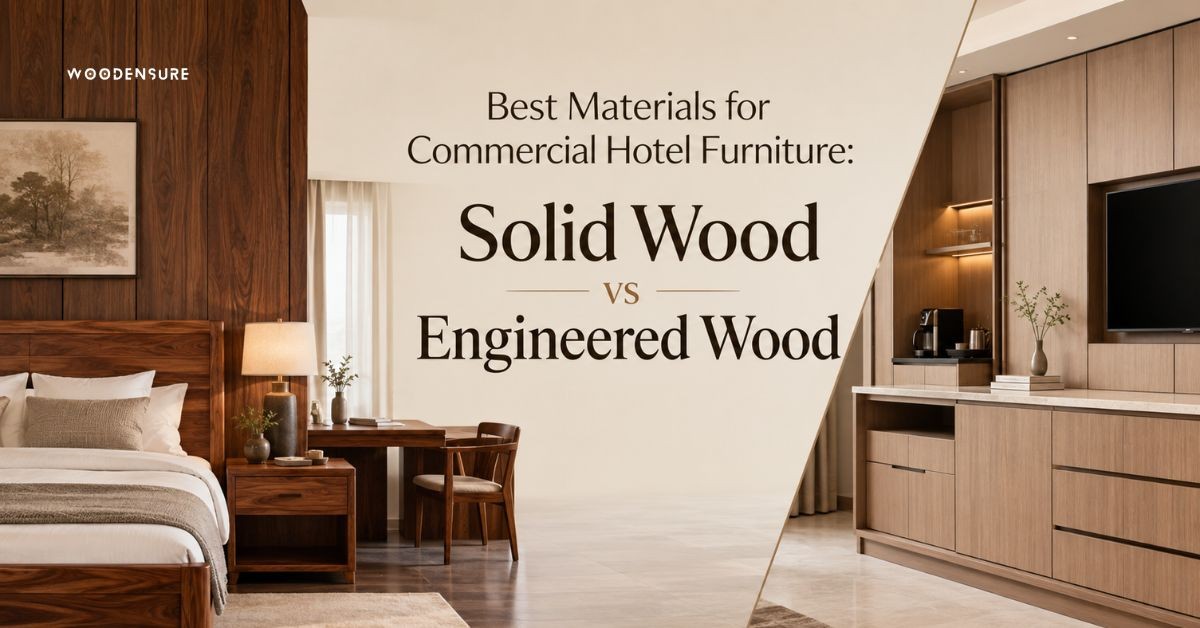
Best Materials for Commercial Hotel Furniture: Solid Wood vs Engineered Wood
For commercial hotel furniture, solid wood such as Sheesham, Teak and Acacia is generally the better long-term choice for guest rooms, restaurants and lobbies. It offers premium appearance, structural strength and the ability to be repaired or refinished. Engineered wood is more suitable for cabinetry, back-of-house storage and utility areas where consistency and lower initial cost matter most.
Last Updated: 24 July 2026
Planning a Hotel Furniture Project?
Get a customised furniture proposal based on your hotel category, room count, preferred materials, dimensions and design requirements.
Why Material Selection Matters in Hotel Furniture
Hotel furniture is used, moved and cleaned far more frequently than residential furniture. Beds, chairs, desks, dining tables and wardrobes must serve different guests throughout the year.
A poor specification can lead to loose joints, swollen panels, peeling surfaces and mid-cycle replacement. These failures increase maintenance costs, create room downtime and affect guest perception.
For Indian properties, material selection is also a climate decision. Coastal humidity, monsoon moisture, dry heat and seasonal changes can all affect performance. Procurement teams should evaluate material, joinery, finish, hardware and repairability together.
What Is Solid Wood Hotel Furniture?

Solid wood furniture is made primarily from natural timber rather than compressed fibres or particles. Common Indian hotel furniture species include Sheesham, Teak, Mango and Acacia.
Its main advantages are natural appearance, structural strength and repairability. Scratched or worn pieces can often be sanded, repaired and refinished during a renovation cycle instead of being replaced.
Performance still depends on kiln drying, stable joinery, suitable hardware and a commercial-grade finish.
Solid Wood Species for Hotels
| Wood species | Best hotel applications | Climate suitability |
|---|---|---|
| Sheesham | Beds, desks, dining tables, lobby furniture | Suitable for most Indian climates when seasoned |
| Teak | Poolside furniture, humid areas, luxury rooms | Strong choice for coastal and semi-outdoor use |
| Mango wood | Restaurant tables, café and utility furniture | Best indoors with suitable finish |
| Acacia | Side tables, desks and lobby furniture | Performs well when kiln-dried and sealed |
What Is Engineered Wood Hotel Furniture?
Engineered wood includes plywood, MDF, HDF, particleboard and veneered panels. These products are made by bonding veneers, fibres or particles with adhesives.
Quality plywood is different from MDF or particleboard. Plywood can provide good dimensional stability for wardrobes, headboards and cabinet carcasses. MDF offers a smooth painted or laminated surface but is vulnerable at exposed edges. Particleboard is normally reserved for lower-cost, low-stress applications.
Engineered wood offers uniform dimensions and efficient repeat production. Its main limitations are reduced repairability and moisture sensitivity when edges or joints are not sealed.

Procurement warning: Never accept “wood” or “engineered hardwood” as a complete specification. Request the board type, grade, thickness, surface and edge treatment before approving a bulk order.
Solid Wood vs Engineered Wood vs MDF
These service-life ranges are planning estimates, not guarantees. Construction, climate, usage and maintenance determine actual performance.
| Factor | Solid wood | Quality plywood or veneered panel | MDF or particleboard |
|---|---|---|---|
| Indicative service life | 15–25 years | 8–12 years | 3–5 years |
| Refinishable | Yes | Limited | Usually no |
| Moisture resistance | Good when sealed | Moderate with correct grade | Poor at unsealed edges |
| Load-bearing ability | High | Good with proper thickness | Limited under repeated stress |
| Guest-facing appearance | Premium | Specification-dependent | Functional |
| Initial cost | Higher | Medium | Lowest |
| Best applications | Rooms, restaurants, lobbies | Wardrobes, headboards, cabinetry | Selected dry utility areas |
The key metric is total cost of ownership, not unit price. It includes purchase, freight, installation, maintenance, repairs, replacement and room downtime.
Solid wood costs more initially, but repair and refinishing may reduce replacement during renovation cycles.
Zone-by-Zone Material Guide for Indian Hotels
Guest Rooms
Recommended: Sheesham, Acacia or a solid wood and plywood hybrid.
Beds, side tables and desks need strong joints and repairable finishes. Plywood may be used for wardrobes and headboards, while visible frames, legs and high-contact surfaces can be solid wood.
Lobby and Reception

Recommended: Solid wood, veneer-over-plywood or epoxy resin with solid wood.
Reception desks, coffee tables and consoles should prioritise finish quality, tactile appeal and distinctive design.
Restaurant, Café and Bar

Recommended: Solid wood with a commercial PU or lacquer finish; epoxy resin or protected solid wood for counters.
These areas face spills, repeated wiping and high seating cycles. Surfaces should be tested against the hotel’s cleaning products.
Outdoor and Pool Areas

Recommended: Teak, exterior-rated materials or powder-coated metal with suitable wood accents.
Evaluate rain, sunlight, drainage, corrosion resistance and maintenance requirements before approval.
Banquet and Conference Areas
Recommended: Solid wood for fixed pieces; tested engineered or mixed-material construction for movable furniture.
Stackable furniture should be evaluated for weight, strength, storage method and replaceable parts.
Back-of-House
Recommended: Quality engineered panels.
Plywood or laminated panels are practical for housekeeping storage, staff areas and utility furniture where premium appearance is secondary.
Bathroom Vanities
Recommended: Moisture-suitable plywood, sealed solid wood or approved waterproof systems.
Avoid MDF and particleboard near repeated water exposure unless specifically rated and fully protected.
Need Help Choosing the Right Furniture Material?
Share your project requirements with the Woodensure hospitality team and receive material recommendations, customisation options and bulk pricing for your hotel.
How India’s Climate Affects Hotel Furniture

Coastal hotels: Properties in Goa, Kerala, Mumbai and Chennai need sealed joinery, moisture-resistant finishes and corrosion-resistant hardware.
Monsoon conditions: Moisture can enter through damaged coatings, raw edges, plumbing leaks or wet cleaning. Kiln drying helps, but sealing and ventilation remain essential.
Hot and dry regions: Rajasthan, Gujarat and Delhi NCR experience strong seasonal changes. Solid wood needs movement allowances, while engineered panels require reliable adhesives and protected edges.
Hill properties: Furniture should be acclimatised before installation and kept away from uncontrolled heaters or damp walls.
Why Hotels Choose Woodensure
Woodensure manufactures customised hospitality furniture in Udaipur, Rajasthan, rather than operating only as a reseller.
Project capabilities include solid wood, epoxy resin and mixed-material furniture; custom dimensions and finishes; written specifications; prototype approval; and coordinated furniture for guest rooms, lobbies, restaurants, cafés, bars, banquets and outdoor areas.
For large projects, approve a prototype or sample room before production. Record dimensions, wood species, board type, finish, hardware, upholstery and packaging in the final specification.
Final Recommendation
For solid wood vs engineered wood hotel furniture, the correct choice depends on the zone.
Use solid wood for high-contact, guest-facing and premium furniture. Use furniture-grade plywood or veneered panels for wardrobes, headboards and cabinetry. Reserve MDF and particleboard for carefully evaluated dry utility applications.
The best material for hotel furniture in India is the one that balances durability, climate suitability, appearance, maintenance and total ownership cost.
Request a Complete Hotel Furniture Proposal
From guest rooms and lobbies to restaurants, bars, banquet halls and outdoor areas, Woodensure can prepare a customised furniture plan for your hospitality project.
About the Author
Written by the Woodensure hospitality furniture team — manufacturers and bulk suppliers of solid wood hotel furniture in India, serving hotel, resort, restaurant and boutique hospitality projects across major Indian cities.
Related Woodensure Resources
Hotel Furniture Buying Guide
Restaurant Furniture Buying Guide
Solid Wood vs Engineered Wood for Indian Homes
Bulk Furniture for Villas, Bungalows and Resorts